



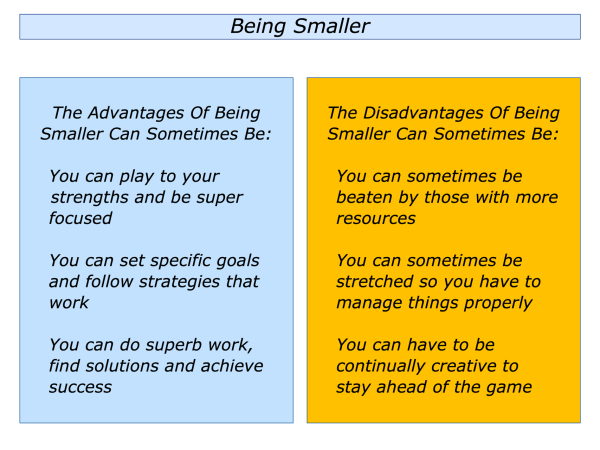
There are many ways to do fine work. One approach is to build on the advantages of being smaller rather than working in bigger organisations that are sometimes less agile.
This is an approach that is sometimes followed by entrepreneurs, sports teams and businesses. They aim to maximise their advantages whilst recognising and managing any potential disadvantages.
People who work in such teams can play to their strengths and be super focused. They can set specific goals, study success and follow strategies that work.
They can do superb work, be customer focused and provide great service. They then also be agile to find solutions to challenges and do their best to achieve success.
Such teams can also have disadvantages. They can sometimes be beaten by those with more resources. They can be stretched so they need to manage themselves properly. They also need to continue to be creative to stay ahead of the game.
Let’s assume that you lead a team that aims to follow elements of this approach. This can involve focusing on the following themes.
You can play to your
strengths and be super focused
The first step involves clarifying the team’s strengths and how it can be super focused. Different teams do this in different ways. Imagine that you lead a team. One approach is to explore the following questions.
Strengths
What can our team learn from its positive history? Looking back, when have we performed brilliantly? What did we do right then? What were the principles we followed? How did we translate these into action?
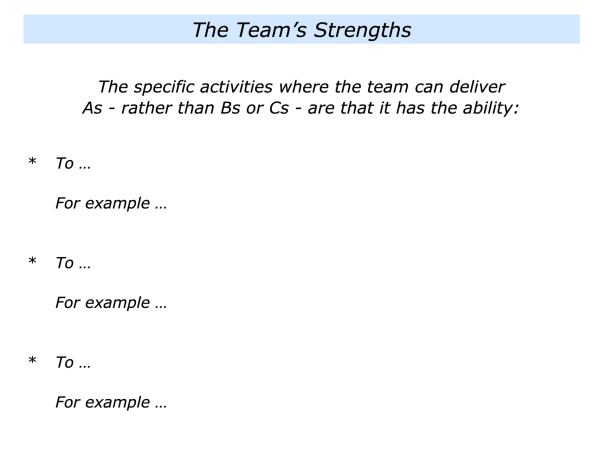
What are our strengths? What are the specific activities where we have the ability to deliver As rather than Bs or Cs? What are our resources and assets? What are the things that our team does best?
How can we build on our strengths? How can we put our people in the places where they perform at their best? How can we continue to do what we do best?
Super Focus
Bearing in mind our strengths, what are our opportunities? How can we build on these opportunities and do outstanding work? What are the advantages we may have over others?
How can we be super focused? If we are a business, for example, who are the kinds of customers with whom we work best? What are challenges they face? How can we use our strengths to help them succeed?
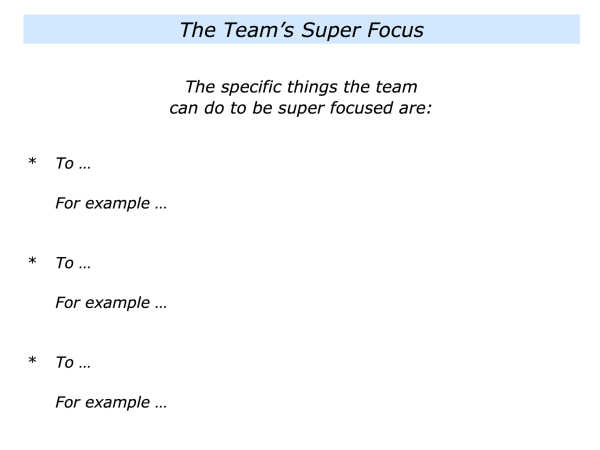
What are the key things that we as a team should focus on doing? How can we do work that is effective and excellent? How can pursue the strategies most likely to achieve success?
Imagine that you lead a team and have worked through some of these questions. If appropriate, you can tackle the exercises on these themes. These invite you to do the following things.
First, to describe the team’s strengths – such as the specific activities where you believe the team has the ability to deliver As rather than Bs or Cs.
Second, to describe the specific things that you believe the team can do to be super focused.
You can set specific goals and
follow strategies that work
The next step involves clarifying the team’s specific goals and the strategies it can follow to increase the chances of achieving success. How to take this step? One approach is to explore the following questions.
Specific Goals
What are the team’s specific goals? How can we build on the things we can control in the situation? How can we manage the things we can’t control?
Bearing these things in mind, what are the real results we want to achieve? What is the picture of success? What will be happening that will show that we have achieved the picture of success?
Successful Strategies
What are the key strategies we can follow to give ourselves the greatest chance of success? What do we know works in these kinds of situations? How can we follow these strategies and translate them into action?
How can we do our best to set things up to succeed? How can we put the right people in the right places? How can we give people the support they need? What else can we do to increase the chances of success?
Imagine that you lead a team and have worked through some of these questions. If appropriate, you can tackle the exercises on these themes. These invite you to do the following things.
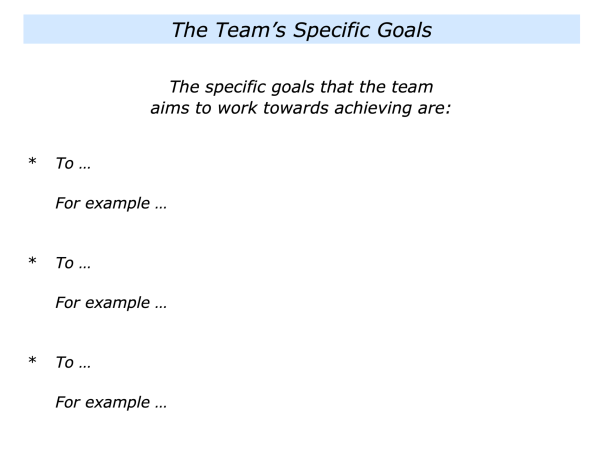
First, to describe the team’s specific goals.
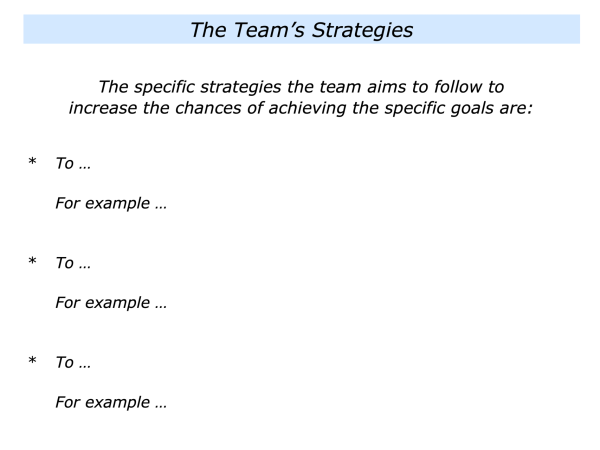
Second, to describe the strategies the team can follow to give itself the greatest chance of success.
You can do superb work, find
solutions and achieve success
The next step involves translating the strategies into action. This is where some smaller teams can make the most of their potential advantages and do superb work.
Teams that work in business, for example, can aim to be really customer focused. They can aim: a) to clarify the customer’s goals; b) to provide great service that helps the customer to achieve success; c) to also add that touch of class.
Teams that work in other areas can really focus on pursuing their chosen strategies. They can aim to do work that is effective, excellent and, in some cases, extraordinary.
Such smaller teams can have an advantage over bigger organisations. They can be extremely focused and do fine work rather than become bureaucratic and lose sight of the real job in hand.
Such teams can also be more agile when anticipating and managing challenges. They can do this: a) by rehearsing ahead of time; b) by mobilising their resources to find solutions to challenges.
Imagine that you lead a team. If appropriate, you can focus on how it can do superb work, find solutions and do its best to achieve success. One approach is to explore the following questions.
Superb Work
How can we keep doing superb work? How can we keep following our chosen strategies? How can we get some quick successes? How can we deliver consistently high professional standards?
How can we, if appropriate, keep focusing on the customers? How can we provide great service? How can we help them to achieve their goals? How can we help them to achieve both present and future success?
Solutions
How can we keep reading reality and focus on continuous improvement? How can we build on what is working? How can we tackle areas for improvement?
How can we anticipate and prevent potential problems? How can we manage such situations if they do happen? How can we clarify the potential options? How can we pursue our chosen option and deliver the required results?
Success
How can we be good finishers? How can we follow our successful pattern for finishing? How can we do our best to deliver the goods and achieve the picture of success? How can we add that touch of class?
How can we, when appropriate, learn from the work we have done? How can we build on what worked? How can we improve other things in the future? What else can we do to shape a positive future?
Imagine that you lead a team and have worked through some of these questions. If appropriate, you can tackle the exercises on these themes. These invite you to do the following things.
First, to describe the specific things the team can do to perform superb work.
Second, to describe the specific things it can do to anticipate and find solutions to potential challenges.
Third, to describe the specific things it can do to do its best to achieve the goals and deliver success.
There are many ways to do fine work. One approach is to build on the advantages of being smaller rather than working in bigger organisations that are sometimes less agile.
As mentioned earlier, this is an approach that is sometimes followed by entrepreneurs, sports teams, businesses and other teams. They aim to play to their strengths, follow strategies that work and deliver success.
Let’s return to your own work. Imagine that you want to follow elements of this approach. How can you do this in your own way? What may happen as a result of taking these steps?
If you wish, try tackling the exercise on this theme. This invites you to complete the following sentences.

Leave a Reply