



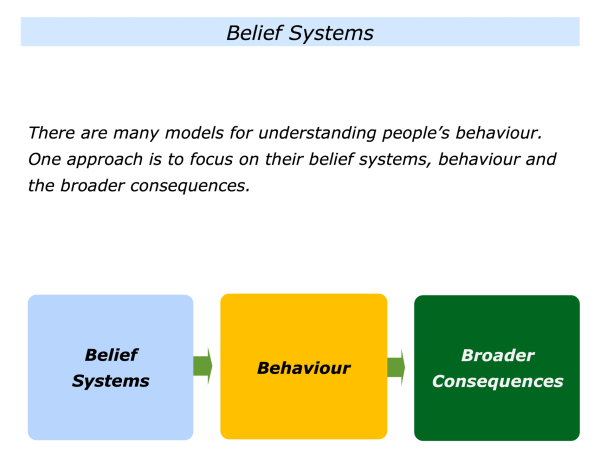
There are many models for understanding people’s behaviour. One approach is to focus on their belief systems, behaviour and the broader consequences.
Belief Systems. These are the beliefs that different people have about different things in life.
Behaviour. These are the ways that people translate their beliefs into behaviour.
Broader Consequences. These are the potential consequences of their belief systems and behaviour – both for themselves and other people.
Different people translate these themes into action in different ways. Let’s explore how they may make these happen.
Belief Systems
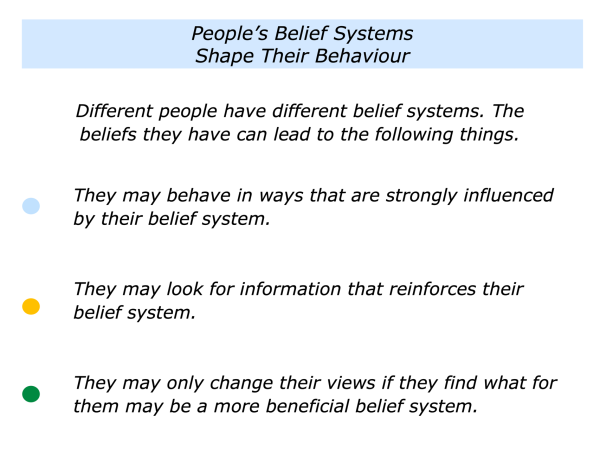
Different people have different belief systems. A person’s belief system can influence the way they behave and how they interact with others. This can have consequences for both themselves and other people.
There are several definitions for belief systems. These include the following.
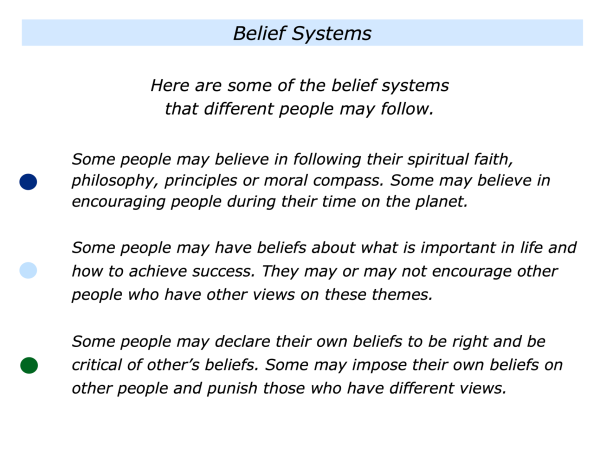
A person’s belief system is often based on the principles they believe in following and what they believe is important in life. This may be shaped by cultural influences and their own personal experiences.
A person’s belief system is sometimes called their paradigm – the way they look at the world. This can shape their attitudes, the way they interpret events and how they behave in their daily life and work.
People may look for information
that reinforces their belief system
People are often protective of the belief systems and may not be open to other ideas. Sometimes it is hard to present an intellectual argument that invites them to see another view. They may simply reply by saying ‘Yes, but…’
Some people may have beliefs that mean they only see what supports their present position. As we know, this is called confirmation bias. When asked to consider another view, they reject it.
They aim to justify their own position by giving examples or by attacking those who have other views. This poses the question:
Do we believe what we see or do we see what we believe?
Different people have different reasons for refusing to read reality. Some have an emotional, economic or other investment that means they prefer to continue behaving in the same way.
Some may refuse to recognise reality because they are afraid of the consequences. They may not know how to develop their behaviour or manage the potential challenges.
Later we will explore how people may sometimes develop or even radically change their belief systems. Before then, however, let’s explore how a person’s views may be translated into action.
Behaviour
People’s belief systems often influence the way they behave in their lives and work. This can have consequences for both themselves and other people.
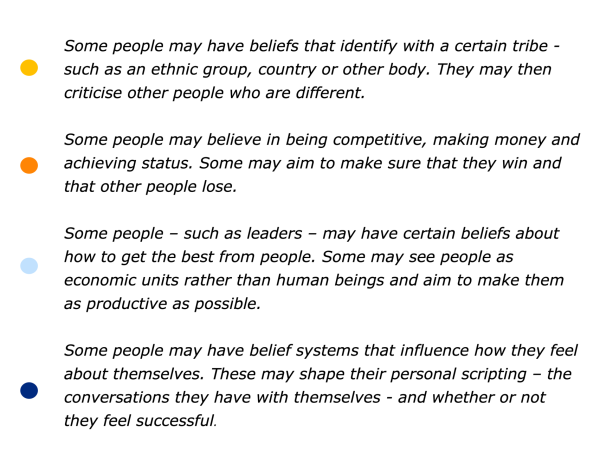
A person who believes it is important to care for people may keep returning to this internal compass. They may ask themselves: ‘How can I encourage people today? How can I do this in my daily life and work?’
They may aim to do this as a parent, friend, educator, medic, coach, mediator or in another role. They may also aim to do positive work that encourages both present and future generations.
A person who believes they are superior to others may translate this into the way they live and work. They may see life as a competition in which they aim to win and make sure that other people lose.
They may continually claim that they are right and that others are wrong. They may do this by bullying people or scapegoating those who are different.
One person may believe they have an internal locus of control and may say: ‘I can make things happen’. They will aim to take responsibility, focus on what they can control and do their best in life.
Another person may believe they are subject to an external locus of control and may say: ‘Things happen to me.’ They may refuse to take responsibility, focus on what they can’t control and find excuses for why they can’t do their best in life.
Broader Consequences
Different people follow different beliefs systems and translate these into behaviour. The way they do this can have consequences – pluses and minuses – for both themselves and other people. Let’s look at some examples.
A person who believes in encouraging others may experience both pluses and minuses. The pluses include the following. They may spread kindness, support others and help to create positive memories for life.
They may also sometimes experience the helper’s high. But this is a by-product, however, of having aiming to encourage people in their daily lives and work.
Such a person may also experience some minuses. They may sometimes have unrealistic views about their ability to help others. There may also be times when others take advantage of their kindness.
People who believe they are superior and aim to dominate others will also experience pluses. They will feel powerful, gain status and may get a kick out of hurting others. They may also get a cult following.
Their behaviour may also create certain minuses. They may feel powerful but also be scared of losing what they have. This can drive them to even more extreme behaviour.
Such a person may also create minuses for other people. They may hurt others, set people against each other, create conflicts and produce lots of collateral damage.
Those who take this approach may also abuse others. They may then present themselves as the victim, however, and continue to point out the failings of other people.
People may sometimes change their belief
system if they see that it will produce benefits
Many people follow their chosen belief system for much of their lives. There may be some people, however, who develop or even radically change their approach. This often depends on one condition:
People may only change their views by finding what for them may be a more beneficial belief system.
Different people may make this transition for different reasons and in different circumstances. Sometimes this can happen if either:
They experience a crisis that encourages them to explore their beliefs;
They have a Eureka Moment that shows another view;
They see a better way of achieving their personal or professional goals.
People buy success rather than the theory of success. Bearing this in mind, some people may only change their views if they see that doing so will bring them more benefits.
Different people may do this for different reasons. Here are some examples.
A person may choose to give up an addiction and live a healthier lifestyle because they want to live longer.
A person may choose to develop a more positive attitude to life because they find that this produces benefits for themselves and others.
A person may choose to encourage their partner rather than keep criticising them because they want to do their part in building a happy marriage.
A leader may choose to develop a more positive leadership style because this will help them to build a more successful organisation.
A company may choose to develop more sustainable practices and products because doing this will help them to make more profits.
Bearing these things in mind, let’s look at another approach that is sometimes explored by people who aim to shape the future.
People can sometimes be offered
another possible belief system
Some people may at times aim to offer others another possible belief system. They may do this because they have positive or not-so positive reasons.
Some aim to offer another belief system because they want to help people or the planet. Some offer it because they want to gain more power and personal followers.
Let’s explore the first of these approaches. Imagine that you are in a situation where a person or a group of people may be open to exploring another way forwards.
The first step is to create a positive environment and show people respect. If appropriate, you may then aim to take the following steps.
To show people that you understand their present position and their personal or professional goals;
To position the ideas you offer in a way that increases the chances of people being open to using them to achieve their goals;
To present the ideas in a way that is positive, practical and, in the widest sense, profitable.
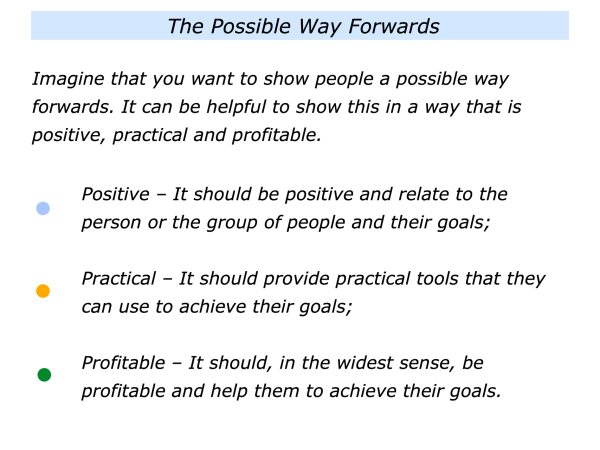
This final point is crucial. People buy benefits. They are more likely to be open to a way forward if they see how it may benefit themselves or their loved ones.
Imagine that you have shared some practical ways forward and the person or the group of people want to follow these in their own way. They can then aim:
To make a specific action plan – such as certain daily disciplines – for following this approach on the way towards achieving their goals;
To get some early successes, encourage themselves, find solutions to challenges and achieve their goals;
To then, in the process, develop a new belief system that they can follow to continue to shape their future and achieve their goals.
This is one approach that can help people to develop another belief system. It can help them to focus on: a) what they believe is important in life; b) how they can achieve what they believe is important in life.
Many people choose to maintain their present belief system, of course, and express this in their behaviour. This can produce positive or negative consequences for themselves and other people.
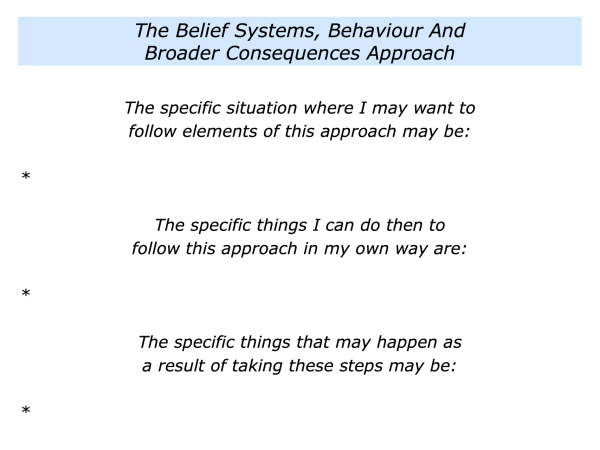
Let’s return to your own life and work. Looking ahead, can you think of a situation where you may want to follow elements of the belief system approach? This could be in your personal or professional life.
You may want to do this in your own life or when working with other people. How could you follow this approach in your own way? What may happen as a result of taking these steps?
If you wish, try tackling the exercise on this theme. This invites you to complete the following sentences.

Leave a Reply