


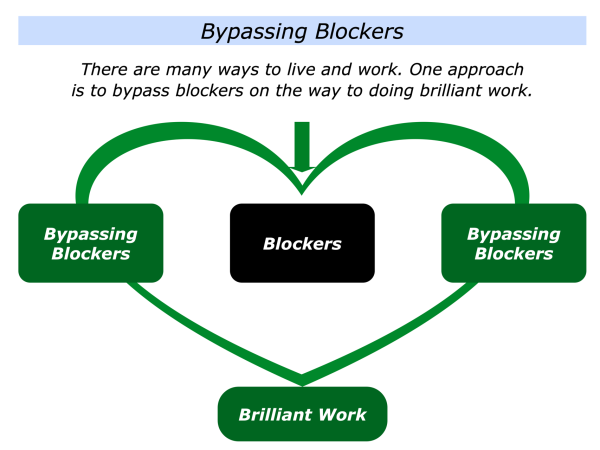
There are many ways to live and work. Some people spend a lot of time worrying about or trying to persuade potential blockers. Some people take another route towards achieving their goals.
Such people sometimes follow the creative art. A teacher described this model during a lecture I attended in the early 1970s. He gave the following description.
“Creative thinkers spend a lot of time clarifying the What. They then build on their assets and find imaginative ways about How reach their goals.
“Conventional thinkers often quickly jump to the How and spend lots of time analysing barriers. They can then sometimes become dispirited and feel that the problems are impossible to solve.
“Creative thinkers often follow the shape of a heart. They keep their eyes on the prize and think of creative ways forward. They then go around barriers to reach the goal.”
Different people follow this approach in different situations. The following section describes people who found creative ways to achieving certain goals in their personal or professional lives.
Helping Dyslexic Children
One parent felt frustrated when trying to get the local school authorities to help their dyslexic daughter. They encountered many barriers that eventually led to them feeling exhausted.
The parent recognised that their daughter, like many dyslexic children, had many strengths. These included being resilient, creative and having leadership qualities.
They helped their daughter to build on their strengths and follow their own learning style rather than wait for the authorities to change. This also included finding opportunities where their daughter could lead certain activities.
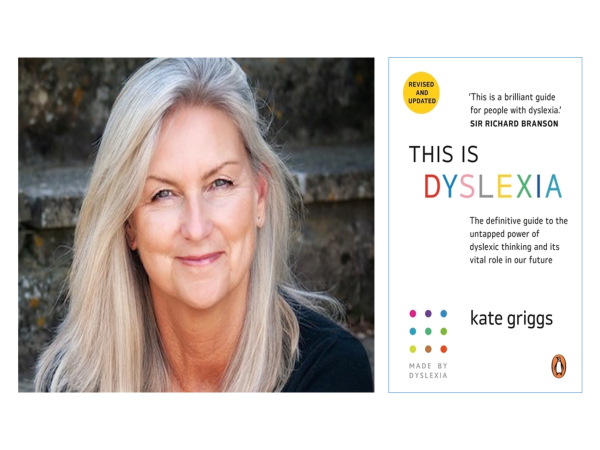
The parent also created a local group to support young people with dyslexia. Many of the ideas they used stemmed from the remarkable work done by Kate Griggs.
Kate has been offering a positive view of dyslexia and educating people about its strengths since 2004. She has also written two books on the topic called This Is Dyslexia and Extraordinary People.
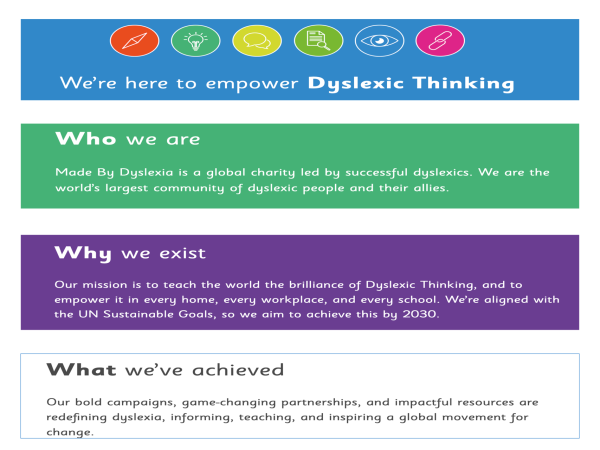
She created the Made By Dyslexia website and also helped to found DyslexicU – The University of Dyslexic thinking. Here are some excerpts from the Made By Dyslexia website.


Building Successful Prototypes
The CEO of a company I worked with recognised it was vital to adopt a new way of doing business. They initially spent a lot of time trying to convince some of the older key managers but failed to get them to change. They therefore chose to take another route. This involved aiming:
To keep the present way of doing business going in some parts of the company;
To build a successful prototype that embodied the new way of business and would help to create a positive future for the company.
The CEO followed a well-known approach for shifting a culture. This is the equivalent of aiming: a) to keep the old house going; b) to build a new house – with a long connecting corridor – that shows a new way.
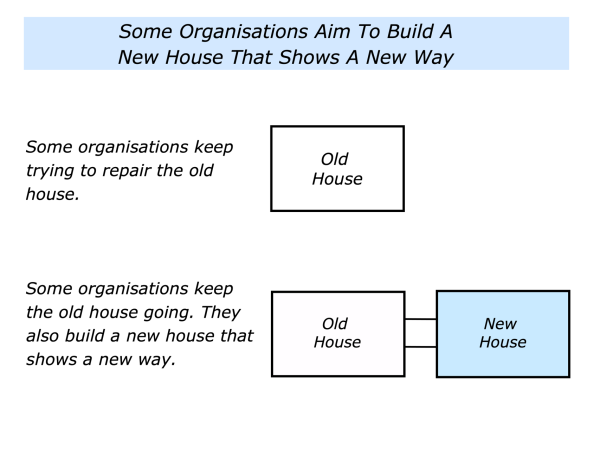
The CEO did their best to set up things to succeed. This included taking the following steps.
They clarified the real results to achieve – including the benefits to the business – and the strategies they could follow to increase the chances of achieving the picture of success.
They clarified how they personally would back the project and appointed a mission holder who would take responsibility – and get the support required – for delivering the picture of success.
They clarified how to implement the approach with some of its most receptive clients – to get some quick wins and produce success stories – plus then do whatever was required to deliver the picture of success.
The prototype demonstrated several strategies the company could follow to shape a successful future. Bearing this in mind, the CEO then gave the people in the company the following messages.
As you know, the company’s aim in the future is to achieve the following picture of success:
To …
To …
To …
The benefits of achieving these goals – for the company, customers and colleagues – will be:
To …
To …
To …
Bearing in mind our strengths and how the market is changing, the strategies we can follow to give ourselves the greatest chance of success are:
To …
To …
To …
Looking ahead, it will be important to continue to build on these strengths and follow these strategies.
Bearing this in mind, I will be holding sessions with each of you in your departments. We will then focus on how you can implement these strategies in your way and get some quick successes.
I look forward to working with you and focusing on how we can channel our strengths to shape a successful future.
The CEO continued to build on the people who were prepared to be professional and implement the strategies. It was also important to help others to move on in, as far as possible, a moral and positive way.
The company continued to build on its strengths and express these in a modern way. This laid the foundations for a positive future.
Encouraging Intrapreneurs
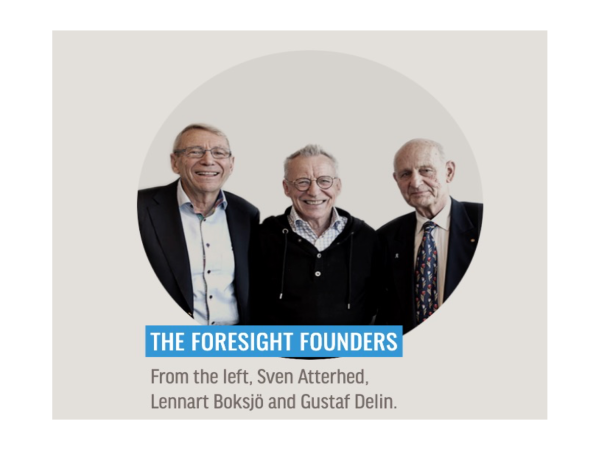
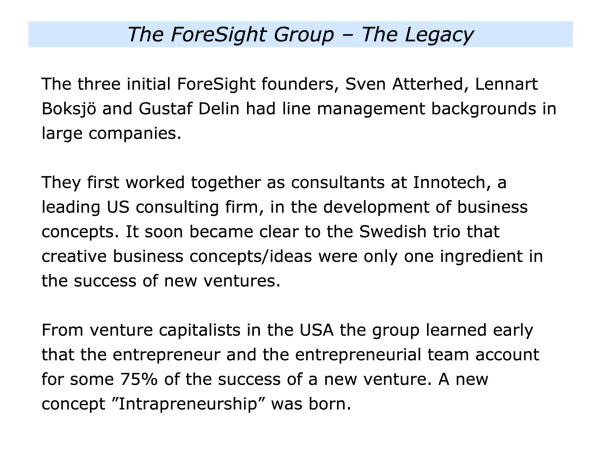
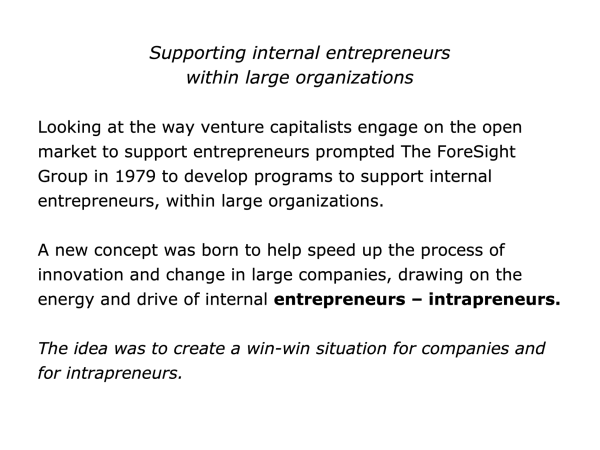
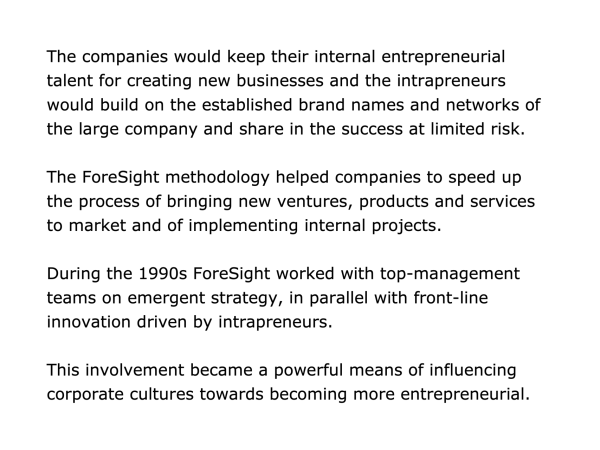
During the early 1980s I was given the opportunity to do some work with The Foresight Group in Sweden. They saw that many people in companies wanted to do innovative work but sometimes found it difficult to get their ideas implemented.
They therefore set up the world’s first School For Intrapreneurs. They helped people to be imaginative – plus use their savvy – to find creative ways to go around potential barriers.
The Foresight Group helped them to develop new products and services that provided wins for the companies and wins for the employees. Here are excerpts from the present company’s website that provides some background to their approach.
Teaching Lifeskills
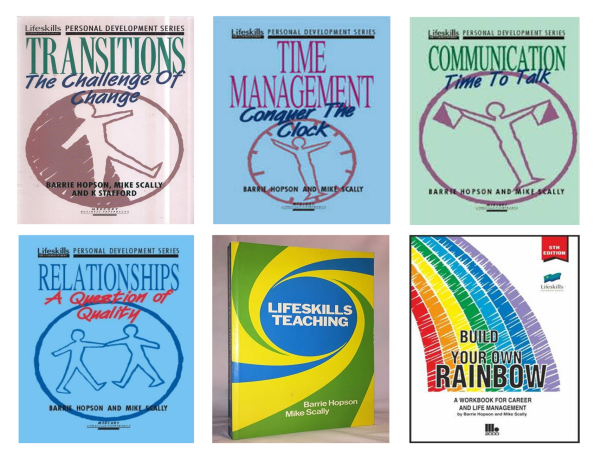
Barrie Hopson and Mike Scally, who I later had the privilege of working with, found a creative way to go around the system in the 1970s. They took this approach to lay the foundation for teaching lifeskills in education.
Barrie set up one of the UK’s first university career counselling units at Leeds University. Alongside the individual counselling, he and Mike created masses of open learning materials that could be used in education.
Looking ahead, they saw how these could be used in many educational settings. The materials provided practical tools that young people could use to shape their personal and professional lives.
Barrie and Mike produced binders that contained hundreds of exercises which teachers and other educators could use in their work. These helped young people to develop lifeskills in many areas. For example:
How to make decisions … How to manage change … How to manage your time … How to identify your transferable skills … How to shape your career … How to manage difficult emotions … How to communicate clearly How to build rewarding relationships … and many other topics.
Wanting to spread the materials, they approached many publishers but failed to find any fertile ground. Apparently the materials did not fit the publishers’ present formula. Barrie got so frustrated that, in one meeting, he blurted out:
“That is okay, we will publish them ourselves.”
Barrie and Mike took this approach. They charged about £30 per binder – a huge amount at the time – but gave the buyers freedom to photocopy the materials. (Something that they knew the teachers would do anyway.)
The Lifeskills materials became well-known and spread across many educational institutions. These continued to be expanded and eventually turned into books.
Barrie and Mike chose to follow the creative route and went around the conventional publishing system. Their ground-breaking work provided many practical tools that enabled educators to help young people to develop lifeskills.
Several years later they took a similar approach when working with companies. They led workshops that enabled many people to take charge of their careers. They also produced books on this topic – such as Build Your Own Rainbow.
During the past sixty years I have had the chance to work with many creative people. They did not follow the cliché of thinking outside the box. They did not even recognise that there was a box.
Such people often focused on the real results to achieve and translated this into a clear picture of success. They then aimed to be creative and bypass any potential blockers on the way to doing brilliant work.
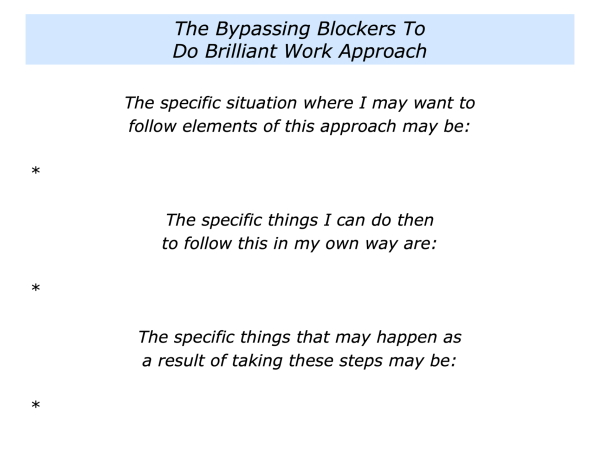
Let’s return to your own life and work. Looking ahead, can you think of a situation where you may want to follow elements of this approach? How can you do this in your own way?
If you wish, try tackling the exercise on this theme. This invites you to complete the following sentences.

Leave a Reply