



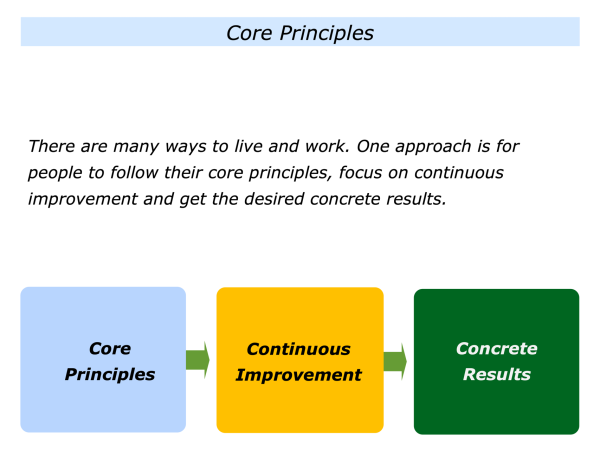
There are many ways to live and work. One approach is for people to follow their core principles, focus on continuous improvement and get the desired concrete results.
This is an approach that can be followed by individuals, teams and organisations. Whatever the situation, it often involves people focusing on the following themes.
Core Principles
Let’s begin by exploring how a person may aim to follow their core principles. We can then consider how an organisation may take this approach.
People That Aim To
Follow Their Core Principles
People who follow this route may do so for different reasons. Some may have grown up in a family where they were encouraged to follow certain principles. One person expressed this in the family way.
“My parents encouraged me to appreciate life, be grateful and help other people. They also encouraged me to follow my interests and keep learning. This was helpful because I was not very good at school.”
Some people pursue certain core principles because they aim to follow a spiritual faith, a moral compass or a vocation. They may then aim to translate these principles into action.
People who follow this approach keep returning to their centre. They focus on how they can follow these principles in their daily lives and work. They aim to be the best they can be rather than trying to be the best.
Different people may aim to follow different principles. Here are some themes that people may mention when describing their approach.
My Core Principles – The principles
I want to follow in my life are:
To be grateful … To be generous … To be kind … To encourage people … To care for my loved ones … To a good partner and parent … To respect all living things … To follow my spiritual faith.
To build on my strengths … To do good quality work … To create beauty … To create cultures in which people can thrive … To do positive things during my time on the planet.
The core principles approach has many pluses. People are more likely to develop a sense of purpose. They also have a moral compass they can follow when making decisions.
People who take this approach can find it gives them strength when tackling tough challenges. Translating their principles into action can also lead to them sometimes experiencing a sense of peace.
Organisations That Aim To
Follow Their Core Principles
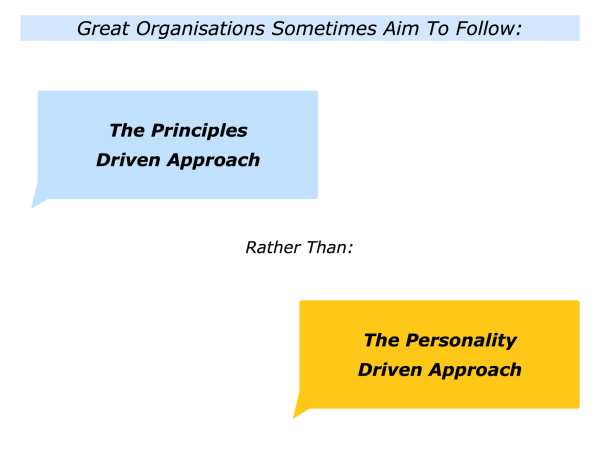
Great organisations often encourage their people to focus on certain core principles. They aim to be principles driven – rather than just personality driven – in order to shape a sustainable and successful future.
Many organisations start by being personality driven. They may have an inspiring founder who creates a product or service. They attract others with the power of their idea or the force of the personality.
Such organisations may only thrive in the long-term if they become principles driven. One approach is for them to clarify and communicate their principles. They then encourage their people to follow these principles to achieve ongoing success.
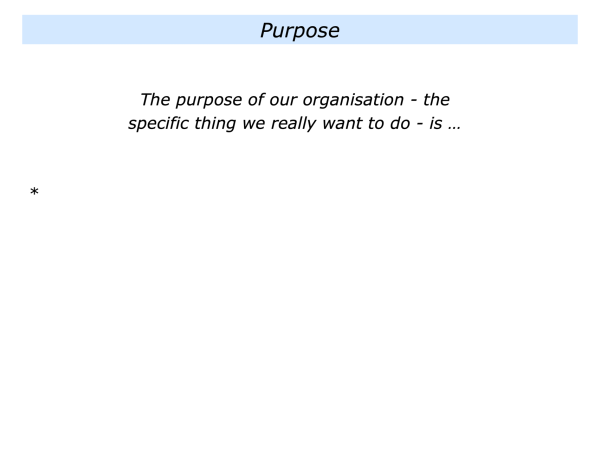
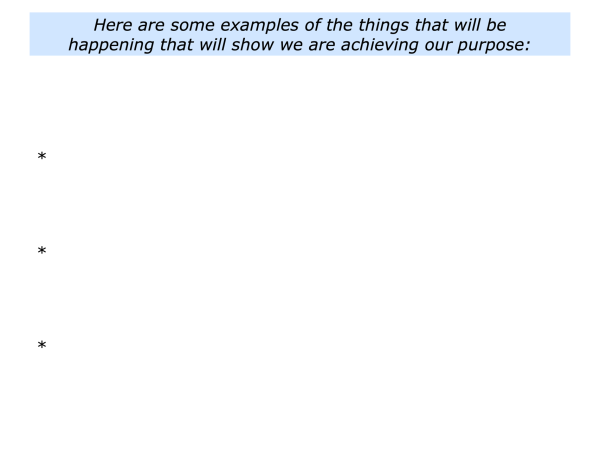
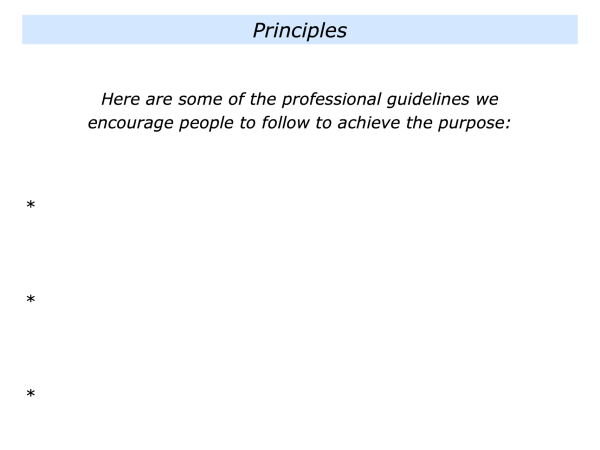
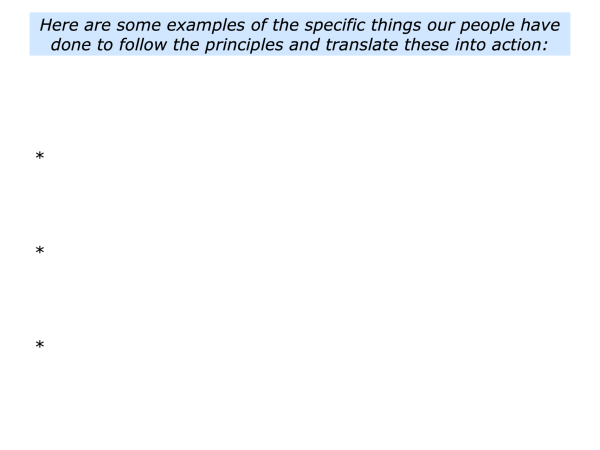
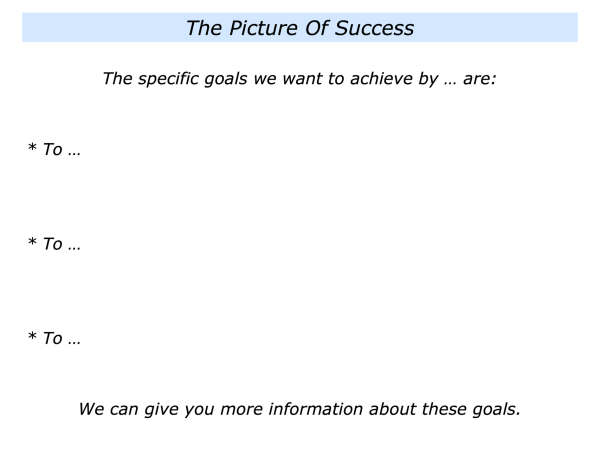
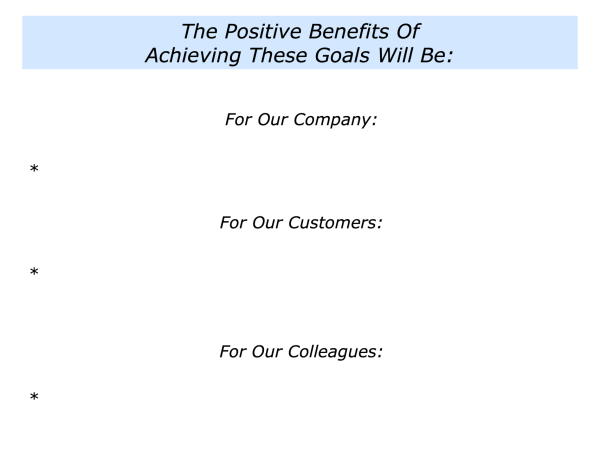
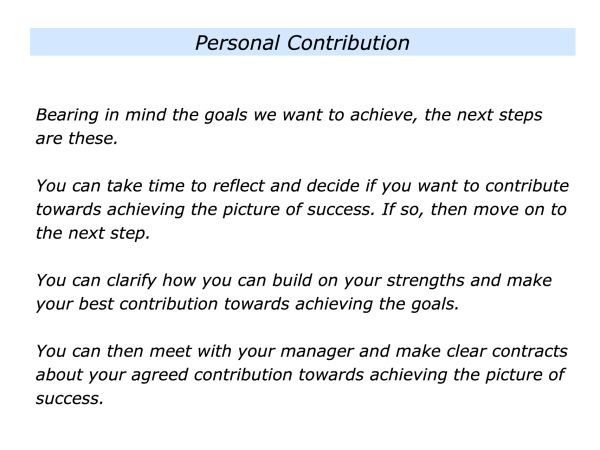
Some organisations also create a culture handbook that describes their purpose, principles and picture of success. This encourages people to keep making their best contributions towards achieving the goals.
Some send this to candidates who are applying to join the organisation. But they may describe an edited version of the picture of success.
Here is a version of such a culture handbook. You would, of course, produce your own version and bring this to life by describing how people in the organisation have translated the principles into action.
Continuous Improvement
Many individuals, teams and organisations aim to follow their core principles. Some may then focus on continuous improvement. Let’s explore how they may translate this approach into action.
People That Focus On
Continuous Improvement
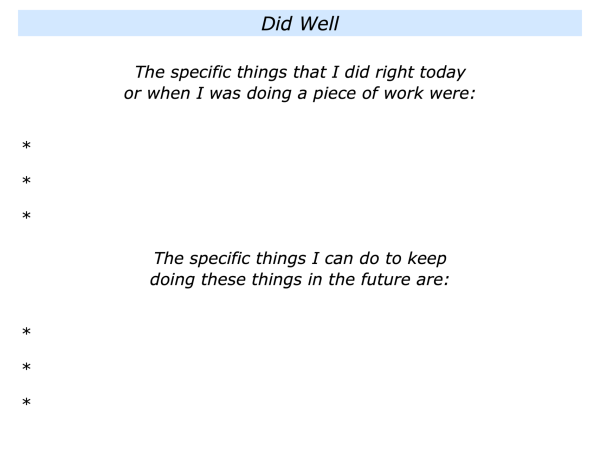
Different people choose different ways to continue to develop. Imagine that a person is aiming to keep improving in their life or work. Some individuals keep a journal, diary or other form of log to record their progress.
Such a person may set aside time to look back on their day or a piece of work they have done. If appropriate, they may then reflect on the following themes:
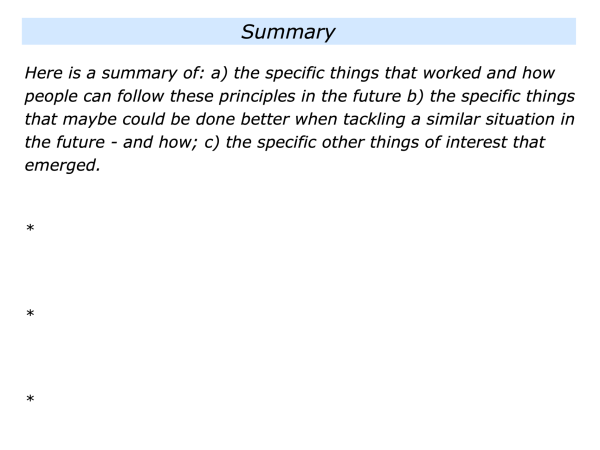
The specific things they did right or did well and how they can follow these principles more in the future;
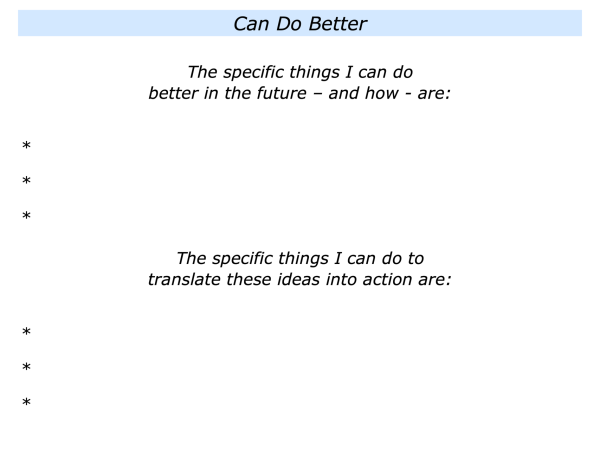
The specific things they could have done better and how they can apply these lessons in the future;
The specific other things they learned from the experience and how they can apply these lessons in the future.
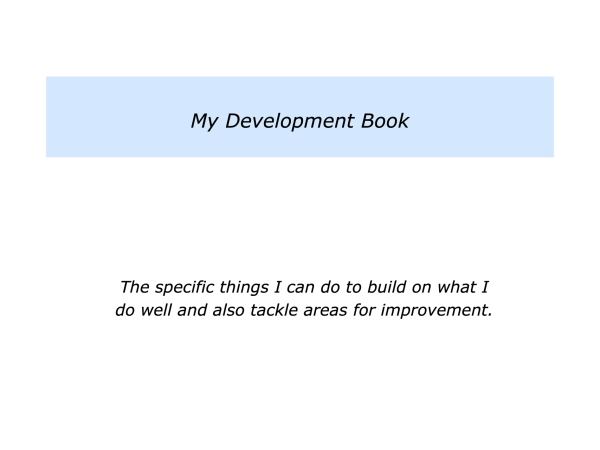
Different people do this in different ways. One approach is to keep something called My Development Book. This involves them focusing on the following themes.
Organisations That Focus On
Continuous Improvement
Different organisations choose different ways to follow the continuous improvement approach. Some encourage their people to keep focusing on the themes mentioned earlier.
Doing Well
The specific things we are doing well and
how we can do more of these things are:
*
*
*
Can Do Better
The specific things we
can do better and how are:
*
*
*
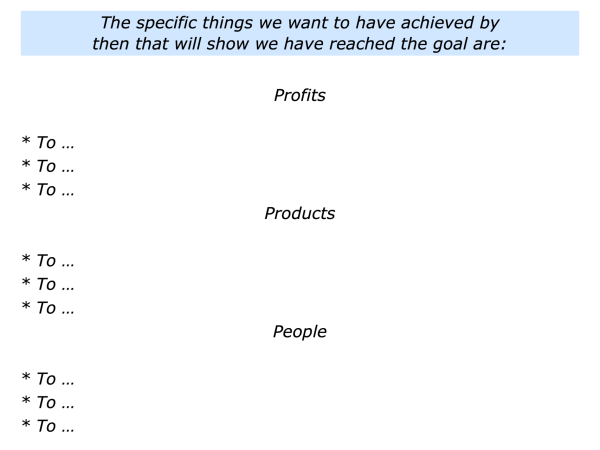
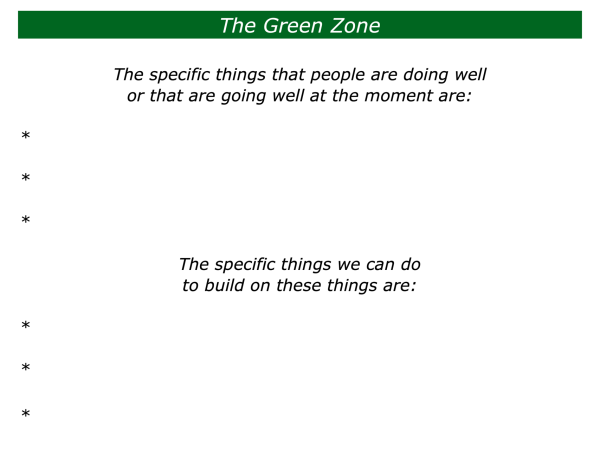
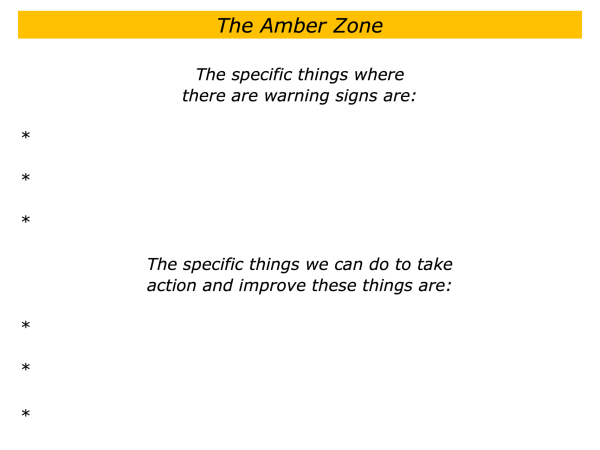
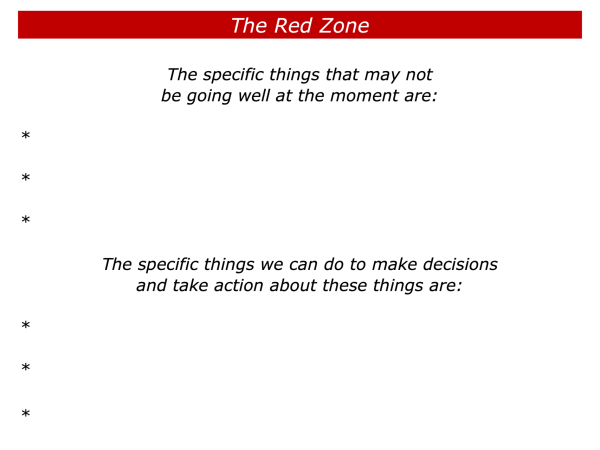
Some organisations sometimes take another route. Bearing in mind the goals to achieve – the picture of success – they encourage their people to keep reporting the things that are in the green, amber and red zones.
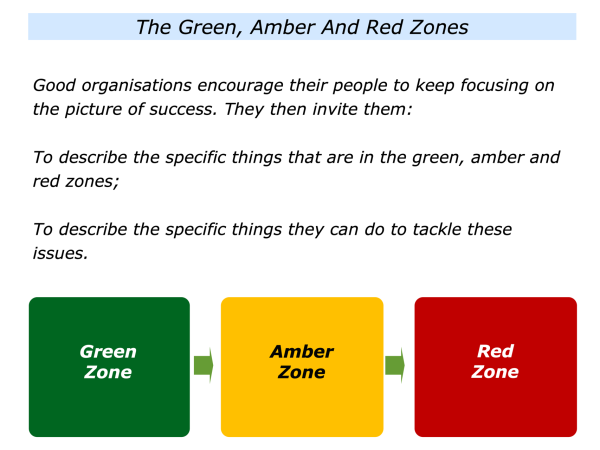
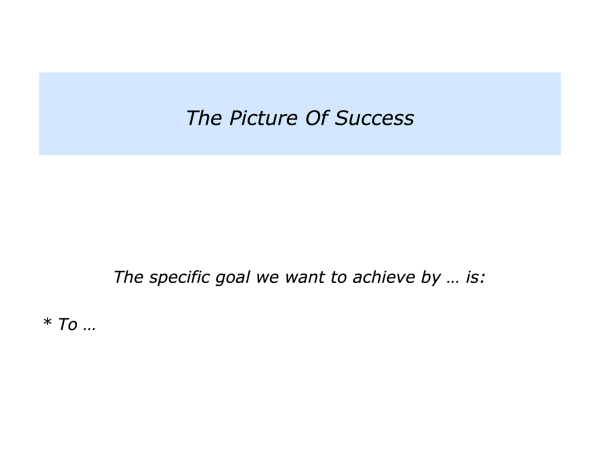
One company I worked with had a dedicated room where people kept focusing on the picture of success. They also kept doing reality checks regarding the activities that were in the green, amber and red zones. The room had charts that covered the following areas
Concrete Results
Many individuals, teams and organisations aim to follow their core principles and focus on continuous improvement. They then do their best to achieve the desired concrete results. Let’s explore how they may translate this into action.
People That Get
Concrete Results
Different people choose different ways to deliver the goods. Much depends, of course, on the results they are trying to achieve.
Some people do this by aiming to follow their successful pattern for finishing. Bearing in mind the particular task or piece of work they want to finish, they take the following steps.
They clarify something in the past
that they have finished successfully
This could be something tangible. They may have worked to pass an exam, get their driving licence, become healthier, complete a project, overcome a setback or tackle a challenge successfully.
It may have been something less tangible but also significant. They may have given specific encouragement to a person, helped students to find work they enjoy, found win-win solutions to a conflict or finished another activity.
They clarify what they did
right then to finish it successfully
Looking back, what did they do right to finish some of these things successfully? What were the principles they followed? How did they translate these into action? What happened as a result?
What may be their successful pattern for finishing? What were the principles they followed for finishing some of the tangible or less tangible things successfully?
They clarify how they can follow these
principles to finish the present thing successfully
Looking at their successful pattern, what may be some of the principles they can follow to finish the present task? What may be some of the other skills they may need to add?
Looking ahead, what is their action plan for finishing the present task successfully? How can they get an early success? How can they then do their best to deliver the desired concrete results?
Organisations That
Get Concrete Results
Good organisations educate and enable their people to follow the core principles and deliver the desired concrete results. Some then encourage their people to maintain the momentum by continually producing success stories.
Different organisations do this in different ways. The following pages describe one approach.
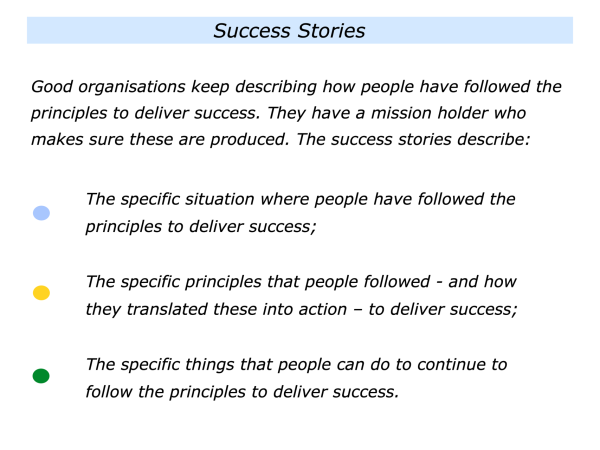
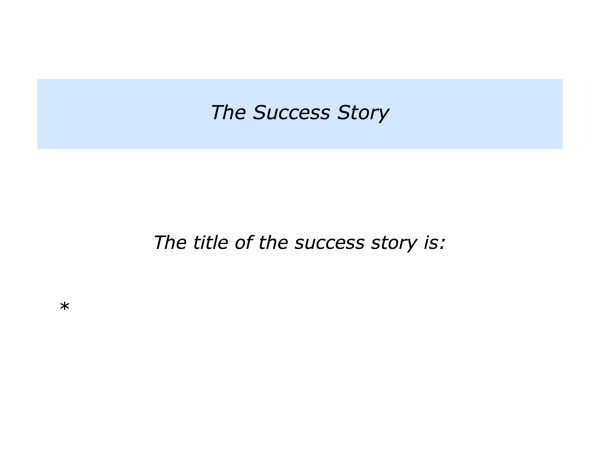
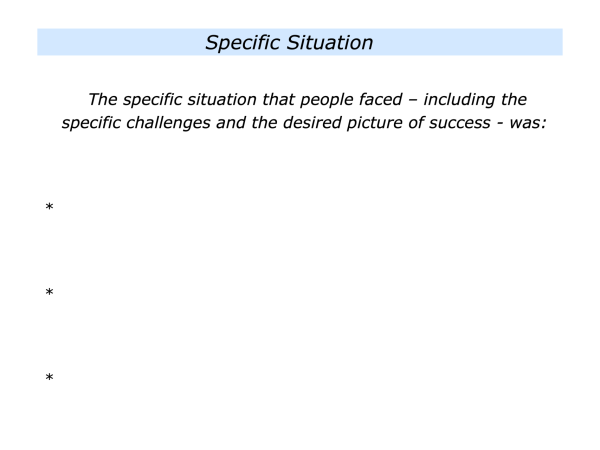
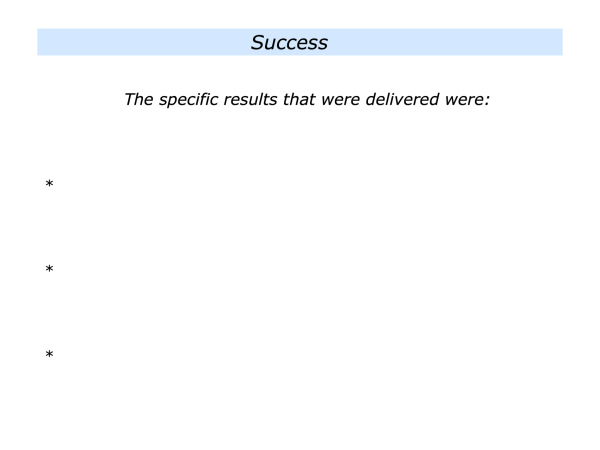
There are many ways to write such stories. One approach is choose a title for the story. It is then to describe the specific situation that people encountered.
People could be helping a client, solving a problem, making systems work better or whatever. It is to describe the challenges they faced and the desired picture of success.
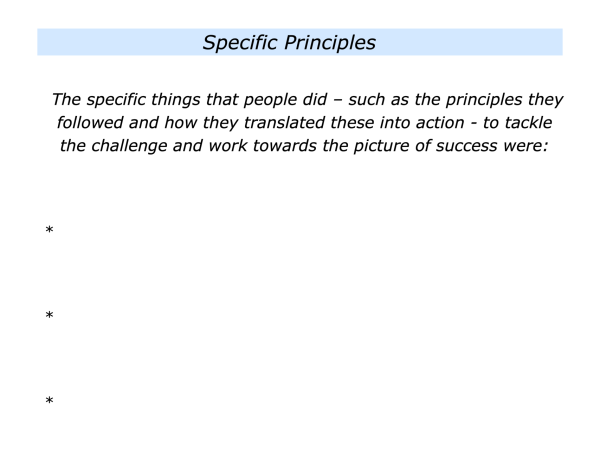
The next step is to describe the principles that people followed and how they translated these into action. It is then to describe the results that were delivered to achieve success.
As mentioned earlier, there are many ways to produce such stories. Here is one framework that people can follow in their own way.
There are many ways to live and work. One approach is for people to follow their core principles, focus on continuous improvement and get the desired concrete results.
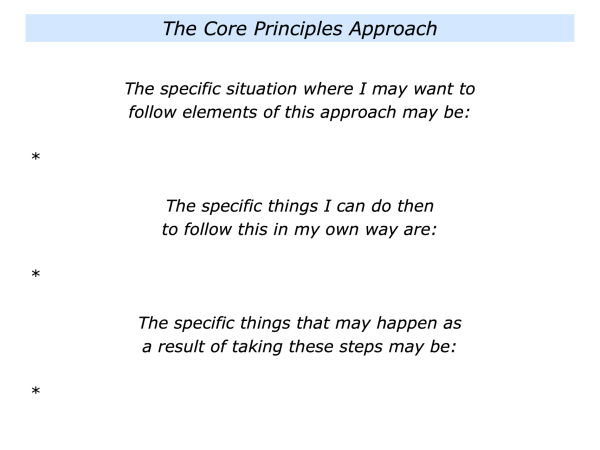
Let’s return to your own life and work. Looking ahead, can you think of a situation where you may want to follow elements of this approach? How can you do this in your own way?
If you wish, try tackling the exercise on this theme. This invites you to complete the following sentences.

Leave a Reply