


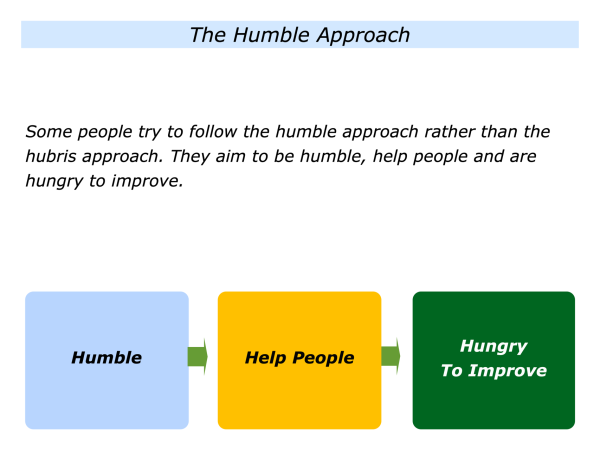
There are many ways to live life. Some people try to follow the humble approach. They aim to help people and are hungry to improve.
Such people recognise, however, that humility is a lifelong quest. Like wisdom, sometimes as soon as you think you may have got it, you may not have.
Different people aim to follow this approach in different ways. Some focus on the follow themes.
They Aim To Be Humble
People who follow this approach are grateful, generous and try to live good lives. They also have a sense of perspective. They see themselves as small in the great sweep of history.
Some therefore aim to serve something greater than themselves. They may aim to follow a spiritual faith, a moral code or a sense of vocation. They aim to keep following these principles in their lives and work.
Such people often feel fortunate for what they have experienced and been given in life. Many feel humble and alive when applying their gifts. As the musician Marcus Miller said:
“It’s a great thing about being a musician: you don’t stop until the day you die, you can improve. So it’s a wonderful thing to do.”
Some want to follow their vocation. Their vocation is their calling – it is what they are here to do. They then express this through various vehicles on the way towards doing valuable work. This can lead to the next step.
They Aim To Help People
People who follow the humble approach do not believe they are important. They do believe that their actions are important, however, because these can affect other people.
They therefore want to help people during their time on the planet. Some aim to do this in their daily lives as parents, partners, friends or in other roles.
Some may follow this approach by using their strengths to encourage other people. They may do this when working as a carer, educator, artist, coach, medic, scientist, manager, leader or in another professional role.
Such people may explore different kinds of work during the early part of their careers. They may then find or create a niche where they start to clarify how they can make a positive contribution. Some do this by exploring the following themes.
What are my strengths? What are the activities that give me positive energy? Which of these may be the ones where I can do positive work? How can I do such work that may help people or the planet?
Different people then pursue their chosen path in different ways. Some follow their equivalent of the sweet spot approach.
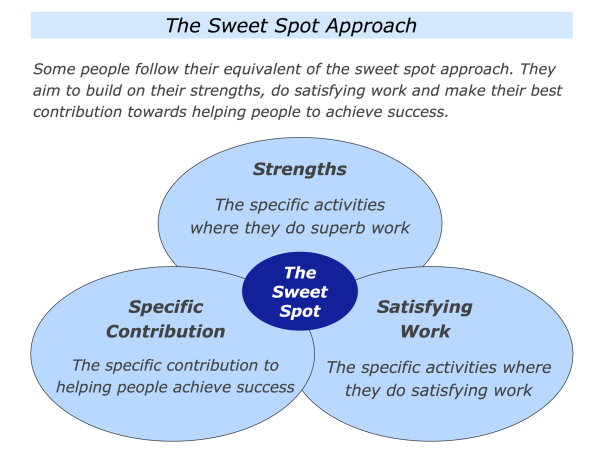
People who follow this approach may be grateful for the gifts they have been given or developed. They see these as a privilege and take pleasure from applying them.
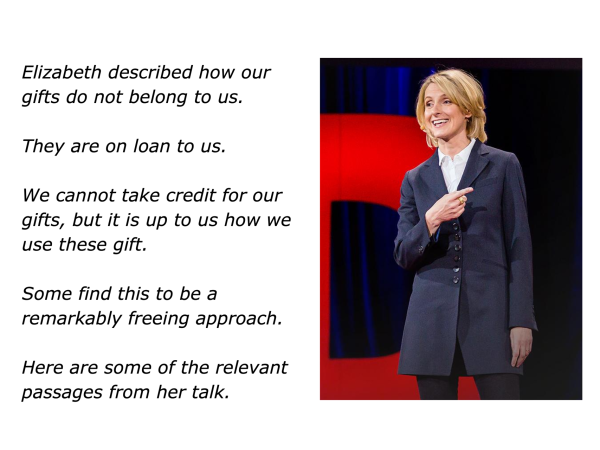
Such people often see taking this approach as simply honouring what they have been given. They echo similar sentiments to those expressed by the author Elizabeth Gilbert in one of her TED talks.
She described how, in some civilisations, people have seen the gifts they have been given as simply being on loan to them. They can then aim to use these to follow certain principles to do good work. She described this in the following way.
In ancient Greece and ancient Rome people did not happen to believe that creativity came from human beings back then.
People believed that creativity was this divine attendant spirit that came to human beings from some distant and unknowable source for distant and unknowable reasons.
The Greeks famously called these divine attendant spirits of creativity ‘Daemons’. Socrates famously believed that he had a Daemon who spoke to him from afar.
The Romans had the same idea but they called that sort of disembodied spirit a ‘Genius’ … which was great because the Romans did not actually think that a genius was a particularly clever individual.
They believed that a genius was this sort of magical divine entity who was believed to literally live in the walls of an artist’s studio … and who would come out and invisibly assist the artist with their work and who would shape the outcome of that work.
Maybe artistry doesn’t have to be quite so full of anguish if you never happened to believe, in the first place, that the most extraordinary aspects of your being came from you.
But maybe if you just believed that they were on loan to you from some unimaginable source for some exquisite portion of your life to be passed along when you’re finished. This starts to change everything.
Imagine that a person has done work that aims to help other people. They may also sometimes embody the following quality.
They Are Hungry To Improve
People who follow the humble approach often focus on how they can continue to improve. Different people do this in different ways.
Some embody the Japanese concept of Kaizen – continuous improvement. They focus on the specific things they are doing – or have done – and explore the following themes.
First: The specific things they have done well and how can do more of these in the future
Second: The specific things they can do better – and how – in the future.
Third: Their specific action plans for translating these ideas into action in the future.
Some people also see the events they encounter in life – such as situations, successes and setbacks – as a chance to progress. They see these as the chance to be positive, to follow their principles and to progress as people or professionals.
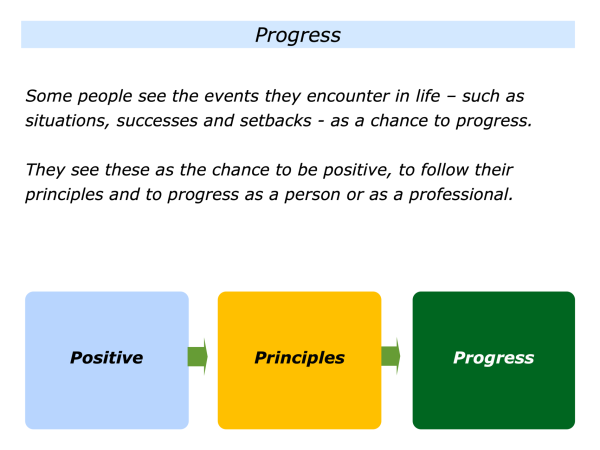
Such people are often humble in their search for knowledge. They are often life-long learners who love to explore and add to their repertoires for doing fine work. They aim to maintain this quality throughout their lives.
The Hubris Approach
People who follow this approach often see themselves as important. They may believe they are superior to others. They may seek status and, in some cases, the power to control other people.
Some may be addicted to bragging. They may even give themselves awards or continually look for praise in order to reinforce their view of themselves.
Some may demonstrate excessive pride and arrogance. They may also behave in ways that cause collateral damage and hurt others. They may also aim to make sure that they win and that other people lose.
Let’s return to the humble approach. Some people believe in the idea that: You are most yourself when you forget yourself. Sometimes this can lead to them going into a state of flow.
Anthony Sher, the actor, described how he followed elements of this approach. He was doing a one-man show called Promo based on Primo Levi’s book about Auschwitz.
Before the performance Anthony was concerned about his own contribution and how it may be received. Bearing in mind the profoundness of the book, however, he saw his own feelings in perspective. He explained this in the following way.
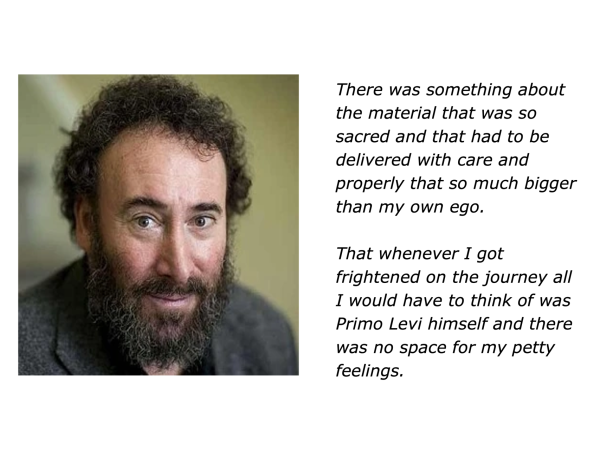
Different people aim to try to follow the humble approach in different ways. Some start by exploring the following themes.
Humility. The things I can do to
try to demonstrate humility are:
To be grateful for life each day … To use my strengths to help other people … To maintain a sense of perspective and not take myself too seriously – even though the work I do may be serious.
Hubris. The things I can do
to try to avoid hubris are:
To learn from my mistakes … To credit other people for the work they do … To recognise that I am small in the great scheme of things … To balance the paradox of accepting myself but also keep improving.
As mentioned before, however, once you think you are humble you may not be. It may then be time to simply focus on doing something practical to help people or the planet.
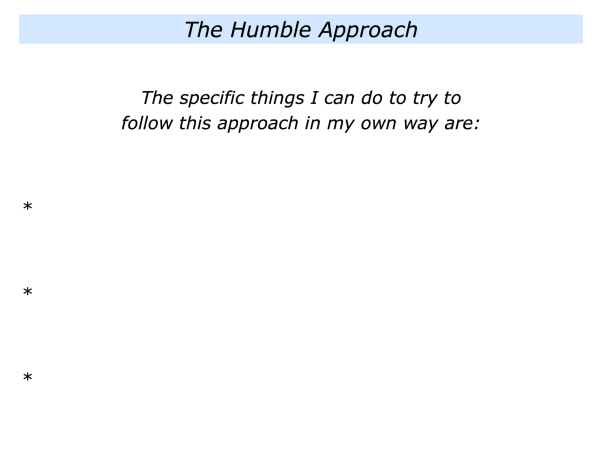
Imagine that you want to try to follow elements of the humble approach. How can you do this in your own way? If you wish, try tackling the exercise on this theme. This invites you to complete the following sentence.

Leave a Reply