



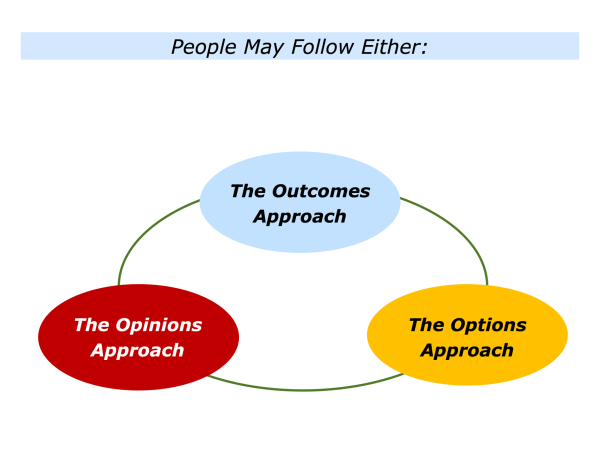
Different people focus on different things when exploring a topic. Some focus on the outcomes to achieve, some on the options going forwards and some on giving their opinions.
The kind of approach that people take can have an effect on what may be achieved when exploring a particular topic. Let’s consider these different approaches.
The Outcomes Approach
Some people focus on the outcomes – the real results – to achieve. They may take this approach when discussing a topic, exploring a challenge or aiming to achieve certain goals.
They clarify the specific things to be delivered or the destination to be reached. They may also explore the key strategies that can be followed to achieve these aims.
Such people may do this when clarifying their own thoughts or having conversations with other people. They explore the following themes.
What are the outcomes – the real results – to achieve? What is the picture of success? What will be the benefits of achieving these goals? What will be happening that will show we have achieved these aims?
How can we do our best to achieve these outcomes? What do we know works in these situations? What are the key strategies we can follow to give ourselves the greatest chance of success?
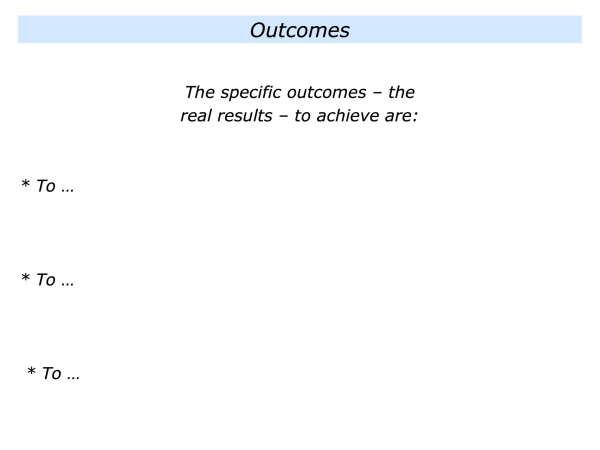
Leaders who take this approach often start meetings by reminding people of the outcomes to achieve. They then invite people to channel their efforts towards achieving these goals.
The Options Approach
Some people apply their creativity to clarify the possible options going forward. Different people do this in different situations. They may do it when focusing on either:
The specific outcomes to achieve;
The possible solutions to challenges;
The specific ways they can shape their future.
Bearing in mind the results to achieve, some take the following steps. They aim to clarify: a) the possible ways forward; b) the pluses and minuses of each option; c) the attractiveness of each route.

Such people may then take time to reflect and let the ideas incubate. They may also explore any other potential solutions by considering the following questions.
What are the real results to achieve? What are the possible options going forward? What are the pluses and minuses of each option? How attractive are each of these options?
Are there any other potential creative solutions? What are the best parts of each option? Is it possible to combine these into another potential way forward?
What do we know works in this kind of situation? When have people tackled similar situations successfully? What did they do right then? What happened as a result?
Bearing all these things in mind, what are the strategies that are most likely to achieve success? How can these be translated into action? What else can be done to increase the chances of achieving the goals?
Such people love to explore the options going forward. Some may then translate these into action. Some may do this by themselves. Some may work with other people to deliver the desired positive results.
The Opinions Approach
Some people like to give their opinions about various topics. Some may give their considered opinion after gathering information, seeing the big picture and getting the facts.
Some people are quick to give their opinions without seeing the big picture. They may give selected examples or anecdotes, however, that seem to back up their point of view.
Such people often have strong views that are rooted in their perception of the world. Sometimes they can come across as critical of other people’s efforts.
Some may simply love giving their opinions about many different subjects. They may not then show how these can be translated into action to help people to achieve positive results.
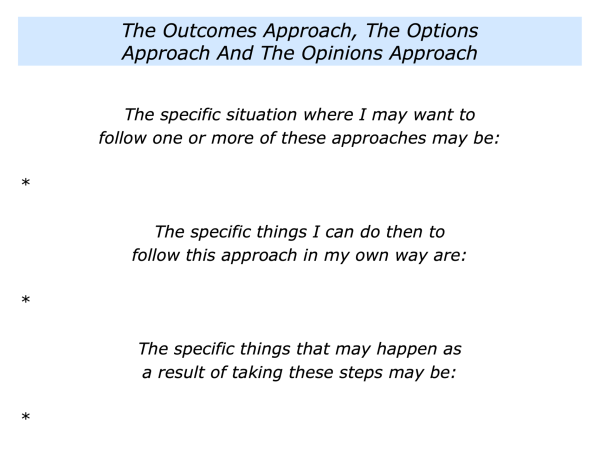
Let’s return to your own life and work. Looking ahead, can you think of a situation where you may want to follow one or more of these approaches? How can you do this in your own way?
If you wish, try tackling the exercise on this theme. This invites you to complete the following sentences.

Leave a Reply