



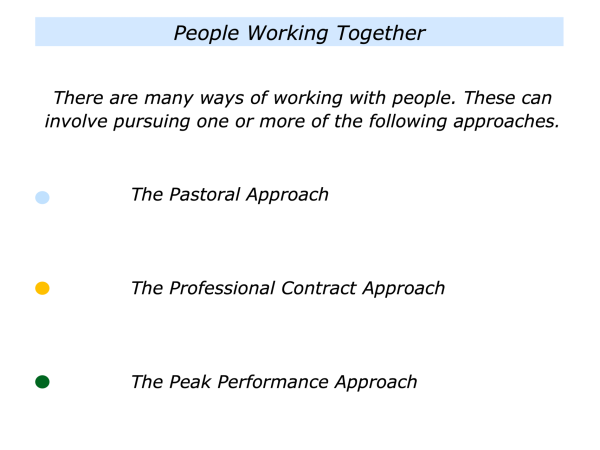
There are many ways of working with people. These can sometimes involve following the pastoral, professional contract or peak performance approaches.
There may also be times, of course, when these ways of encouraging and working with people may overlap. Bearing this in mind, let’s explore these approaches.
The Pastoral Approach
This is an approach followed by people who aim to care for others and, when appropriate, help them to shape their futures. Originally viewed as being provided by spiritual faiths, it is now offered in other settings.
People may follow the pastoral approach when caring for people who are homeless, recovering from an illness, experiencing a crisis or trying to manage a challenging situation.
Some may do this when working in a spiritual or voluntary organisation. Some may do this when working as a professional in a support service, school, organisation, sporting association or another environment.
Different people may offer different things when following the pastoral approach. Here are some of the ways they may translate this into action.
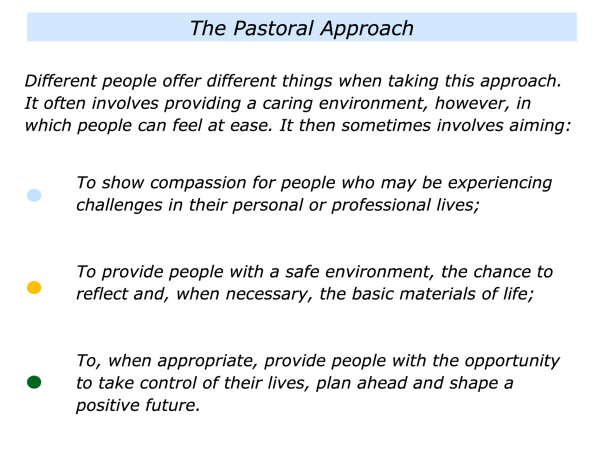
The pastoral approach can provide a safety net for some people. This can sometimes be necessary in a society where people may need help to manage certain personal or professional challenges.
When appropriate, it can help them to develop their inner strength and focus on what is important in life. This can also involve offering them skills they can use to shape their future lives.
The Professional
Contract Approach
Clear contracting plays a key part in many areas of life. This is especially so in professional relationships. Making clear contracts can provide the platform for achieving mutual success.
Different people make these contracts in different situations. A person or an organisation, for example, may do so when providing a client with counselling, medical, technical, financial or other kinds of professional services.
Professional contracts often involve people working towards achieving certain goals. They then involve people following certain guidelines on the way towards achieving the agreed goals.
There are, of course, many different kinds of contracts. Some contracts may be practical – such as legal or working contracts – but others might be psychological.
Sometimes contracts involve signing a piece of paper. Sometimes there is a spoken agreement. Sometimes the agreement is assumed but unspoken. The latter can, of course, lead to misunderstandings.
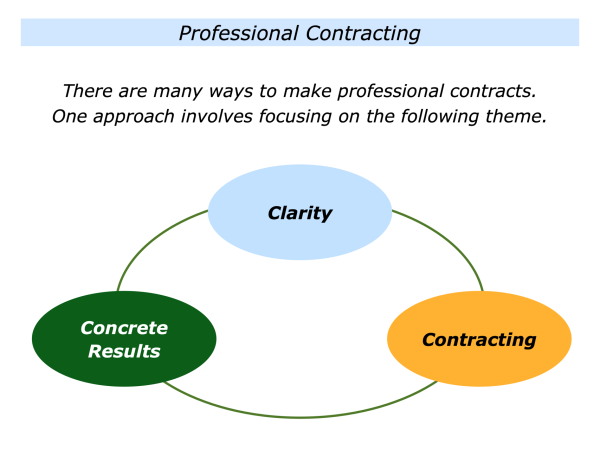
Different people make contracts in different ways. They do, however, often focus on the following themes.
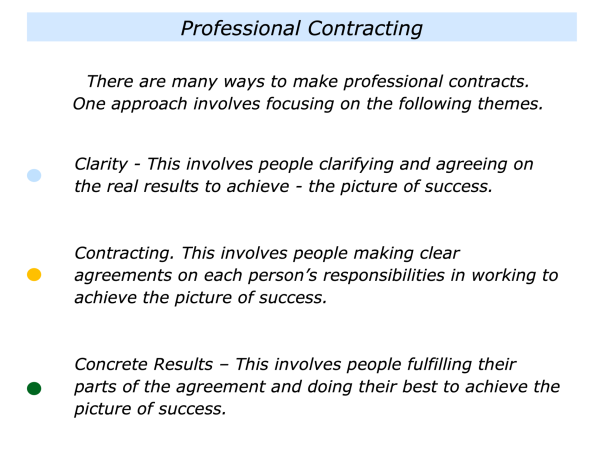
Clear contracting plays a key part in educational, coaching and other professional relationships. Sometimes this contract is extremely explicit about each person’s responsibilities in working toward achieving the agreed goals..
This can be the case when, for example, a therapist is working with a recovering addict. The therapist may make it clear they will only work with people who are motivated and are prepared to act in a responsible way. Breaking the agreement will lead to the end of the therapeutic relationship.
As mentioned earlier, the contracting approach can be used in many professional areas. The following section describes one way it can be used in a coaching situation.
The Coaching Contract
Good coaches often use the contracting approach when working with people. They do this when encouraging athletes, learners and in other professional situations.
They start by establishing a coaching contract. The following process seems very structured, but it can be adapted in different ways.
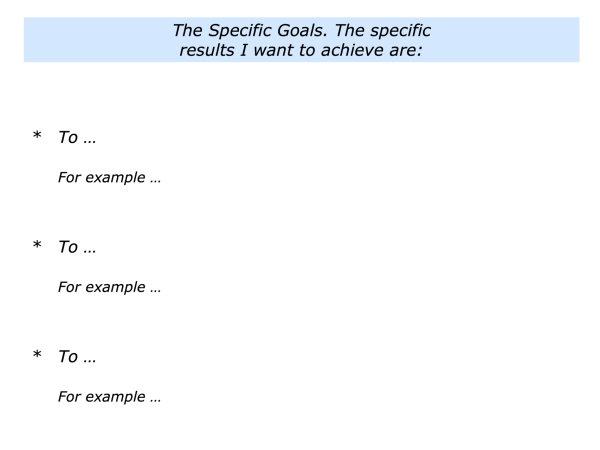
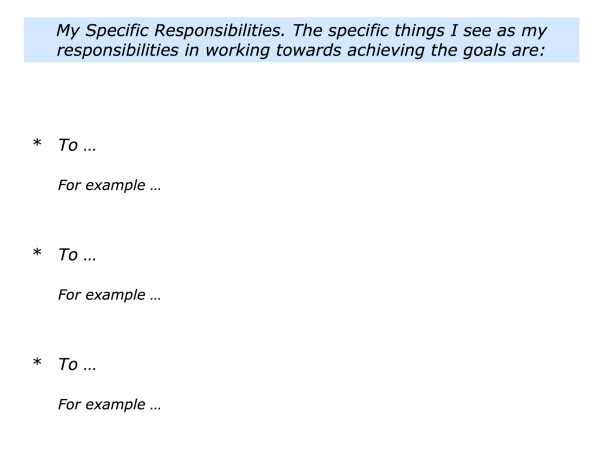
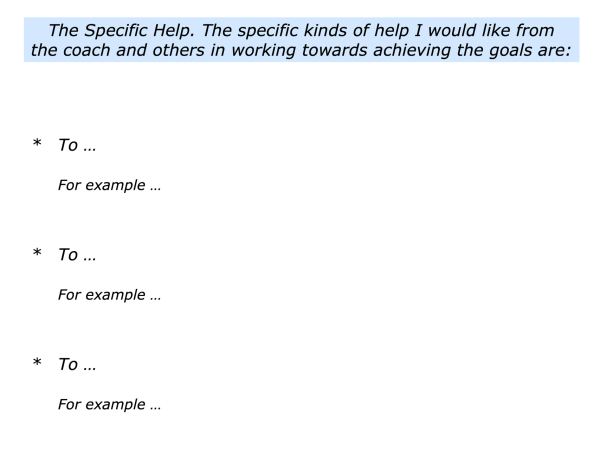
The coach begins by inviting the coachee to have an initial go at filling in the coaching contract. The coachee is asked to describe the following things.
The specific goals they want to achieve.
The specific things they see as their responsibilities in working towards achieving the goals.
The specific kinds of help they want from the coach and other people in working towards achieving the goals.
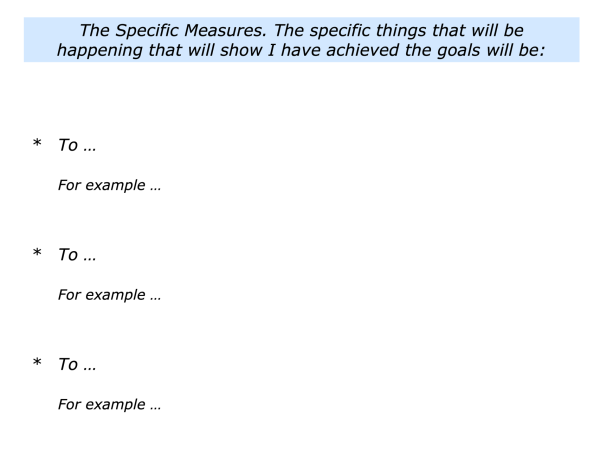
The specific things that will be happening that will show they have achieved the goals.
The coachee and coach then meet to agree on the coaching contract. This forms the basis for their work together.
What happens if the coachee breaks the contract? Depending on the situation, the coach may immediately stop working with the person. On other occasions, they may ask them:
“Let’s go back to the goals you want to achieve? Do you still want to achieve these goals?
“What do you see as your responsibilities in working to achieve the goals? Are you prepared to do those things?
“If so, then we may have the basis for working together. If not, then that is your choice. And, as we know, every choice has consequences. If you wish, take time to reflect. Then let me know your answer.”
Good coaches are supportive, but they can also be tough. They give people clear messages and are prepared to follow through on the consequences. Here is the framework for the coaching contract.
As mentioned earlier, some organisations follow elements of the contracting approach when outlining the various responsibilities in working to reach the goals. Here is one approach they may take.
The Professional Deal Approach
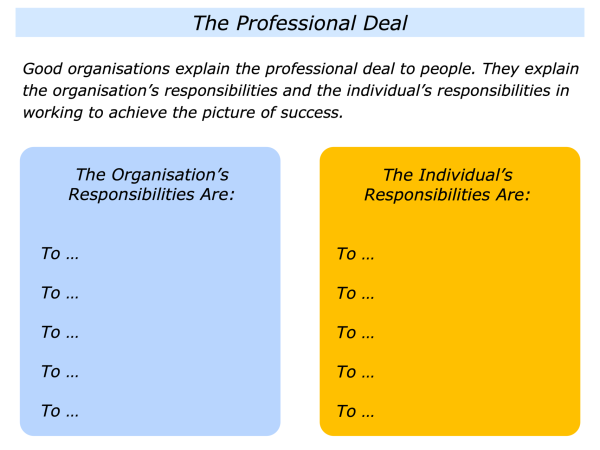
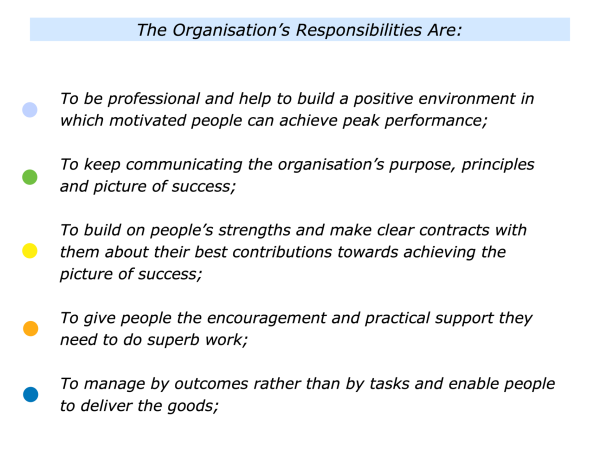
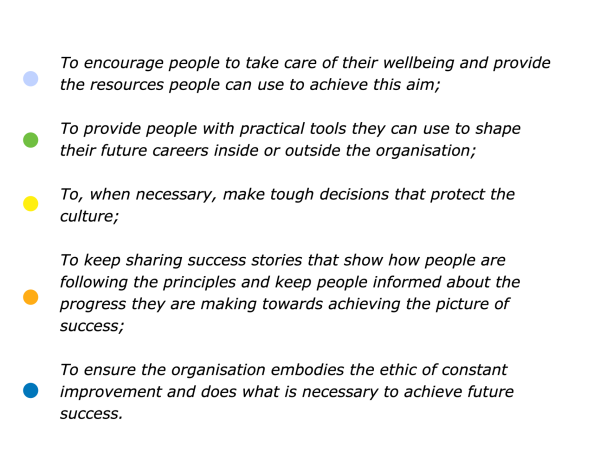
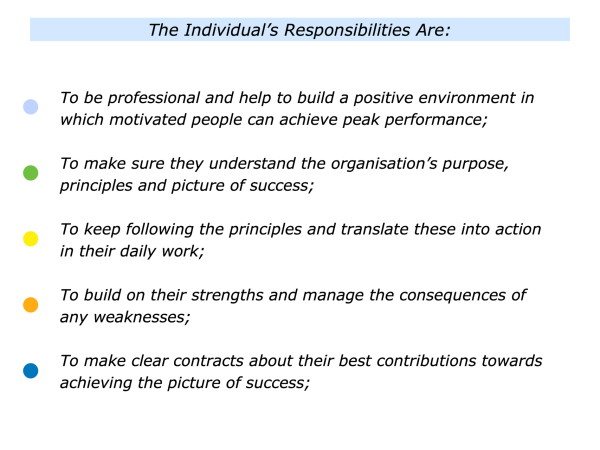
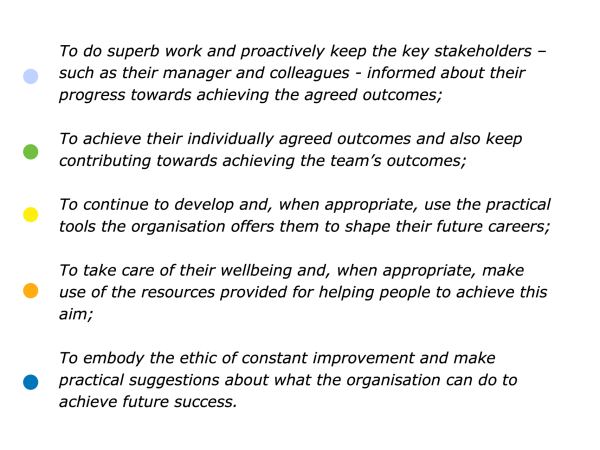
Good organisations aim to build a positive environment in which motivated people can achieve peak performance. They also communicate the organisation’s purpose, principles and picture of success.
Such organisations explain the professional deal. This describes both the organisation’s responsibilities and the individual’s responsibilities in working to achieve the goals.
They then give people chance to reflect on whether they want to contribute. If so, they make clear contracts with individuals about their best contributions towards achieving the goals. Here is one example of the kind of deal that may be explained to people.
The Peak Performance Approach
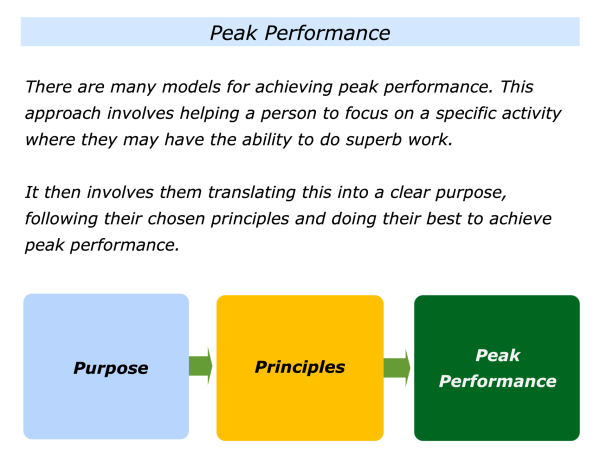
This approach involves helping a person to focus on a specific activity where they may have the ability to do superb work. It then involves them translating this into a clear purpose, following their principles and doing their best to achieve peak performance.
There are many definitions for peak performance. The one we are using here is:
A person focusing on a specific activity and becoming the best they can be.
Such a person may focus on an activity where they deliver As rather than Bs or Cs. It may be one that gives them positive energy. They may then translate this into a specific project and aim to achieve their picture of success.
They may focus on an activity where they feel in their element – at ease and yet able to excel. They may then aim to do work that is effective, excellent and maybe even extraordinary.
Such a person may aim to build on their strengths, follow strategies that work and achieve success. They may aim to make a positive contribution, pass on knowledge and sometimes experience a sense of peace.
There are also many models for achieving peak performance. The following pages describe one approach that can be taken to help people to do their best to achieve their chosen goals.
Purpose
People love to have a sense of purpose. One approach is for them to follow a passion, translate this into a clear purpose and work towards their picture of success. Let’s explore these themes.
Passion
Some career coaches advise people to follow their passion. Others say this is not good advice. They suggest that people should focus on the things they do best.
Great workers often combine these elements. They pursue a passion where they have the ability to do superb work. They may feel passionately about encouraging people, doing creative projects, finding a medical cure or doing another activity.
Imagine that you want to help a person to follow this path. What are the things they feel passionately about? What are those where they may have the ability to deliver peak performances?
Purpose
People love to have a sense of purpose. This can bring meaning and structure to their days.
Great workers may translate their passion into a clear purpose and focus on a specific thing they want to do. Different people do this in different ways.
Some people focus on a long-term purpose. They may aim to follow a spiritual faith, a vocation or a sense of mission. They then aim to express this in various ways in their life and work.
Some people focus on a short-term purpose. They may aim to write an article, climb a mountain, finish a marathon, teach an inspiring course, lead a team to success or achieve another goal.
Different people describe different things regarding their purpose. Here are some that they may mention.
My Purpose
The specific thing I want to do is:
I want to encourage people … I want build a happy family … I want to help people to live healthy lives … I want to help people to become the architects of their own lives.
I want to help dyslexic people to build on their strengths … I want to write articles that inspire people … I want to create enriching environments that enable people to grow.
I want to find a specific medical cure … I want to create technology that simplifies people’s lives … I want to give people practical hope … I want to pass on knowledge that helps people to build a positive world.
Imagine that you have helped a person to begin to translate their passion into a purpose. This can lead to the next stage.
Picture Of Success
Great workers realise that, whilst they may aim to follow a purpose, they may need to express this in various ways in the life and work. Bearing this in mind, they may aim to do a specific project or work to achieve a specific goal.
Imagine that you want to help a person to follow this path in their own way. When doing so, you encourage them to explore some of the following questions.
What is the specific project I want to do or the specific goal I want to reach? What are the real results I want to achieve? What is the picture of success? What will be happening that will show I have achieved the goal?
What will be the benefits of achieving the goal? What will be the pluses and minuses involved in working to achieve the goal? How can I build on the pluses and manage the minuses?
Bearing in mind what is involved, on a scale 0-10 how high would I rate my motivation to do the work? How can I maintain or improve the rating? Make sure the rating is at least 8+/10.
Imagine that the person has worked through these themes. If appropriate, one approach is for them to complete the following framework.
My Picture Of Success
The specific project I want to do or
the specific goal I want to reach is:
To …
The real results I want to achieve are:
To …
To …
To …
The specific benefits of
achieving these results will be:
To …
To …
To …
This purpose section has focused on ‘What’ a person wants to do and ‘Why’ they want to do it. The next step involves focusing on the ‘How’.
Principles
Great workers often follow their chosen principles when aiming to reach a goal. They aim to be super professional and, when necessary, find solutions to problems. Let’s explore these themes.
Principles
Imagine that a person has chosen to focus on achieving a specific goal. What are the principles they want to follow when doing the work? How can they translate these into action?
Different people follow different principles and much depends on the work they are doing. Here are some they may mention.
My Principles
The principles I want to
follow when doing the work are:
To be compassionate in my work in the hospice … To be a good educator who enables people to shape their futures … To help people to build on their strengths, follow strategies that work and achieve success.
To make natural history programmes that encourage people to take care of the planet … To create a positive culture in which people can do positive work and get positive results … To create wins for our company, wins for our customers and wins for our colleagues.
Bearing in mind the principles they want to follow, some people then focus on how to translate these into action. Some do this by exploring the following questions.
What is the specific goal I want to achieve? What are the principles I want to follow when working to achieve the goal? What are the reasons why I believe in following these principles?
How can I translate these principles into action? What are the key strategies I can follow to increase the likelihood of achieving success? How can encourage myself and other people on the journey?
Imagine that the person has clarified the principles they want to follow. The next step involves the following theme.
Professionalism
Great workers aim to be super professional and deliver consistently high standards. They aim to do this whether counselling people, coaching a sports team, leading a business or doing other kinds of work. Such people often take the following steps.
They prepare properly. They look ahead, clarify the results to achieve and rehearse following their chosen strategies to achieve the goal. They then click into action.
They are super professional and encourage other people. They aim to get some early wins, perform superb work and provide great service. They do their best to achieve success.
They focus on continuous improvement. They keep doing reality checks to clarify what is working, what they can do better and how. They then implement these ideas to keep improving.
Such workers may also aim to act as positive models for other people. The way they behave can set the tone. It can also encourage other people – especially when times get tough.
Imagine that the person is delivering high professional standards when doing a piece of work. It can then be time to explore the next theme.
Problem Solving
Great workers find solutions to challenges. Some even use setbacks as a springboard to success. Each person will do this in their own way, but it can be useful for them to explore some of the following questions.
Looking ahead, what may be some of the difficulties I may face on the journey? What can I do to prevent some of these difficulties happening? How can I manage these difficulties if, despite my best efforts, they do happen?
What can I do to stay calm during a crisis? How can I buy time to think and explore the options for going forwards? How can I find creative solutions to challenges? How can then pursue my chosen option and do my best to achieve success?
Imagine that the person is delivering consistently high standards. Sometimes this can be enough to reach the goal. But there may be times when they want to move on to the following theme.
Peak Performance
Great workers do their best to deliver the goods and achieve peak performance. Some go further and aim to pass on knowledge to other people. Sometimes this can lead to a sense of peace. Let’s explore these themes.
Peak Performance
Great workers often rise to the occasion and, when appropriate, deliver peak performances. They may do this when playing a sport, performing a song, conducting an operation, tackling a challenge or doing another activity.
They use their radar to gather information, see patterns and predict what may happen. Reaching into their repertoire of skills, they then apply their knowledge to deliver the desired results.
Such workers seem to go into another dimension. They seem to act slowly but swiftly. They then do something special to deliver peak performances and achieve the picture of success.
Imagine the person is follow this approach in their own way. Sometimes it can be useful for them to explore the following themes.
How can I be a good finisher? Looking back, what is my successful pattern for finishing? How can I follow those principles in this situation? How can I flow, focus and finish?
How can I keep doing the basics and, when appropriate, add the brilliance? How can I add that touch of class? How can I do my best to achieve peak performance?
Imagine that the person has completed the piece of work. They may simply want to rest, reflect and re-energise themselves. At some point they may also wish to consider the following theme.
Passing On Knowledge
Great workers sometimes want to go beyond doing fine work. They want to share what they have learned with other people. How can they do this in their own way? One approach is to start by focusing on the What, Why, Who, How and When.
The What
What is the knowledge they want to pass on? This may depend on the project or other activity they have been pursuing. They may have learned lessons from gardening, counselling, building houses, managing crises, coding, leading teams, solving particular problems or whatever.
The Why
Why would they like to pass on this knowledge? What would be the benefits for people? What are the practical tools they could take away and use in their daily lives and work? How could these things help them to succeed?
The Who
Who would they like to reach with the knowledge? Would they be young people, those with learning difficulties, budding entrepreneurs, athletes, leaders, scientists, social entrepreneurs, therapists or other people?
The How
How would they like to share their knowledge with people? Different people prefer different methods for sharing know how. They may prefer, for example:
To act a positive model and show what good looks like on a daily basis by, for example, running a business;
To act as a mentor, coach, trusted advisor or to run teaching sessions, seminars, workshops or other forms of education;
To write articles, create websites, write blogs, produce learning materials, make videos, make television programmes or whatever.
The When
When do they want to share the ideas with people? What would be their preferred setting? Would they like to run a seminar, produce a blog, run a coaching session or whatever?
Peace
Great workers love to do their best. This can lead to them enjoying a sense of peace. This can take different forms.
A person who is adrenaline-driven may enjoy stretching themselves and reaching a specific goal. This may be followed by a rush of satisfaction and feeling high.
Such a person may then enjoy a sense of peace but this may only last for a short while. They will then move on to planning the next mountain they want to climb.
Another person may pause and feel content in a positive way. They may take time to reflect, recentre and re-energise themselves. They may then begin to explore the next thing they want to do their best to achieve peak performance.
Let’s return to the themes we have explored in this piece. There are many ways of working with people. These can sometimes involve following the pastoral, professional contract or peak performance approaches.
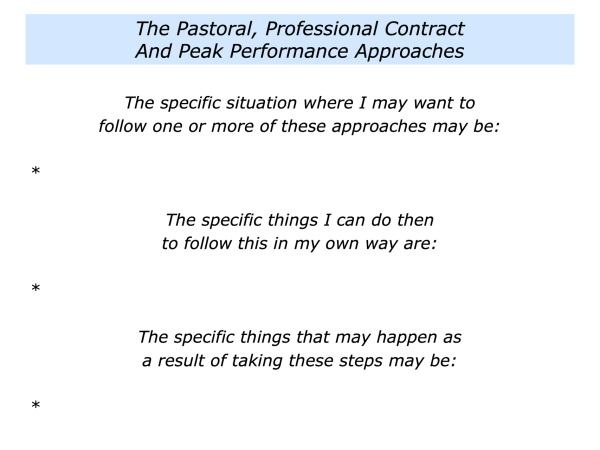
Looking ahead, can you think of a situation where you may want to follow one or more of these approaches? How can you follow this in your own way? What may happen as a result of tacking these steps?
If you wish, try tackling the exercise on this theme. This invites you to complete the following sentences.

Leave a Reply