



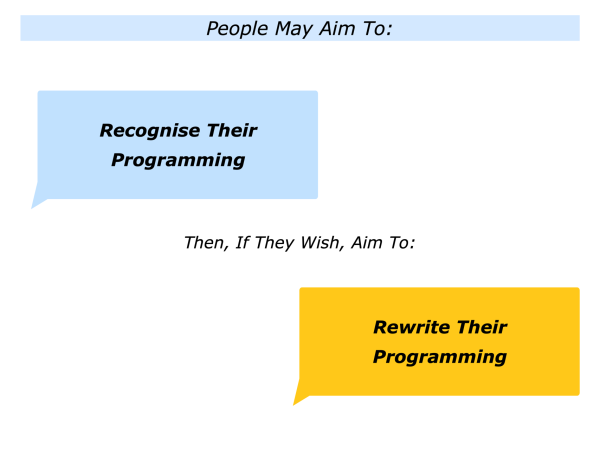
There are many ways to try to understand people. One approach is to recognise their personal programming. This is like a positive or negative pattern or script they follow in certain situations.
People are human beings, of course, rather than robots. They can choose to recognise and, if they wish, rewrite their programming. They can then aim follow this programme to get positive results.
Different people may follow this approach in different ways. Whatever route they take, however, this often involves them focusing on the following themes.
Recognising Their Programming
The first step may be for a person to recognise the programming they may follow in a certain situation. This can involve focusing on:
The pattern they may follow in a specific situation;
The personal attitude they may demonstrate, the way they translate this into action and the actual words they may say in the situation;
The possible consequences this may have – for themselves or other people – in the situation.
Some people may follow a positive programme that produces positive results for themselves or other people. Some may follow a programme that produces negative or other consequences.
The Personal Programming approach has similarities to what some people call the Personal Scripting approach.
People May Follow Positive
Scripts Or Negative Scripts
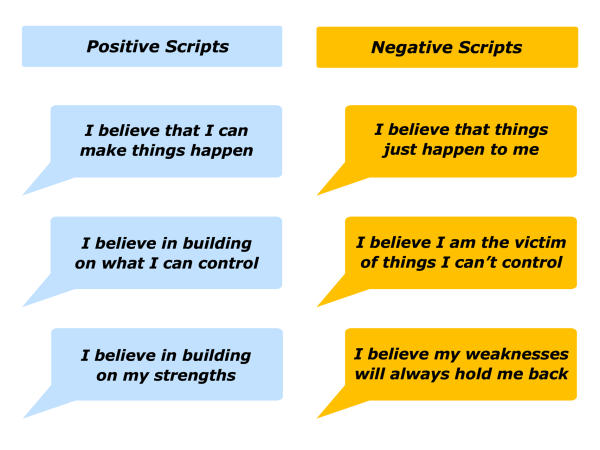
Different people follow different scripts in their lives. Some may follow positive scripts, some may follow negative scripts. The scripts they choose to follow can have consequences for themselves and other people.
Bearing this in mind, sometimes it can be worth exploring the old question regarding our daily conversations with people. This is:
“Who is the person you have the most conversations with?”
The answer is, of course, yourself. A person may have multiple conversations going on inside their head but there may be certain themes to which they keep returning. These themes can become positive or negative scripts.
A person with a positive script may say: “I believe that I can make things happen.”
A person with a negative script may say: “I believe that things just happen to me.”
A person with a positive script may say: “I believe I can do things to shape my feelings.”
A person with a negative script may say: “I believe there is little I can do to affect my feelings.”
A person with a positive script may say: “I believe in aiming to do my best in life.”
A person with a negative script may say: “I believe that the odds in life will always be against me.”
The idea of scripting became popular in the 1960s. Eric Berne, the founder of Transactional Analysis, explained that individuals learn life scripts that act like an internal programme.
People may translate this programme into a script that they follow in certain situations. As mentioned earlier, the way they follow this can have positive, negative or other consequences.
A person can get to a point in life, however, where they choose to create their own scripts. They may do this after encountering a difficult situation or deciding they want to take more control of their life.
When writing their own script it is vital for them to keep one thing in mind.
They need to focus on the things they can control rather than the things they can’t control.
Imagine that you are a sports psychologist who is helping an athlete who often get to the final of events and then falls apart. They may have two contradictory messages going through his head. These may be:
“I must try to win, but I am bound to lose.”
Some people may advise such a person to believe in themselves. They may advise them to keep saying:
“I am going to win.”
This may or may not work. One challenge, however, is that such an approach is focusing on something the athlete cannot control. Another approach is to invite the athlete:
To focus on what they can control … To write a script they believe in … To then do their best to follow this in specific situations.
Bearing this in mind, the athlete may say something like:
“I am going to aim to flow rather than freeze.”
People who write their own scripts also shape their mental model – the way they perceive life. This often influences the running commentary they may have inside their head. Such people sometimes take the following steps when working through this approach. They aim:
To create a positive script they want to follow;
To take practical steps to translate this into action;
To take time to pause – especially when things get tough – and revisit their positive script.
There are many factors that can make up a person’s programme. These can include: a) the attitude they demonstrate; b) the way they translate this into action; c) the actual words they say – both to themselves and others – in a situation.
Imagine that a person wants to recognise a programme they may follow in a certain situation. One approach is for them to do the following exercise.
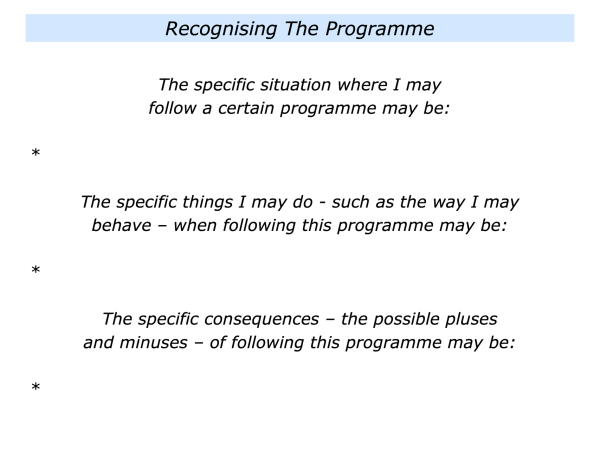
Recognising The Programme
This exercise invites a person to do the following things when focusing on a personal or professional situation. They can aim:
To clarify a specific situation where they may follow a certain programme;
To clarify the actual things they do – such as the way they behave – when following this programme;
To clarify the consequences – the pluses and minuses – of following this programme.
Here is the exercise on this theme. This invites a person to complete the following sentences.
Rewriting The Programme
Imagine that a person has recognised that a programme – a pattern – they follow in a situation does not get them the desired results. This could be a situation in their personal or professional life.
Such a person may then aim to rewrite their programme and behave in a way that increases the chances of getting the desired results. One approach is for them to do the following exercise.
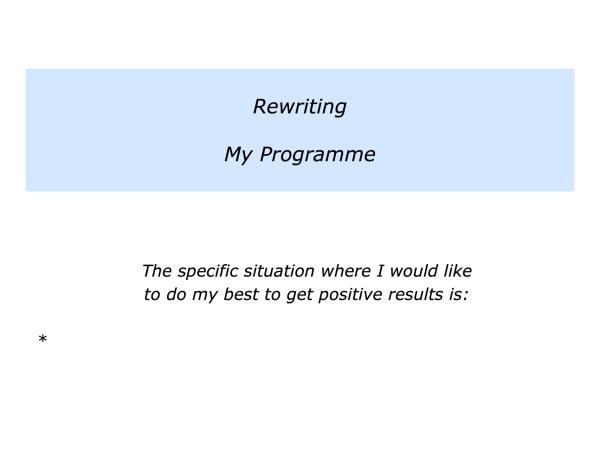
Rewriting My Programme
– The Dos And Don’ts
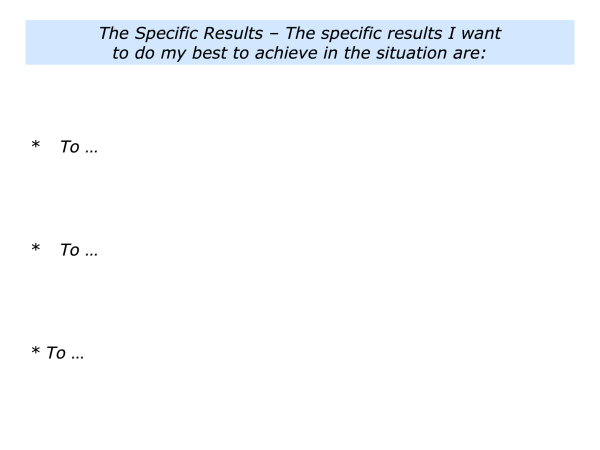
The person can start by clarifying a specific situation where they would like to do their best to get certain results. They can then aim:
To clarify the results they would like to achieve for themselves and, when appropriate, also for other people in the specific situation;
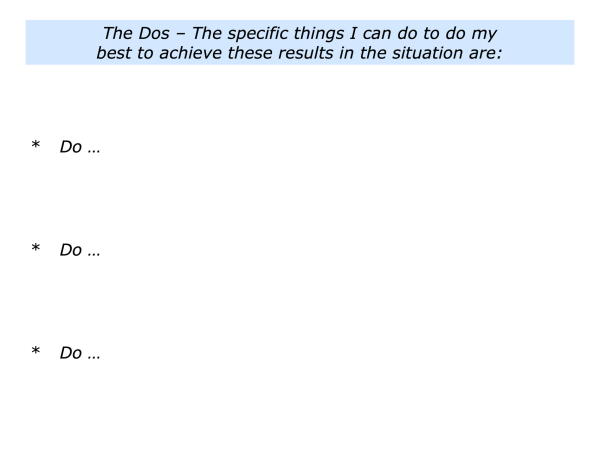
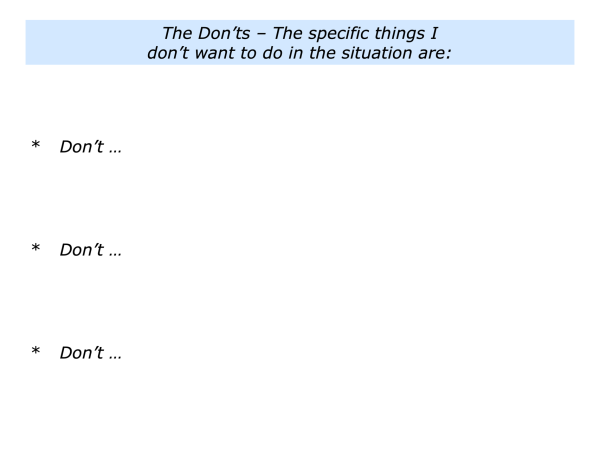
To clarify the programme – the Dos and Don’ts – they want to follow to do their best to get those results in the specific situation;
To clarify how to translate these Dos and Don’ts into action and rehearse following them to get these results in the specific situation.
Different people work through these steps in different ways. One approach is for them to do the following exercise.
The Positive Mantra Approach
Some people take another step after rewriting their programme. They create a positive mantra that they can say to themselves to focus on the principles they want to follow in a situation.
Some athletes follow this approach. They may have a positive mantra they say to themselves to cut out any distractions and focus on the task in hand. For example, they may say something like:
Be positive, be present, do your personal best.
It is vital that a person creates a mantra that means something to them. They can then keep reminding themselves to follow their chosen principles and do their best in the situation.
There are many ways to live life. One approach is for people to recognise and, if appropriate, rewrite their personal programming regarding how they behave in certain situations.
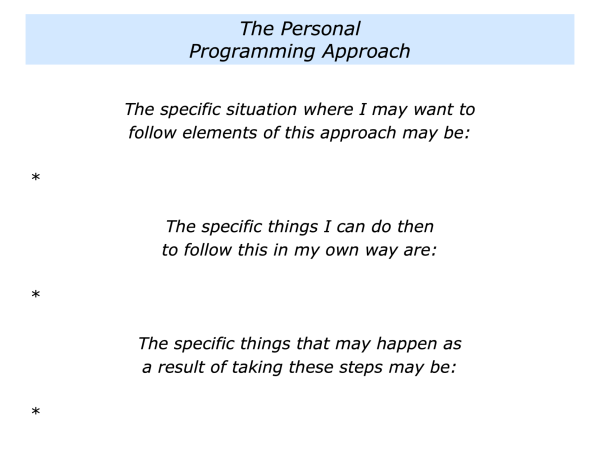
Let’s return to your own life and work. Can you think of a situation where you may want to follow elements of this approach. This could be in your own life or when helping other people.
If you wish, try tackling the exercise on this theme. This invites you to complete the following sentences.

Leave a Reply