


Many people want to build positive relationships. The ways that people communicate, however, can help or hurt a relationship. Bearing this in mind, one approach is to recognise that:
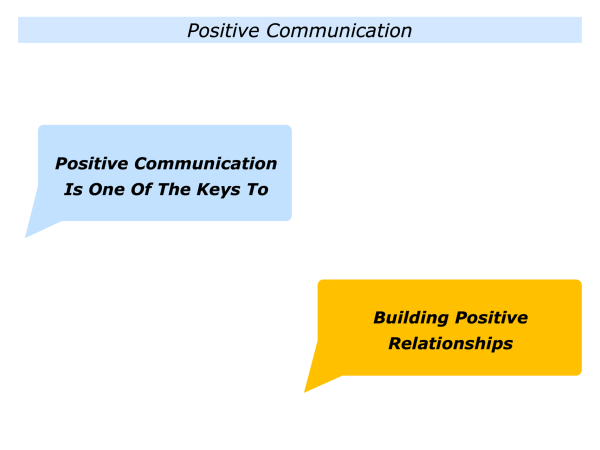
Positive communication is one of the
keys to building positive relationships
The positive or negative words that people use at the start of a conversation, for example, can set the tone and have a strong influence on the atmosphere they create.
Family therapists often focus on the way that couples communicate with each other. Partners who communicate in a caring and encouraging way are more likely to thrive than those who criticise each other.
Positive communication can
help to build a relationship
This can involve somebody taking personal responsibility, encouraging the other person and focusing on the future to find solutions to challenges.
Negative communication
can hurt a relationship
This can involve somebody not taking personal responsibility, criticising a person and blaming other people for specific incidents in the past.
Imagine that you want to follow the elements of the positive communication approach. This could be in your personal or professional life.
Whatever the situation, it can sometimes be useful to focus on the following themes.
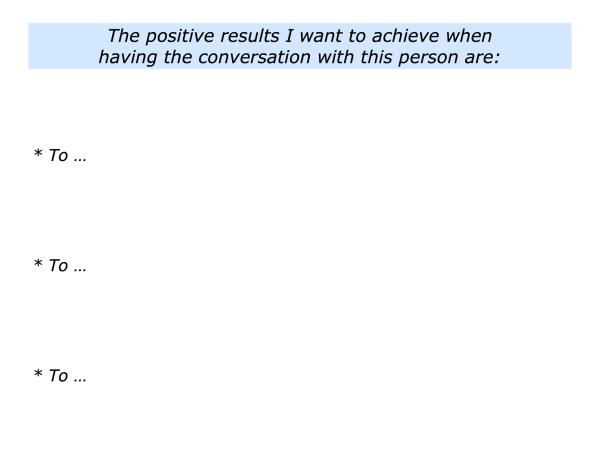
You can prepare properly and clarify the positive results you want to achieve.
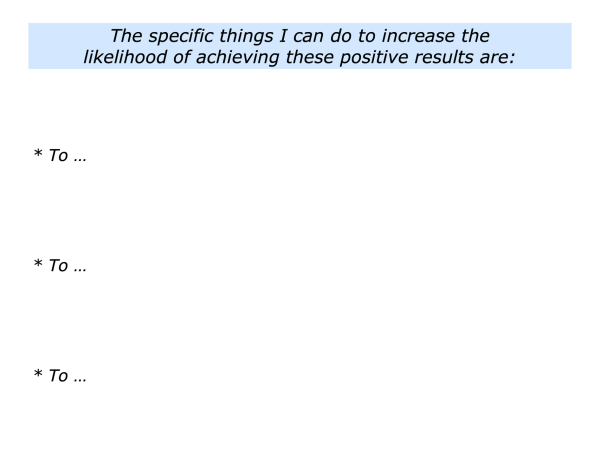
You can clarify the specific things you can do to increase the chances of achieving the positive results.
You can start the conversation in a positive way and do your best to achieve the desired positive results.
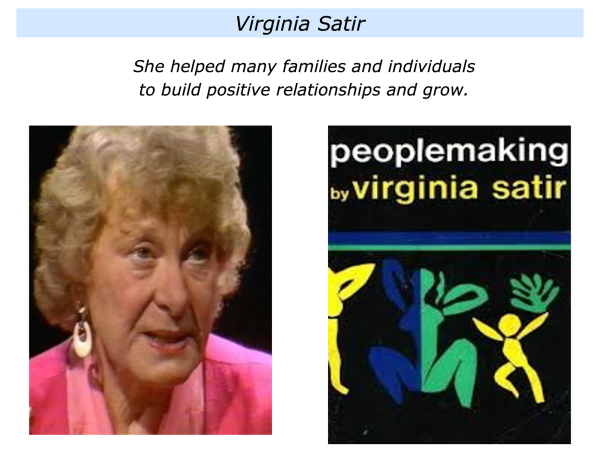
Many people have written about the importance of communication in relationships. Virginia Satir, for example, was a pioneering family therapist who helped many people to communicate clearly and grow.
Best known for her remarkable work in therapy sessions, aspects of her work were also passed on her books. Virginia expressed some of her ideas in the following ways.
Communication is to relationships what breath is to life. My dream is to make families a place where people with high self-esteem can develop.
I regard parenting as the hardest, most complicated, anxiety-ridden, sweat-and-blood-producing job in the world. Succeeding requires the ultimate in patience, common sense, commitment, humour, tact, love, wisdom, awareness, and knowledge.
At the same time, it holds the possibility for the most rewarding, joyous experience of a lifetime, namely, that of being successful guides to a new and unique human being.
Every word, facial expression, gesture, or action on the part of a parent gives the child some message about self-worth. Once a human being has arrived on this earth:
Communication is the largest single factor determining what kinds of relationships they make with others and what happens to them in the world about them.
Virginia’s work helped people to see how the way that they behaved could affect other people. She passed on many practical tools that people could use to communicate in healthy ways that encouraged other people.
Let’s return to your own life. Imagine that you want to continue to communicate in a positive way. Looking ahead, can you think of a situation where you may want to have a conversation with a person?
You may want to encourage the person, work well together or maybe even want the person to behave differently in the future. Whatever the situation, it can be worth going through the following steps.
You can prepare properly and clarify
the positive results you want to achieve
Imagine you are going to have a conversation with a person. It can be useful to prepare properly. One approach is to start by clarifying the positive results you want to achieve in the conversation.
Much depends, of course, on whether this is a personal or professional situation. Bearing this in mind, however, it can be useful to explore the following themes.
Would you like the person:
To feel encouraged … To feel you have their interests at heart … To feel you recognise their goals and challenges … To feel you want to help them to shape a positive future.
To be clear on the professional goals to achieve … To recognise the strategies they can follow … To be clear on the working contract going forwards … To know when they have achieved the picture of success.
Imagine that you have taken this step. You may then want to focus on the next theme.
You can clarify the specific things you can do to
increase the chance of achieving the positive results
Let’s assume that you have clarified the positive results you want to achieve. Bearing in mind what you can control in the situation, how you can do your best to achieve these results?
As mentioned earlier, much depends on the situation. If appropriate, however, you may aim:
To help the person to feel at ease … To start the conversation in a positive way … To encourage the person to keep building on their strengths … To, when appropriate, help the person to achieve their goals.
To, in a professional situation, explain the goals for the conversation … To invite the person to, if they wish, add to the topics to explore … To keep following the strategies most likely to achieve the desired positive results.
You may want to achieve other results. There may be situations, for example, where you may need to have a conversation with a team member who is behaving in an unprofessional way. You may then aim:
To explain to a person that they have several options going forwards and that each option has consequences;
To explain that, if they wish, they can choose to behave in a professional way in the future and this could be beneficial for both them and the team;
To explain that you will give them time to reflect and the person to then can get back to you to say which route they want to follow in the future.
Let’s return to the conversation you may want to have with a person in your personal or professional life.
Imagine that you have clarified the specific things you can do to increase the chances of achieving the desired results. If appropriate, you can then mentally rehearse following these strategies. This then leads to the next step.
Good communicators recognise that the way they start a conversation can set the tone. They therefore aim to, whenever possible, start the conversation in a positive rather than negative way.
They recognise that the approach they follow – and the words they use – can have an emotional impact. In a professional situation, for example, they may aim:
To create a positive environment, be fully present and aim to make the other person the centre of their world;
To describe the topics they want to explore and, when appropriate, invite the other person to add to the agenda;
To then follow the strategies most likely to achieve the desired positive results in the session.
Good communicators also try to, as far as possible, finish a conversation in a positive way. This can help people to continue to live and work well together.
Let’s return to your own life and work. Looking ahead, can you think of a situation where you may want to follow elements of the positive communication approach? How can you do this in your own way?
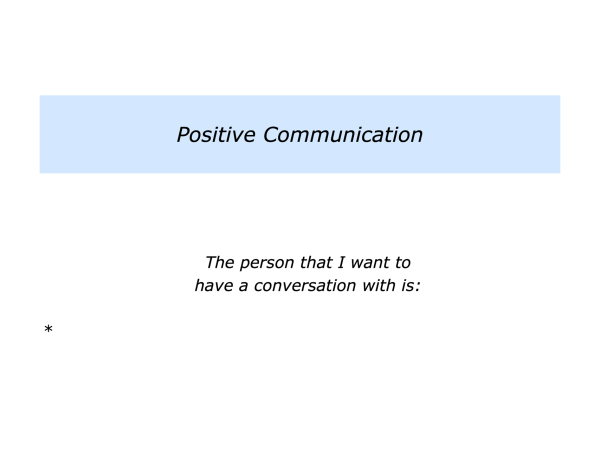
Who may be the person with whom you want to have a conversation? What may be the positive results you want to achieve? How can you do your best to achieve these results?
If you wish, try tackling the exercise on this theme. This invites you to complete the following sentences.
You can start a conversation in a positive way and
do your best to achieve the desired positive results

Leave a Reply