


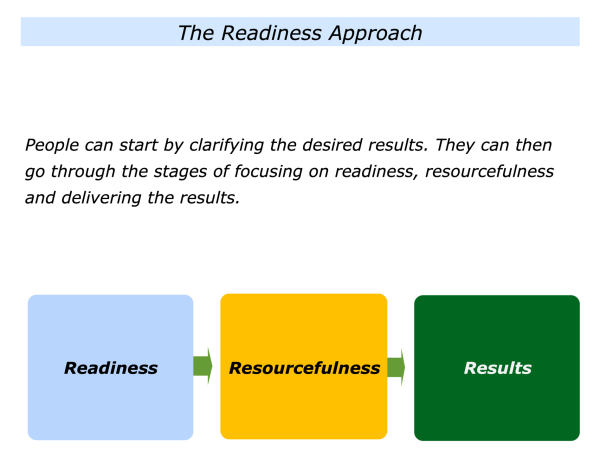
There are many ways to do fine work. Some people aim to follow the readiness approach rather than the rusty approach. Different people follow this in different ways.
Good leaders, for example, often start by clarifying the desired results. They encourage their people to go through the stages of focusing on readiness, resourcefulness and delivering the desired results.
Imagine that you lead an organisation and want to follow elements of this approach. This can involve focusing on the following themes.
Results
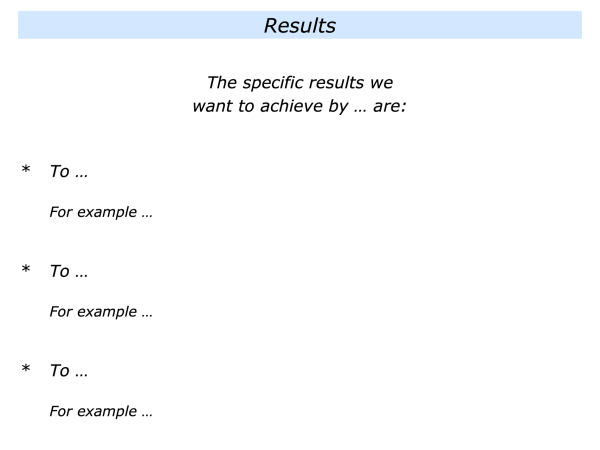
Good leaders start by clarifying the desired results. One approach is to pick a date in the future and clarify the outcomes the organisation wants to achieve by that date.
Much depends, of course, on the kind of work the organisation is doing. A school, sports team, theatre group, startup business, commercial company or other organisation will have different goals.
Bearing this in mind, if you wish try tackling the exercise on this theme. First, pick a date in the future. Second, describe the specific results you want the organisation to deliver by that date.
Readiness
Good leaders help their people to develop the readiness required to deliver the desired results. Here is one definition for the word readiness.
Readiness is the state of being fully
prepared for an action, task, or situation
Good organisations provide their people with the resources they need to develop this ability. Some do this by taking the following steps.
They start by communicating the organisation’s purpose, principles and picture of success. They also show the benefits – to all the various stakeholders – of achieving this picture of success.
They communicate the strategies people can follow to achieve the goals together with the reasons for these. They then invite people to make clear contracts about their best contributions. This includes providing the support they need.
They enable people to improve their readiness by anticipating potential challenges. They help people to develop practical ways they can prevent or, if necessary, manage such challenges.
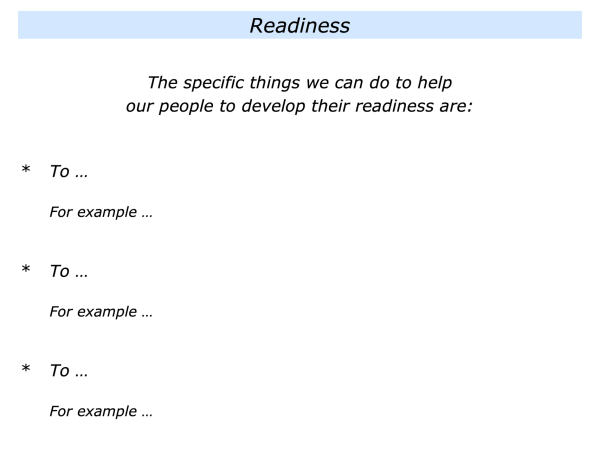
Imagine that you lead an organisation and want to help your people to develop their readiness. How could you do this in your own way? If you wish, try tackling the exercise on this theme. This invites you to complete the following sentences.
Resourcefulness
Good organisations encourage their people to be resourceful when performing superb work. This also involves encouraging them to be creative and find solutions to challenges.
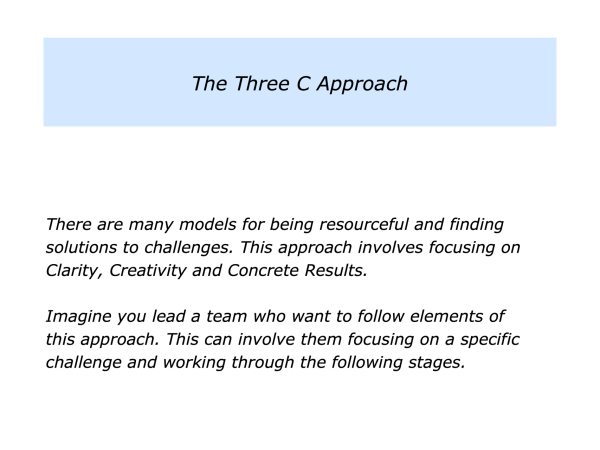
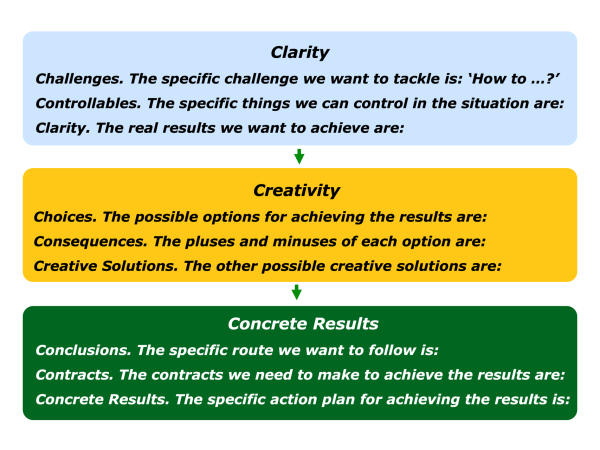
There are many ways to help people to take this step. One organisation I worked with ran sessions where people used the Three C Model for finding solutions. This involved focusing on Clarity, Creativity and Concrete Results.
People started by brainstorming the challenges facing the organisation. They focused on one specific challenge and framed it in ‘How to …’ terms. People then worked through the following steps
Clarity
This involved people aiming: a) to clarify the challenge; b) to clarify the things they could control in the situation; c) to clarify the real results to achieve and the benefits of achieving these goals.
Creativity
This involved people aiming: a) to clarify the possible choices going forwards; b) to clarify the consequences of each option; c) to clarify any other potential creative solutions.
Concrete Results
This involved people aiming: a) to clarify the route they wanted to follow; b) to clarify any working contracts they may need to make; c) to clarify their action plan for getting concrete results.
Different organisations encourage people to be resourceful in different ways. Here is an overview of one framework that it is possible for people to follow when aiming to find solutions to challenges.
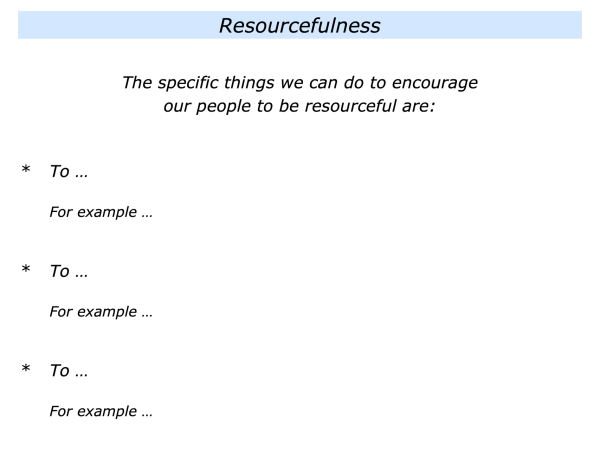
Imagine that you lead an organisation. How can you encourage your people to be resourceful? How can you help them to anticipate any challenges they may face?
How can they prevent some of these challenges happening? How can they manage some of these challenges that, despite their best efforts, do happen? How can you encourage them to be resourceful and find solutions to challenges?
If you wish, try tackling the exercise on this theme. This invites you to complete the following sentences.
Results
Good organisations build on people’s strengths. They make clear contracts with people about their best contributions. They also give them the support they need to do the job.
Then then manage by outcomes rather than by tasks. They encourage people to perform superb work, find solutions to challenges and do their best to achieve the desired results.
Such organisations also encourage people to proactively report the progress they are making towards achieving the goals. Some do this by encouraging people to focus on the following themes.
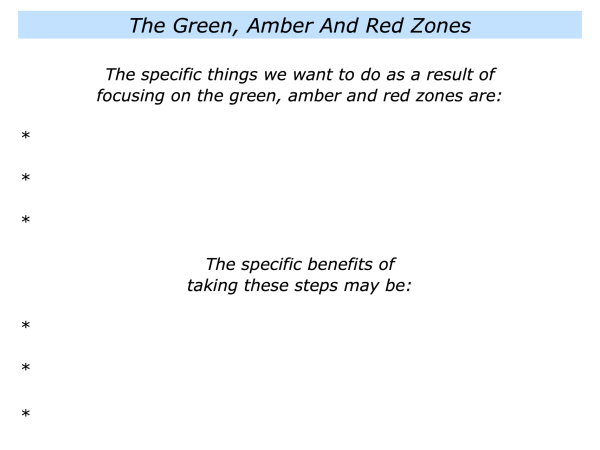
The Green, Amber And Red Zones
One organisation I worked with had a dedicated room where people kept focusing on the picture of success. They also kept doing reality checks regarding the activities that were in the green, amber and red zones. The room had charts that covered the following areas.
The Picture Of Success
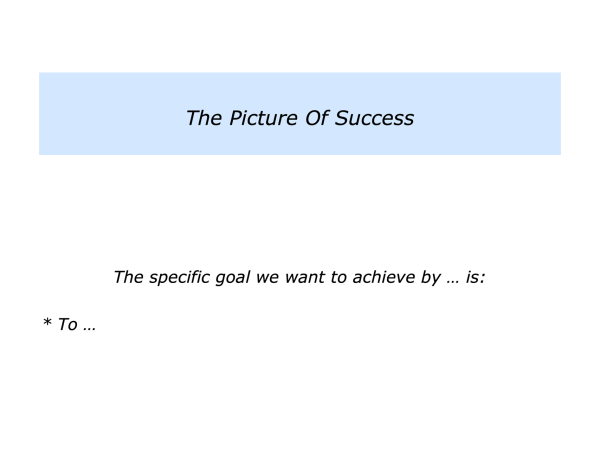
People kept referring to the organisation’s aims that were displayed on one wall. These were grouped in terms the goals to achieve under the Three Ps: profits, products – including customer satisfaction – and people.
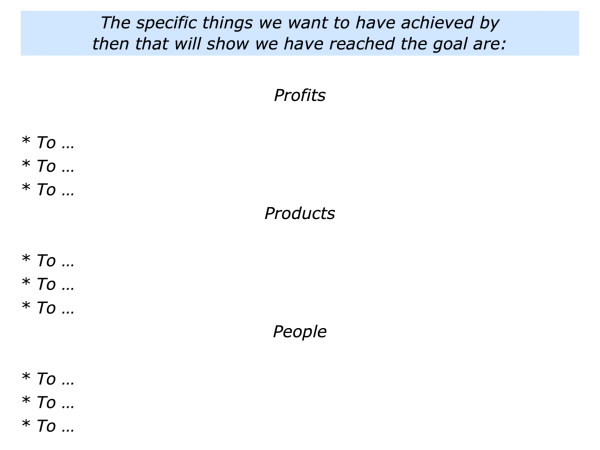
The other walls had the following charts that described the current state of play regarding various activities.
The Green Zone
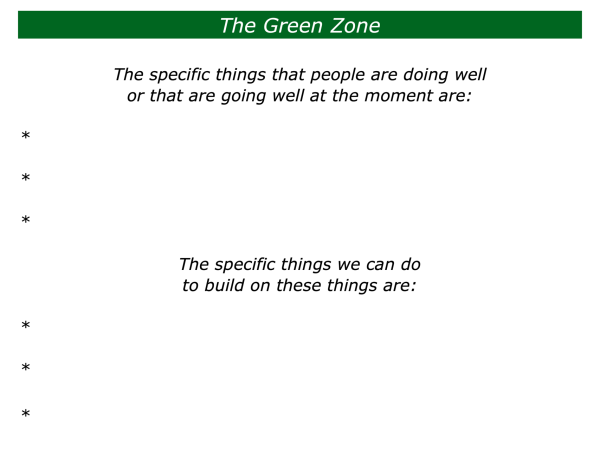
People listed the things that people were doing well or things that were going well. They also provided concrete suggestions regarding how to maintain or build on these activities.
Great workers build on what is working. If things are going well with a particular customer, for example, they explore how to continue providing great service. This can lead to developing the relationship even further.
People kept adding to the following chart. They then focused on how to implement these ideas in a way that helped the team to achieve its picture of success.
The Amber Zone
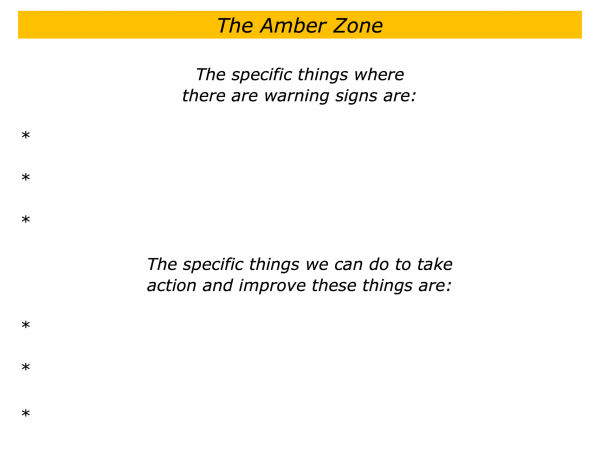
People described the things where there were potential warning signs. They also provided suggestions regarding how to improve these activities or situations.
Great workers worry about things that are in the amber zone. They are concerned that, unless these issues are addressed, these may quickly slide into the red zone. So they focus on how to move these activities more towards the green zone.
Bearing this in mind, people clarified any issues that were in the amber zone. They also focused on the specific steps that could be taken to improve these things.
The Red Zone
Great workers think ahead to ensure that things do not slide into the red zone. Crises do occur, however, so it is then vital to find positive solutions. There may be some issues, however, that are continually falling into the red zone. If systems are breaking down, for example, these may well need replacing.
A more challenging issue could be if a particular customer continually makes life difficult. Certainly it is vital to do whatever possible to provide great service but some customers may prove impossible to please.
They may also prove to be a massive drain on resources. In such cases it may mean deciding to move on from the customer. This can be a difficult but necessary decision.
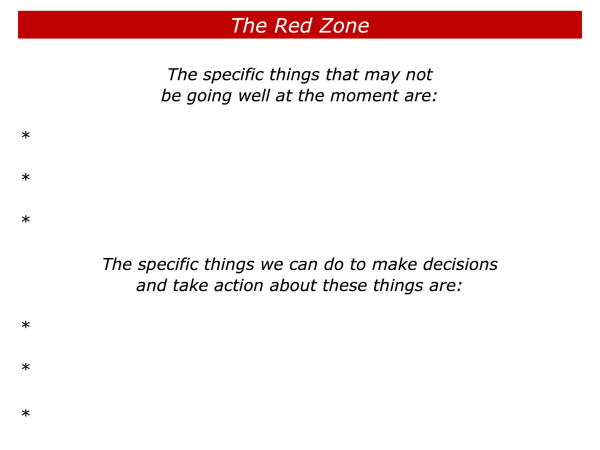
People listed the things that were not going well and gave suggestions regarding how to improve these activities. These could sometimes involve making radical improvements or for taking key decisions.
Taking Action
Imagine that people have described things that may be in the green, amber or red zones. Bearing these in mind, it can be time to focus on the specific actions to take.
How can people build on the things that are in the green zone? How can they tackle any issues that may be in the amber zone? How can they make decisions and take action about things that may be in the red zone?
Looking at these actions, how can people get some quick successes? How can they then maintain the momentum? What may be the benefits of taking these steps?
Here is the final exercise that you can use to pull everything together. This involves focusing on the following themes and continuing to work towards achieving the organisation’s picture of success.
There are many ways to do fine work. Some people aim to follow the readiness approach rather than the rusty approach. Different people follow this in different ways.
Good leaders often start by clarifying the desired results. They then encourage their people to go through the stages of focusing on readiness, resourcefulness and delivering the desired results.
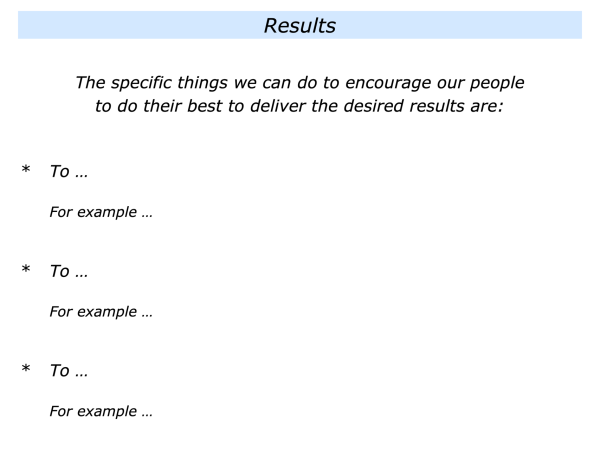
Imagine that you lead an organisation and have followed elements of this approach. How can you encourage people to take the final step and do their best to deliver the desired results?
If you wish, try tackling the final exercise on this theme. This invites you to complete the following sentences.

Leave a Reply