


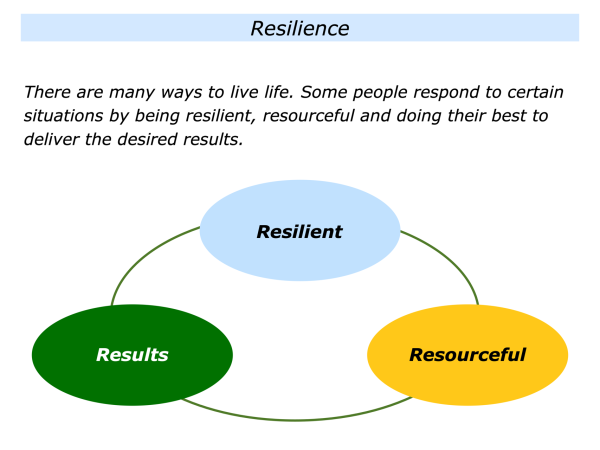
There are many ways to live life. Some people respond to certain situations by being resilient, resourceful and doing their best to deliver the desired results.
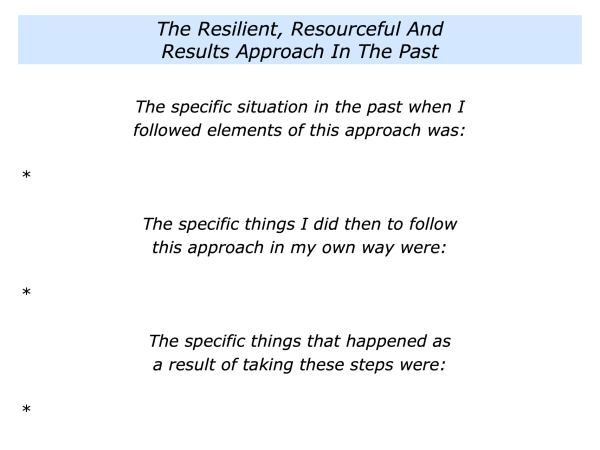
Looking back, can you recall a situation when you followed elements of this approach? You may have done this after suffering a loss, experiencing a disappointment or feeling a sense of injustice.
What was your first reaction to the event? You may have felt angry, hurt or rejected. How did you to take time to heal, reflect and begin to resurface? How did you then aim to be resourceful?
How did you clarify the real results to achieve in the situation? How did you explore the possible ways forward? How did you decide on your chosen route? How did you make your action plan?
How did you move into action? How did you get an early success? How did you maintain the momentum? How did you encourage yourself on the journey? How did you do your best to finish properly and achieve the desired results? What happened as a result of taking these steps?
If you wish, try tackling the exercise on this theme. This invites you to complete the following sentences.
Different people focus on these themes in different ways. Let’s explore how they may translate these into action.
They Are Resilient
You will have your own approach to being resilient but it can also be useful to learn from other people’s experiences.
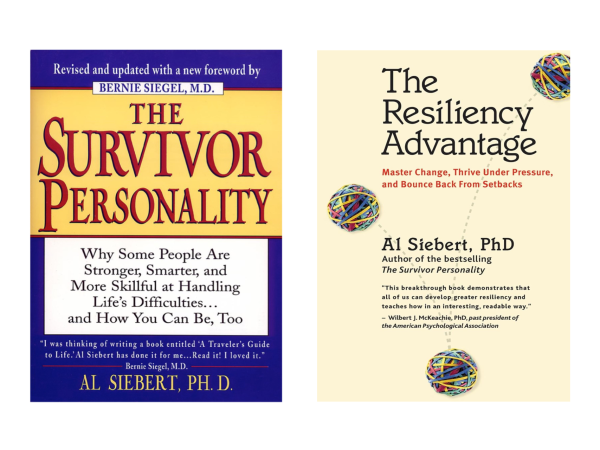
Al Siebert’s books – such as The Survivor Personality and The Resiliency Advantage – laid the foundations for much of today’s work on being resourceful and resilient.
Al spent over 40 years studying life’s survivors – those who grew when overcoming tough challenges. He initially focused on people that met four criteria:
They had survived a major crisis … They had surmounted the crisis through personal effort … They had emerged from the experience with previously unknown strengths and abilities … They had, in retrospect, found value in the experience.
The situations they faced included sexual assaults, life-threatening illnesses, being prisoners of war, addictions, physical attacks and crippling accidents.
How do people cope with such adversity? Some don’t, says Al. They feel victimised, become helpless or lash out at others. Some people do deal with adversity. Al described some of the steps that such people take.
They stay calm, clarify the situation and chart their strategy. Committing to their course of action, they concentrate fully until they reach their chosen goal. Al described this in the following way.
They thrive by gaining strength from adversity and often convert misfortune into a gift.
Are life’s best survivors different from other people? No. They survive, cope, and thrive better because they are better at using the inborn abilities possessed by all humans.
Al outlined some of the qualities that survivor’s demonstrate when tackling challenges. These include the following steps.
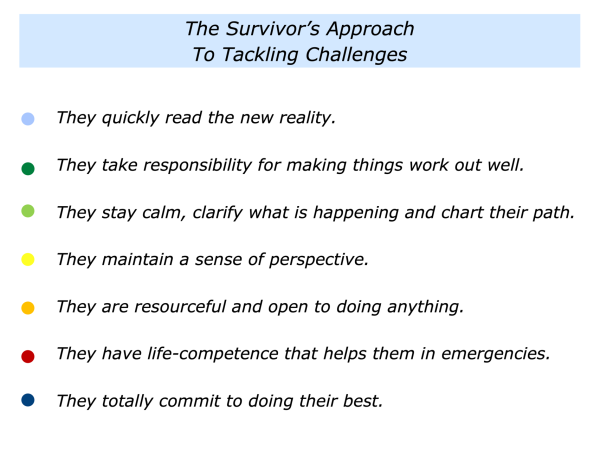
They quickly read the new reality
Survivors have experience of overcoming difficulties in life. They read situations quickly and start considering the consequences. Other people ignore what is happening or bury their heads in the sand. Survivors click into awareness mode and take snapshots of what is actually happening.
They stay calm
Why? They realise it is vital to establish clarity. They must clarify what is happening and then make decisions about the way forward. The best way to do this is to get in the helicopter and take an overall view.
They maintain a sense of perspective
People who are diagnosed with a serious illness, for example, may reframe it as a project. Looking at it from this perspective, they are able to remove themselves and plan the path ahead.
They are resourceful and
open to doing anything
Al found that survivors chose their strategies from a wide repertoire of options. One contributing factor is that they have a quality common to many peak performers. Such people embrace what appear to be seeming paradoxes.
They are able to see the big picture andthe small details, to be focused and flexible, to be serious and playful. This means they are able to see a wider number of options than people who have been trained to behave in one way.
They have life-competence
that helps them in emergencies
Survivors are life-long learners. Such people tend to be savvy rather than having lived a sheltered life. This enables them to read situations, call on their experience and make decisions.
Moving into action, they observe what is happening – what is working and what isn’t – and are prepared to change direction. This is a great advantage when tackling problems or emergencies.
They totally commit to doing their best
Survivors make their decision and throw themselves into pursuing their chosen strategy. They employ every ounce of energy to reach the goal. Al described this in the following way.
The survivor way of orientating to a crisis is to feel fully and totally responsible for making things work out well.
Such people often grow from the experience. They continue to expand their resilience and repertoire, but they also develop a sense of perspective about life. Al described them in the following way.
Resilient adults are happy rather than hostile. They forgive instead of holding grudges and are more playful than serious.
They get better and better every decade because they have a child-like curiosity. They ask questions, explore, want to know how things work, and learn valuable lessons in the school of life.
As mentioned earlier, people who are resilient may also focus on the following theme when tackling challenges.
They Are Resourceful
There are many ways to deal with setbacks, disappointments and challenging situations. Some people choose to be resourceful rather than resentful.
Such people use their creativity to explore the possible ways forward. They then do their best to get the desired results. The following section looks at some of the approaches they may take.
The Building On Your
Resources Approach
Every person has strengths, assets and resources. Some people focus on how they can use these in a situation to tackle a certain challenge or reach a particular goal.
Imagine that you want to clarify your own resources. One approach is to explore the following questions.
What are your personal and professional strengths? What are the activities where you can deliver As rather than Bs or Cs? What are the activities where you have a track record of delivering positive results?
What are your personal and professional assets? You may have a positive attitude, a strong drive and a good imagination. You may have reasonable health, a caring family and encouraging friends.
You may be resilient, focused and able to find creative solutions to challenges. You may have particular strengths and the ability to do strategic thinking. You may be good at helping certain kinds of people to succeed.
What are the other resources that you may have access to? You may have a wide professional network of people of friends, customers and potential employers. You may also have access to certain knowledge and technology that could help you to reach a goal.
Imagine that you have clarified some of your assets. You can then focus on how you can use these to tackle a particular challenge or reach a specific goal.
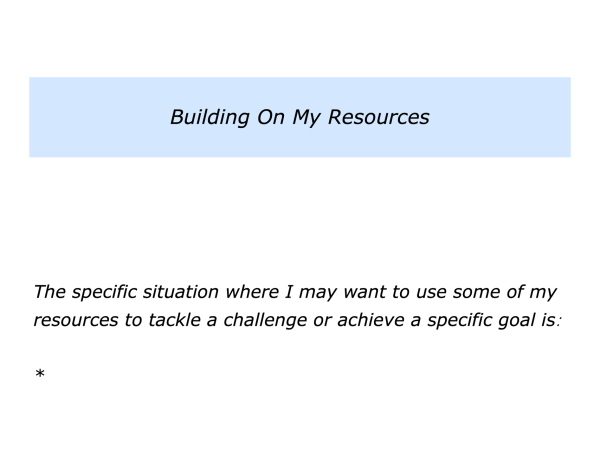
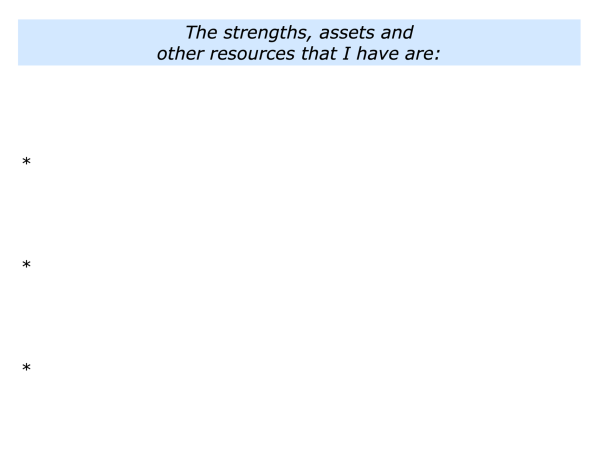
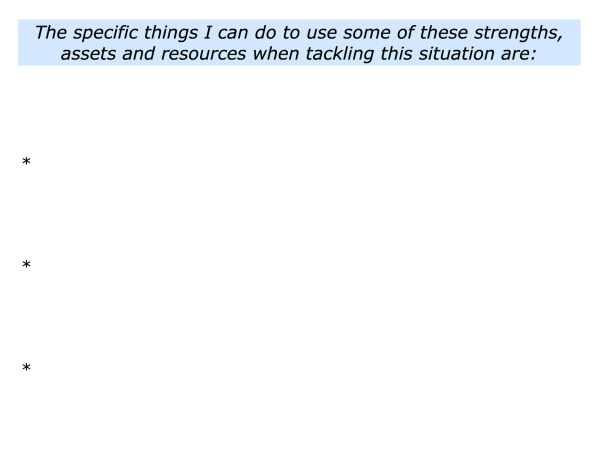
If you wish, try tackling the exercise on this theme. This invites you to complete the following sentences.
The Creative
Problem-Solving Approach
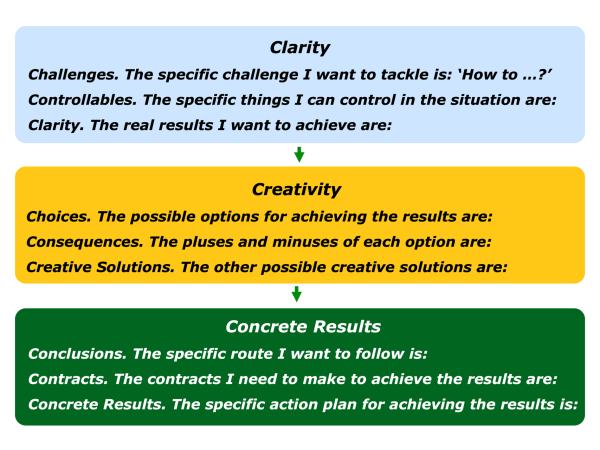
There are many models for being resourceful. One model is to follow the Three C approach for creative problem-solving. Bearing in mind what a person can control in a situation, this involves focusing on the following themes.
Clarity – This involves clarifying the real results to achieve;
Creativity – This involves clarifying the choices, consequences and creative solutions;
Concrete Results – This involves clarifying the action plan for achieving the desired results.
Here is a summary of the themes you can explore when finding solutions to a challenge.
The Guidelines For Thriving When
Looking For A Job Approach
As mentioned earlier, Al Siebert has passed on many ideas that people can use in challenging situations. These included helping people who had lost their jobs.
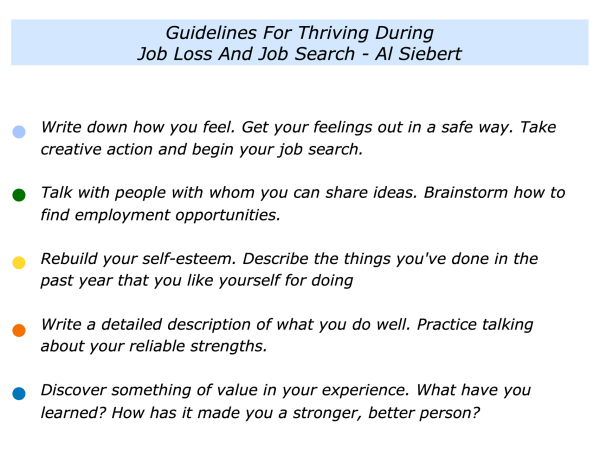
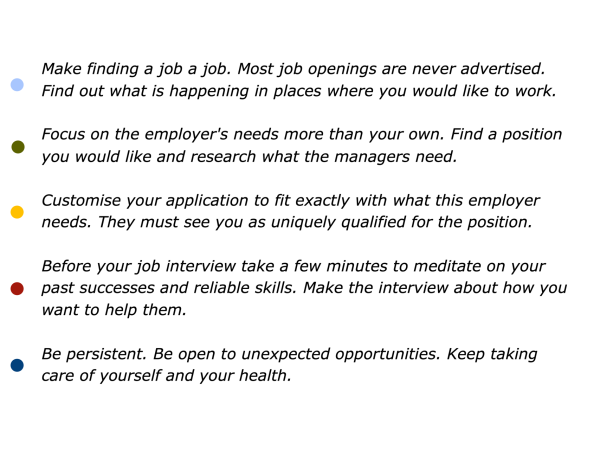
The following ideas from his 1993 book The Survivor Personality are still relevant today.
Losing your job through no fault of your own can wipe you out emotionally. How do you find the energy to search for work? How do you deal with your anger?
How can you be pleasant, relaxed, and self-confident in an interview when you don’t feel that way? Here are some guidelines for handling the emotional challenge of dealing with job loss and searching for new employment.
There are many ways to be resourceful. Whatever approach is taken, however, it can also be useful to bear in mind the following themes when exploring the possible ways forwards. It can be useful:
To build on your strengths;
To follow strategies that work;
To do your best to achieve the picture of success.
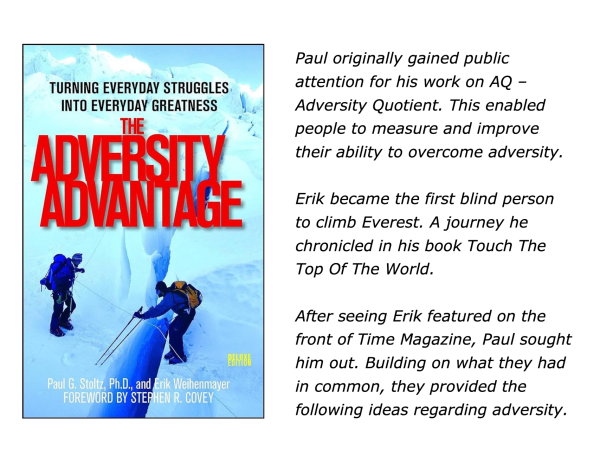
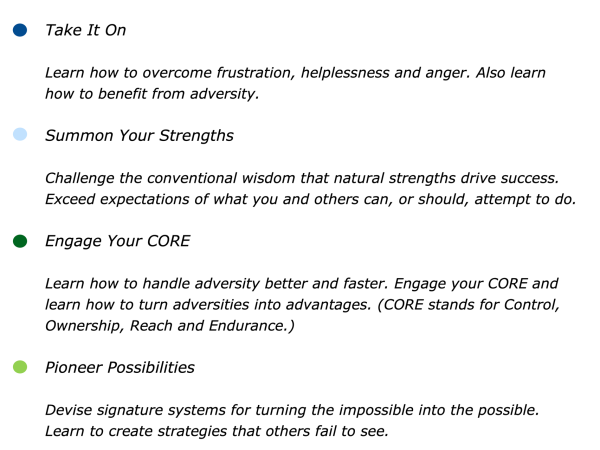
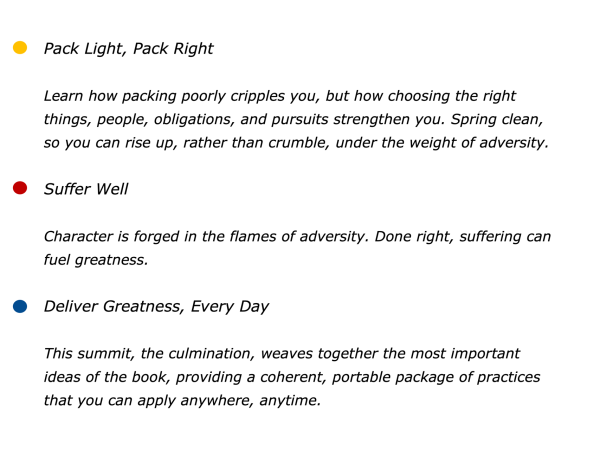
Paul G. Stoltz and Erik Weihenmayer describe elements of this approach in their book The Adversity Advantage. This shows how overcoming setbacks can fuel a person’s ability to produce greatness.
The following section provides an introduction to the book and some of the suggestions the authors offer for managing adversity and shaping the future. You will, of course, adapt these in your own way.
People who are resourceful then aim to translate their chosen strategy into action. This involves them demonstrating the following characteristic.
They Focus On Results
Such people are often results focused but it is important to highlight several factors regarding this approach. They focus on what they can control and do their best to achieve certain results.
Bearing in mind the results they want to achieve, such people often focus on the following themes.
Responsibility
They take responsibility for shaping their future and aim to achieve certain goals. They may aim to find a new job, stay sober, encourage other people or achieve another goal.
Routine
They then aim to follow a certain routine that will increase their chances of achieving the goals. They also plan how to anticipate and deal with random events that could throw them off-track.
Results
They get some early successes, maintain good habits and encourage both themselves and other people. They make the journey as rewarding as possible and do their best to achieve the desired results.
Different people follow this approach in different ways. The following pages look at some routes that people may take when tackling certain challenges.
The One Day At
A Time Approach
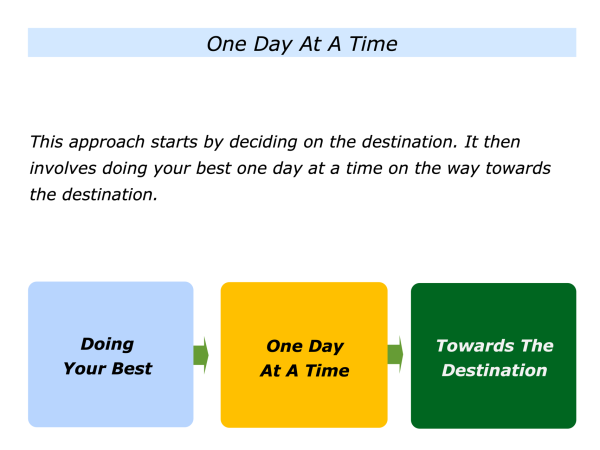
The one day at time approach is associated with recovering from addictions but it is used in many other situations. It may be followed by individuals who pursue a certain path or work towards a specific goal.
The approach starts by a person deciding on their destination. The person may then make a specific action plan. They may focus on how they can do their best each day, each week and each time period on the way towards their chosen destination.
This approach is followed by people in many fields. Some create mantras they aim to follow on the way towards achieving their aims. This can involve taking the following steps.
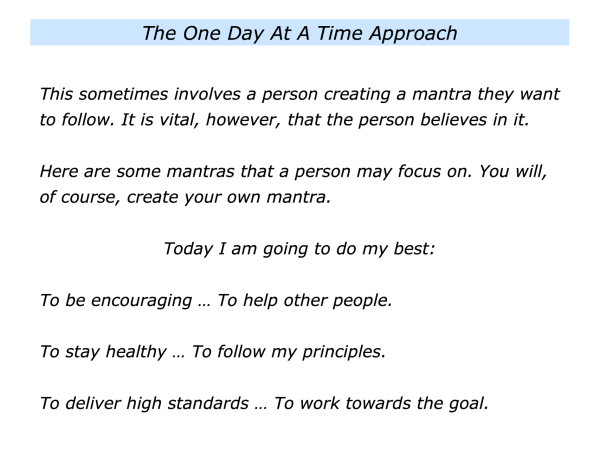
During my early career I worked with recovering addicts who focused on staying healthy one day at a time. Since then I have worked with many caring people, creative artists and peak performers who have taken a similar approach.
Such people often focus on one principle where they want to do their best. They may aim:
To be encouraging one day at a time … To help one patient at a time … To write one page at a time.
They may find that following their mantra in one area has a knock on effect. They may begin to improve in other areas of their life. They may also recognise the philosophy that:
The journey is the destination and the destination is the journey.
There are many applications of the one day at a time approach. Let’s look at a similar approach that is followed by people in sports but it can also be applied in other fields.
The Winning The
Next Moment Approach
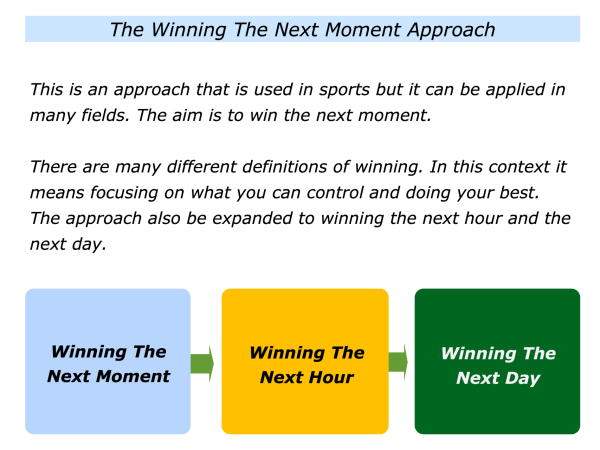
This is an approach that is used in sport. The aim is to win the next moment. It is an approach that can also be expanded to other areas of life.
There are different views on winning. In this context, winning means focusing on what you can control and doing your best. Some people expand this to winning the next moment, the next hour and the next day.
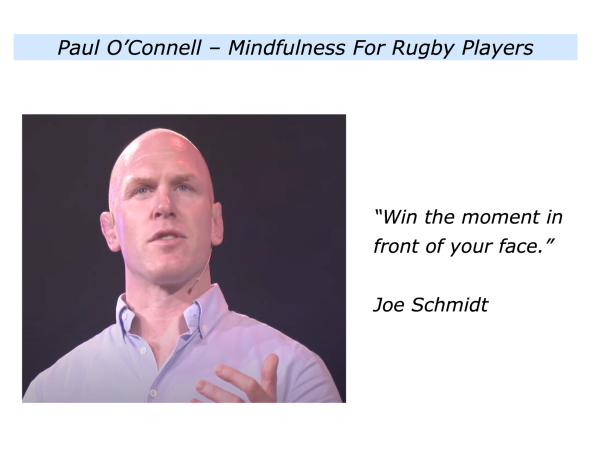
Paul O’Connell, the former Irish Rugby Union player, described this approach in a talk he gave to a Pendulum Summit in 2018. He called the approach ‘mindfulness for dumb rugby players’.
The team’s coach Joe Schmidt kept giving his players the following message.
Forget the mistake you have made, forget the try you have scored.
Be fully present and win the next moment in front of your face.
There are many ways to live life. Some people respond to certain situations by being resilient and resourceful. They then aim to do their best to deliver the desired results.
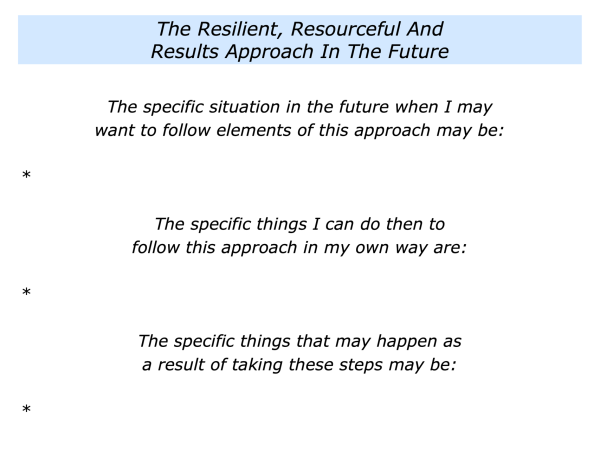
Let’s return to your own life and work. Looking ahead, can you think of a situation where you may want to follow elements of this approach? How can you do this in your own way?
If you wish, try tackling the exercise on this theme. This invites you to complete the following sentences.

Leave a Reply