



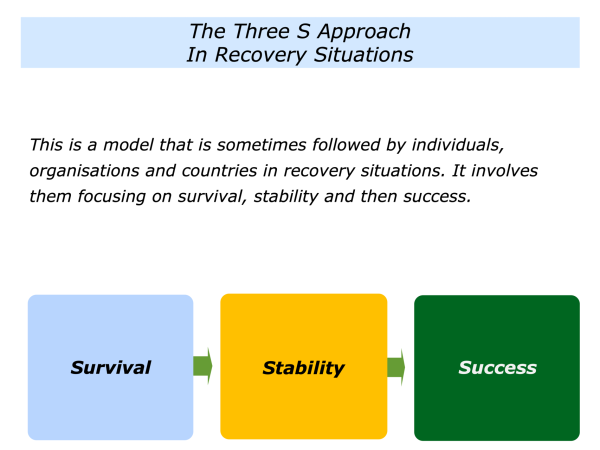
This is a well-known model that can be followed by individuals, organisations and countries in recovery situations. Some people add other steps – such as also doing work that has significance.
These steps mirror those described in Maslow’s hierarchy of needs and also some approaches to turnaround situations. Let’s consider how people may focus on these steps
Survival
People want to feel in control of shaping their future. This is particularly so when they move into survival mode in recovery situations. A person may do this, for example, when either:
They are fighting to stay alive … They are looking for work after losing a job … They are aiming to retake control of their life after experiencing a shock … They are doing other things to simply survive.
Different people behave differently in such situations. Some take time to reflect and heal. Some set specific goals and clarify their strategy. Some move straight into action mode and do what they can to survive.
Whatever route they take, they aim: a) to take responsibility; b) to mobilise their resources; c) to focus on the right priorities needed to recover.
Many organisations went into survival mode during the Covid pandemic. Different organisations then behaved in different ways. Much depended, of course, on their situation as the start of the pandemic.
Some had healthy financial reserves … Some had planned ahead for unexpected events … Some had a strong order books that were now in jeopardy … Some had already borrowed too much … Some had over expanded by acquiring other companies … Some were already in decline.
Some organisations immediately moved into action to deal with the situation. They aimed:
To take practical steps to make sure they survived … To take care of their people in practical ways … To begin to create a platform for shaping a positive future.
Many countries take similar steps when dealing with crises. They may be engaged in a conflict, dealing with a natural disaster or managing another event. People often do what is required to survive. When appropriate, they may then move on to the next stage.
Stability
Imagine that a person has managed the survive the most difficult part of a situation. They may have been able to take care of an illness, deal with a financial setback or manage another challenge.
People may focus on getting more stability in their life. They may aim to follow healthy habits, improve their finances or take other steps to make their life more positive and predictable.
A recovering alcoholic will follow good habits and stay sober one day at a time. A person recovering financially will follow a budget. A person who has left a toxic relationship will spend time with positive people and begin to rebuild their life.
Good organisations also aim to provide stability. Let’s look at one example.
Company A
The leadership team of the company aimed to be both positive and predictable during the Covid pandemic. They had previously built a successful company by taking the following steps:
They had created a supportive and stimulating environment in which self-motivated people could deliver ongoing success;
They had continually communicated the company’s purpose, principles and picture of success;
They had given people the practical and psychological support they needed to do superb work and deliver their parts of the picture of success.
They had also ensured the company built a long financial runway. This paid dividends when Covid hit.
The leadership team then aimed to maintain stability during the difficult times. This included communicating with their people through a series of Zoom sessions.
They explained that the company was in a good financial position and people would continue to be paid. If anybody had any particular difficulties, however, then certain kinds of help were available.
The leaders reiterated the company’s purpose and principles. They also explained how these would be expressed in the present situation by translating them into specific goals. Looking ahead, they encouraged people to take the following steps:
To keep in touch with each other and, when appropriate, ask for help and give each other the required support;
To connect with their clients and provide practical support that would help them to manage the present situation and achieve their specific goals;
To, if they wished, get involved in task forces that would help the company to shape a positive future.
This final point encouraged people to look beyond the present situation and focus on shaping a positive future. Let’s explore this theme.
Success
People who have gone through the stages of survival and stability may then focus on achieving success. This can mean different things to different people.
A recovering alcoholic may aim to stay sober, build good relationships and live a fulfilling life. A person who has managed a particular challenge may pass on knowledge that helps other people who face similar challenges.
A person who has changed their career may move from doing solid work, to satisfying work and then to stimulating work. A peak performer may set specific goals, do superb work and achieve their picture of success.
Some organisations also aim to achieve sustainable success. This was the case with Company A. The leadership team held several sessions that refocused on the company’s aims by exploring the following themes.
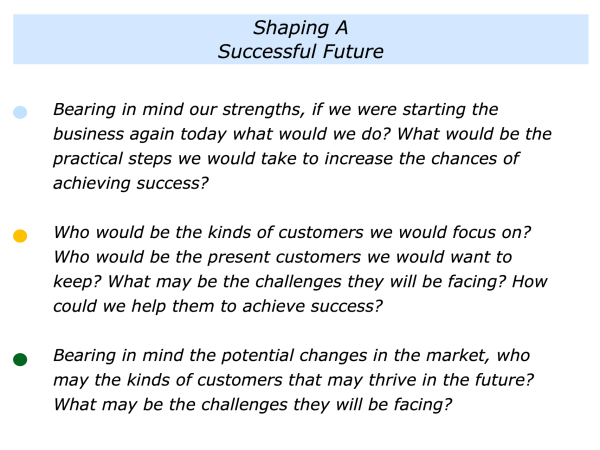
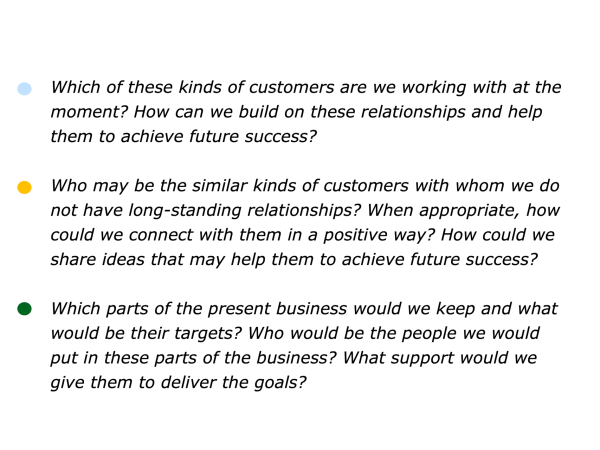
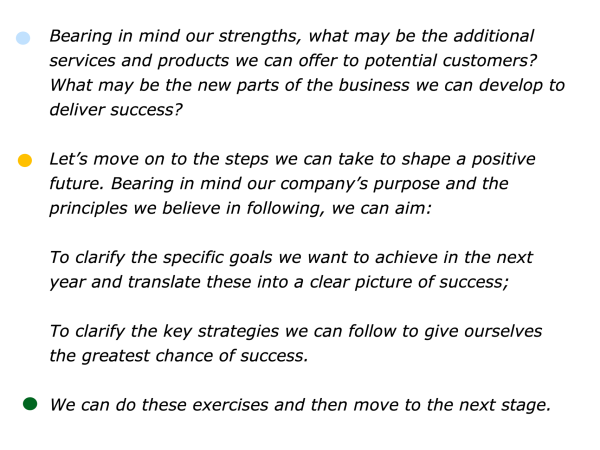
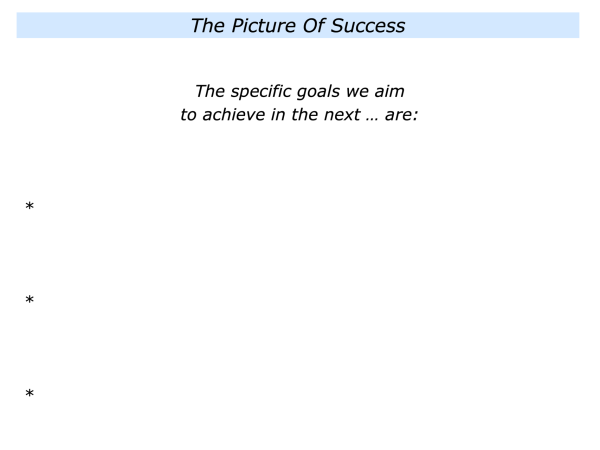
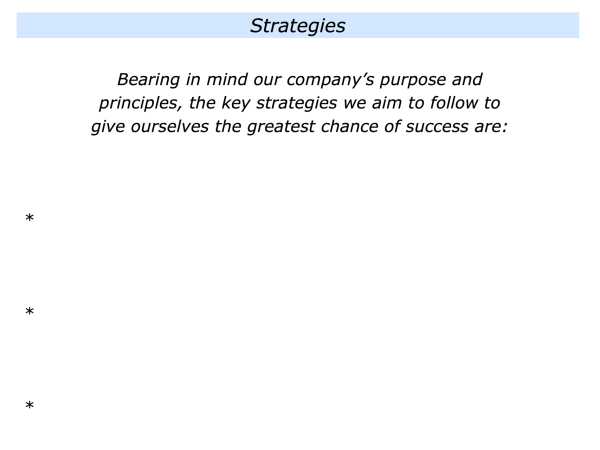
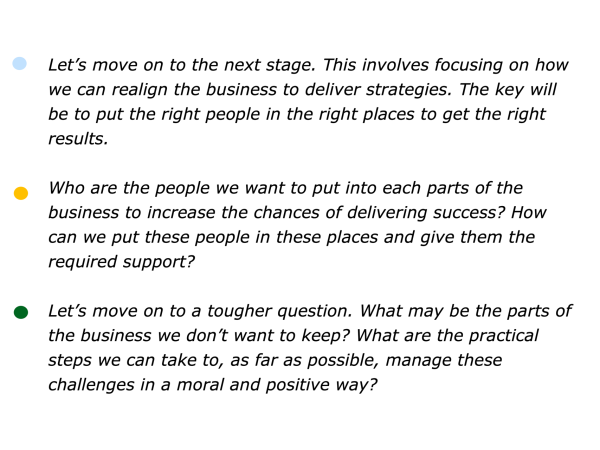
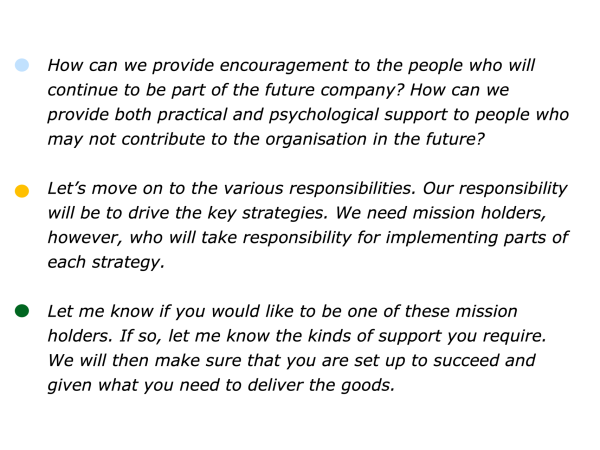
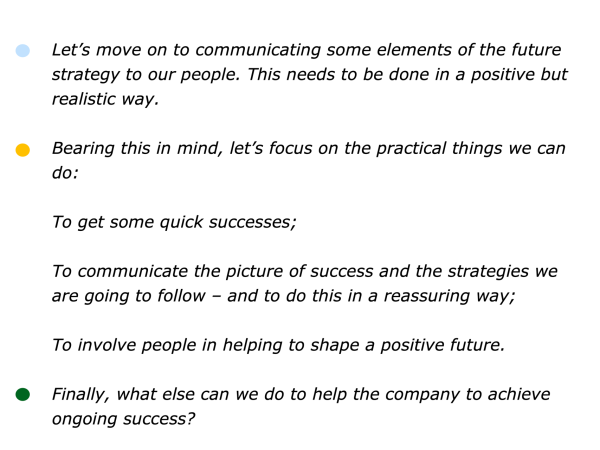
The leadership team agreed on the ways forward and did a good job of communicating these their people. They again focused on aiming:
To provide stability and support for people … To encourage people to focus on shaping the future … To invite people to make their best contributions towards achieving the picture of success.
The company continued to evolve during the next two years and many of its people remained to shape the future. They continue to maintain high morale and also deliver success for both the business and its customers.
There are many models for managing challenging situations. One approach is for people to go through the stages of survival, stability and then achieving success.
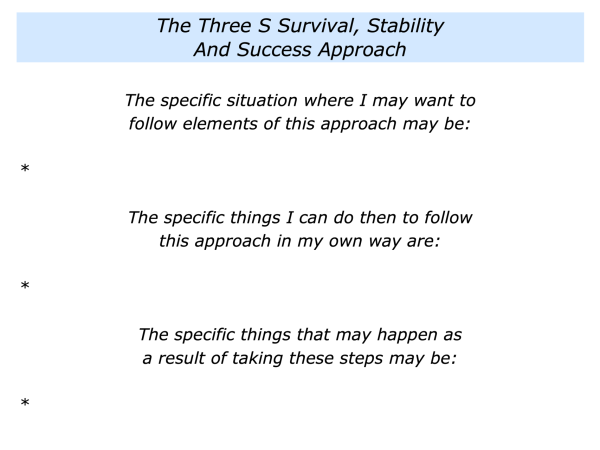
Looking ahead, can you think of a situation where you may want to follow elements of this approach? How can you do this in your own way? If you wish, try tackling the exercise on this theme. This invites you to complete the following sentences.

Leave a Reply