



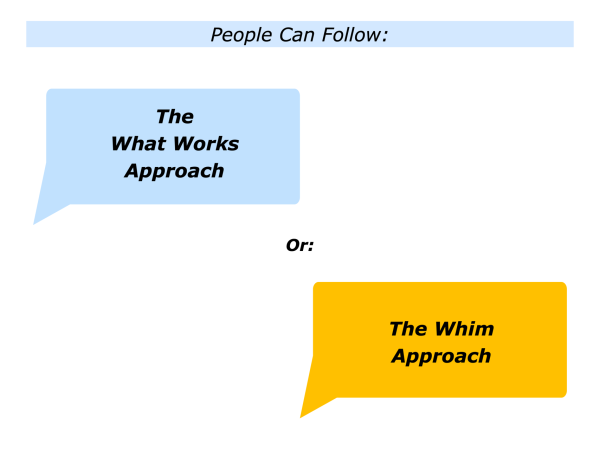
Some people make decisions based on what works. Bearing in mind the results to achieve, they study what works. They then follow the strategies most likely to achieve success.
Some people make decisions based on a whim. They base these on a passing feeling, a fit of anger or what they consider to be their superior judgement.
The ways that people make decisions and translate these into action can have consequences – both for themselves and other people. Let’s explore these different approaches.
The What Works Approach
People who follow this approach often aim to make considered decisions. They may do this when tackling challenges, making a decision that could have certain consequences or aiming to achieve a specific goal.
Imagine that the leader of an organisation is following elements of this approach. They may start by aiming:
To clarify what is actually happening in the situation … To clarify the things they can control in the situation … To clarify the possible ways forward in the situation.
Let’s assume that the leader has gathered lots of information about the situation. They may then take the following steps to follow the strategies most likely to achieve success.
They clarify the real results to achieve
in the situation – the picture of success
The leader will aim to clarify the goals to achieve in the short, medium and long-term. Bearing in mind what they can control in the situation, they may explore the following themes.
What are the real results we want to achieve? What is the picture of success? What will be the benefits of achieving these goals? What will be happening that will show we have achieved the picture of success?
Imagine that they have clarified the results to achieve in the short, medium and long-term. Bearing these in mind, they may then move on to the next step.
They clarify what is most likely to
work to achieve the picture of success
The leader may start by exploring all the possible ways forward together with the pluses and minuses of each option. At a certain point, however, they may study success and the strategies that are most likely to work. Different people do this in different ways.
Some people learn from their own positive history. This is a model that is often followed by athletes when they are preparing to compete in an event is one also be followed by people in other walks of life.
Such people aim: a) to recall a situation when they have tackled a similar challenge successfully; b) to clarify the principles they followed; c) to clarify how they can follow similar principles – plus maybe add other skills – to tackle the present challenge.
Some people study what works by looking around the world and finding people who have tackled a similar challenge successfully. They clarify what people did right, the principles they followed and how they translated these into action.
Some people follow elements of the Appreciative Inquiry approach. This is a positive model that studies humanity its best. It invites people to clarify when they have tackled similar challenges successfully in the past and how they can follow these principles to deliver success in the future.
Different leaders focus on what works in different ways. They may then use their information to clarify the strategies they want to follow to achieve success. Some may do this by focusing on the following themes.
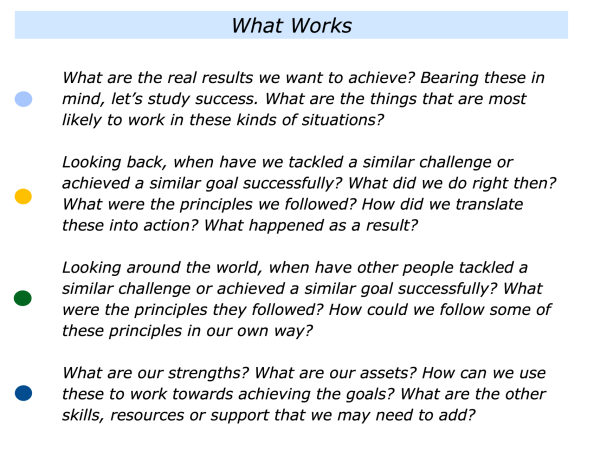
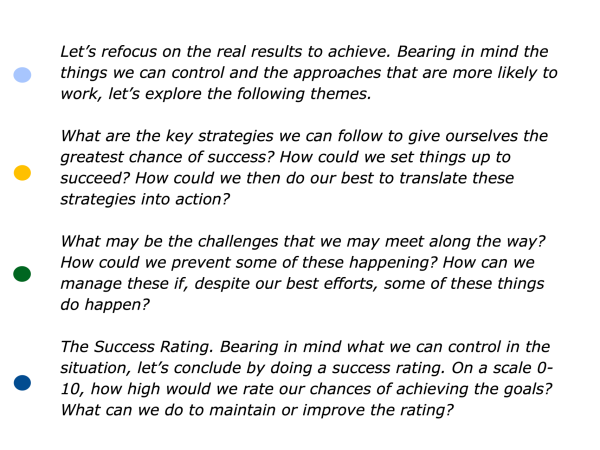
Let’s assume that a leader and, when appropriate, other key people have worked through these steps. They may then move on to the next stage.
They then do their best to
achieve the picture of success
Good leaders will then aim to follow the strategies most likely to achieve the desired results. Different leaders do this in different ways. One approach is for them to go through the following steps.
They communicate the results to achieve and the benefits of achieving the picture of success.
They communicate the strategies to follow – and the reasons for these – to increase the chances of achieving the picture of success.
They make clear contracts with people about their parts – including the support needed – to contribute towards achieving the picture of success.
Such leaders encourage people to keep following the chosen strategies. They also keep doing reality checks about: a) what is working and how to build on these things; b) what can be done better and how.
People who take this approach focus on continuous improvement. They are then more likely to do what works on the way towards achieving the picture of success.
The Whim Approach
Some people make decisions based on a whim. They base these on a passing feeling, a fit of anger or what they consider to be their superior judgement.
Different people follow the whim approach in different situations. Some follow it in their daily lives. The decisions they take may or may not have positive or negative consequences for themselves or other people.
Some leaders follow the whim approach when making critical decisions. They may do this when choosing to follow a certain strategy, choosing to hire or fire people or, even in some cases, choosing to go to war. This can have more profound consequences.
Some individuals demonstrate characteristics of what is called the Dunning-Kruger approach. They may vastly overate their own abilities or knowledge. This can lead to them making snap judgements that can create lots of collateral damage.
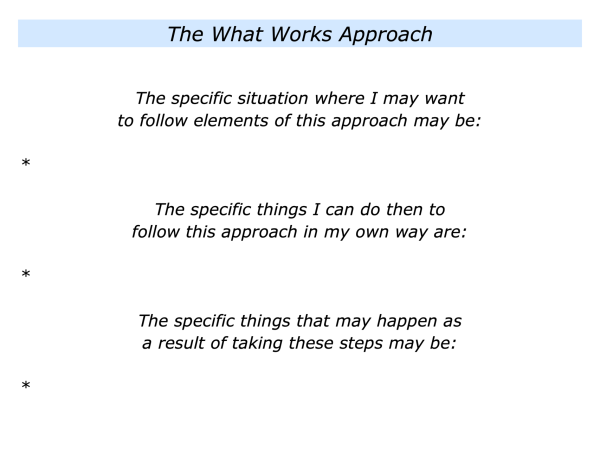
Let’s return to your own life. Looking ahead, can you think of a situation where you want to follow elements of the what works approach? How can you follow this in your own way?
How can you aim to clarify: a) the real results you want to achieve; b) the specific things that are most likely to work; c) the strategy you can follow to increase the chances of achieving success?
If you wish, try tackling the exercise on this theme. This invites you to complete the following sentences.

Leave a Reply