


This piece explores the qualities found in many caring relationships. Some of these are based on the qualities shown by healthy couples. But they are also demonstrated in other relationships and partnerships.
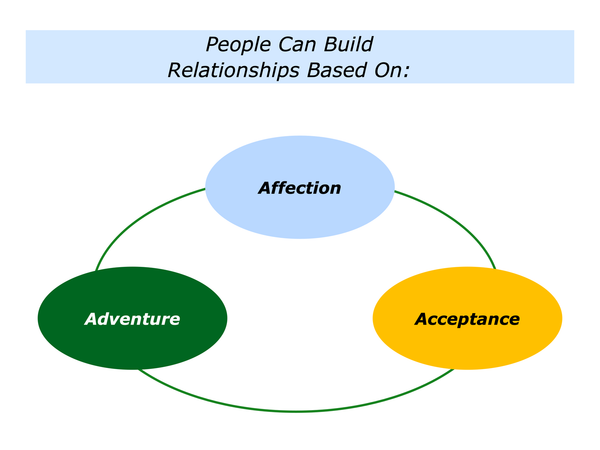
Healthy couples often demonstrate affection, acceptance and adventure. Let’s explore these themes and how they may be expressed in different kinds of relationships.
Affection
Healthy couples show each other affection. Some do this in physical ways, some do it in psychological ways. They encourage the other person and aim to make them feel like the centre of their world.
Some couples do this simple ways. They make their partner a cup of tea, listen and encourage them to be themselves. They may also, when appropriate, encourage their partner to work toward their personal goals.
Good encouragers may show respect and affection for people in other ways. They often aim to create a positive environment in which a person feels at ease and able to be themselves.
When appropriate, they encourage a person to explore situations. They may also enjoy helping people to look ahead and work towards achieving their goals.
Acceptance
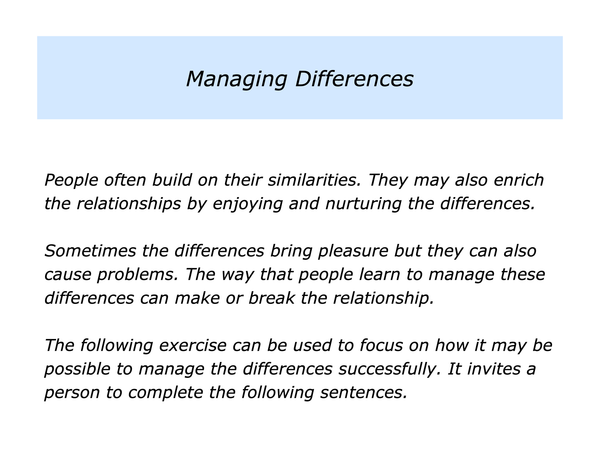
Good encouragers aim to build on what they and other people have in common. They also find ways to support and, in some cases, manage any differences. They recognise that differences can make or break a relationship.
Healthy couples, for example, accept each other rather than constantly try to change each other. They realise that, after a certain time, people do not change all that much. They are clear on:
The differences they want to encourage, because these make the other person special.
The differences they are prepared to accept, because the person probably won’t change certain habits.
The differences they would like the person to change and how. It can then be helpful for them to give a positive alternative.
Regarding the latter differences, they may suggest how they would like the person to behave in the future. But what if the person refuses to change? The person making the suggestion has a decision to make.
They can recognise that the other person is not going to change and accept the difference. They can keep trying to persuade the person to change. They can, if they feel the difference is too painful, choose to leave the relationship because there is no point in being a victim.
Virginia Satir, a great family therapist, believed that the way people managed their differences determined whether a relationship would flourish or die. Let’s explore this theme in more depth.
Managing Differences Successfully
This section describes an exercise that was inspired by Virginia’s approach. Although the exercise relates to couples, the principle of managing differences successfully has been applied to many other systems, such as teams and organisations.
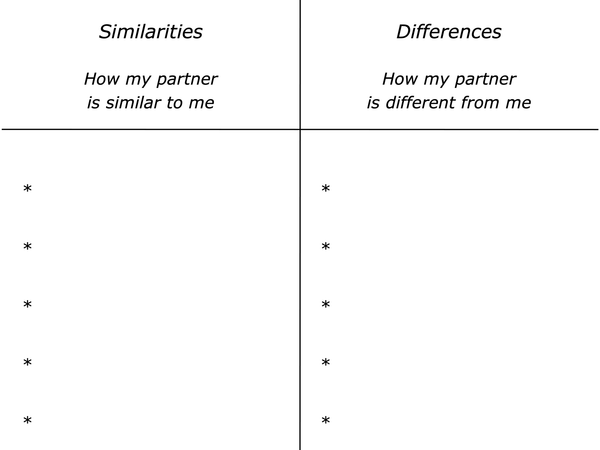
Imagine you are a family counsellor who is working with a couple. If appropriate, you can invite them to work through the following steps. Each person makes lists describing the following things.
Similarities: How my
partner is similar to me
This can cover every aspect of life. These may include values, attitudes, habits, behaviour, physical things, psychological things, philosophical things or other topics.
A person may list the way their partner is similar to them by writing the following:
“They have two children – ours; they like walking in the countryside; they get angry about injustice; they like Italian food; they enjoy watching sport; they enjoy having pets; etc.”
Differences: How my
partner is different from me
This can also cover every aspect of life. A person may list how their partner is different from them by writing:
“They are a morning person, whilst I am an evening person; they are introvert, whilst I express my feelings; they have different standards of tidiness in the house; they drink quite a lot; etc.”
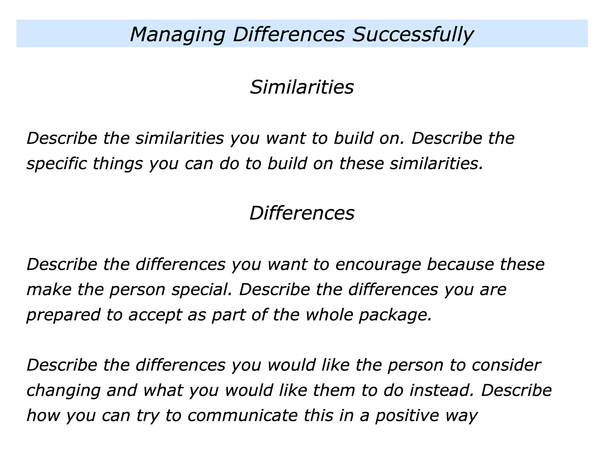
Similarities: How we can build
on what we have in common
Each partner describes how they want to build on what they have in common. Providing these are healthy similarities – things that benefit both – it can be good to build on this foundation. For example, people may plan to share more projects in the future.
Differences: How we can
manage the differences
This is the crunch part. Differences can make or break a relationship. They can add juiciness or they can be a nightmare.
Each person is to take the following steps. Looking at how their partner is different, they can explore the following themes.
The differences they want to encourage – because these make the other person special.
The differences they are prepared to accept – because their partner probably won’t change certain habits.
Bearing in mind the whole package involved in living with their partner, they may be prepared to accept some of the differences.
The differences they would like their partner to change and how they would like them to behave. It is vital for them to give a positive alternative.
This final point is crucial. For example, Partner A may be upset because Partner B behaves in a certain way – such as suppressing their feelings, drinking lots of alcohol, fighting dirty during arguments or whatever.
Partner A has several options. Each option has consequences.
They can put up with the behaviour.
They can harangue the other person and hope they will change.
They can give the other person a positive alternative. They can explain how they would like the person to behave in the future. They can also describe the potential benefits for everybody.
Imagine Partner A gives a positive alternative but Partner B says:
“I am not prepared to change.”
Partner A can then ask themselves:
“Am I prepared to stay in the relationship? Is it worth the whole package?”
If so, fine. If not, then Partner A has a decision to make. Here is the exercise on the theme of managing differences successfully.
Virginia Satir opened people’s eyes to the importance of managing differences successfully. Looking at my own work, for example, I apply it to building positive teams. As described elsewhere in the book:
Great teams are based on similarity of spirit and diversity of strengths.
Healthy systems – whether they are families, teams or organisations – are based on similar values. These provide the foundation. They only flourish, however, if on top of this they encourage variety.
Let’s focus on another theme that is demonstrated by people in caring relationships.
Adventure
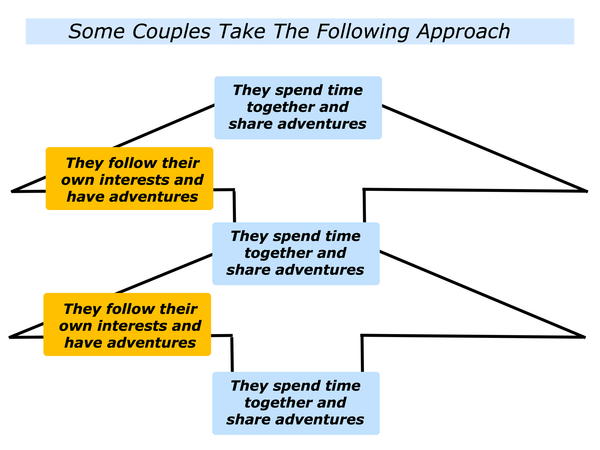
Healthy couples sometimes share adventures together. These can be big adventures or even simply enjoying small talk together. They feel uplifted after their time together.
They may then individually go apart and pursue their own interests and adventures. This are ones that help them to feel alive but that do cause pain in the relationship.
The couple may then come back together to share what they have each been doing. They then build on what they have in common and share adventures. Sometimes this is simply chatting but in a positive way.
Such couples aim to enjoy their time together and also when they are apart. They take this approach to building a mutually enriching relationship.
You can, of course, apply these principles in your own way to build with the people that you enjoy being with. Taking these steps will continue to give you positive energy.
There are many views about how people can build good relationships. One approach is for people to base their relationships on affection, acceptance and adventure.
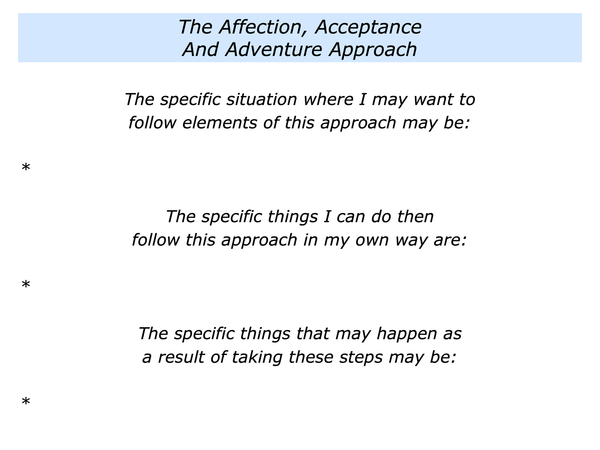
Imagine that you want to follow elements of this approach in a relationship. How can you do this in your own way? How can you encourage a person in your personal or professional life?
If you wish, try tackling the exercise on this theme. This invites you to complete the following sentences.

Leave a Reply