



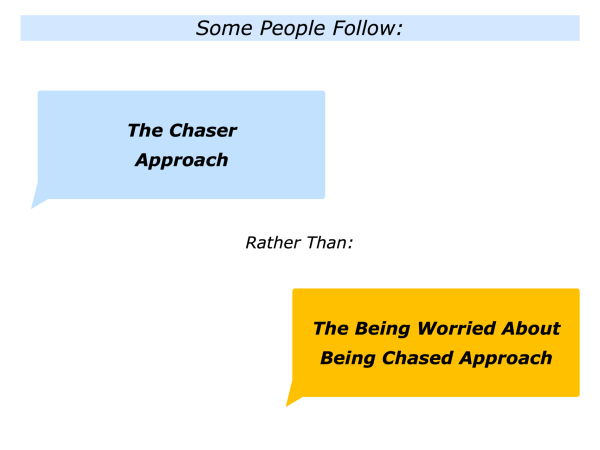
The chaser approach is followed by many people in sports and other fields. They follow this approach even when they are leading. They then focus on working towards even more stimulating goals.
They follow this approach rather than worrying about being chased. They look forward to the future rather than constantly looking over their shoulder.
Such people are good at reading reality, however, and recognise potential challenges. They then focus on what they can control and do their best to achieve their goals.
Some people take the lead in an activity but worry about being caught. They use lots of energy being concerned about what they can’t control. This can lead to feeling neurotic and going into a downwards spiral.
Different people follow these approaches in different ways. Let’s explore how they may focus on these themes.
The Chaser Approach
People who follow the chaser approach often have a positive attitude. Bearing in mind what they can control in a situation, they set positive goals, do positive work and do their best to get positive results.
Different people will then choose to work towards different goals. An athlete, for example, may aim to chase a personal best time, a championship or a world record.
Another person may aim to follow their chosen life principles. They may then aim to keep improving, develop as a person and become the best they can be.
People who follow the chaser approach sometimes go into another dimension. Some aim to be pacesetters and make the new rules for the game. They aim to take the lead, maintain the lead and extend the lead.
Such people often build on their strengths. They focus on pursuing their own path rather than worrying about competitors. They set stimulating goals, follow strategies that work and do their best to achieve success.
They may also borrow from sports and follow what is called the next play approach. This was popularised by the college basketball coach Mike Krzyzewski. It has since by applied by many people in other areas of life.
The Next Play Approach
The next play approach involves moving forward from a success or disappointment. It is then to be fully present and do your personal best to shape a positive future. Mike explained this approach in the following way.
In basketball and in life, I have always maintained the philosophy of ‘next play.’ What it means is that what you have just done is not nearly as important as what you are doing right now.
The ‘next play’ philosophy emphasizes the fact that the most important play of the game or life moment on which you should always focus is the next one.
Whenever you got knocked back individually and collectively, it is: OK, the next play. What am I going to do next?
People who follow the chaser approach may apply elements of this approach in their own way. They channel their feelings in a positive way and do their best to achieve their short, medium and long-term goals.
The Being Worried About
Being Chased Approach
Some people, teams and organisations take the lead in an activity but spend a lot of energy worrying about being caught. This approach can have both pluses and minuses.
Some people argue that it can be healthy to be concerned about what others are doing. They say that this can be motivating and lead to delivering better results.
Such an approach can work for a while, but it can sometimes lead to negative energy and neurosis. People who keep looking over their shoulder can trip over and fall.
Certainly it is vital to learn from others, but it is important for people to build on their strengths. They can then aim to be the best they can be and achieve their own picture of success.
There many ways to live life. Some people have a positive attitude and follow the chaser approach. They focus on the future and keep working toward achieving stimulating goals.
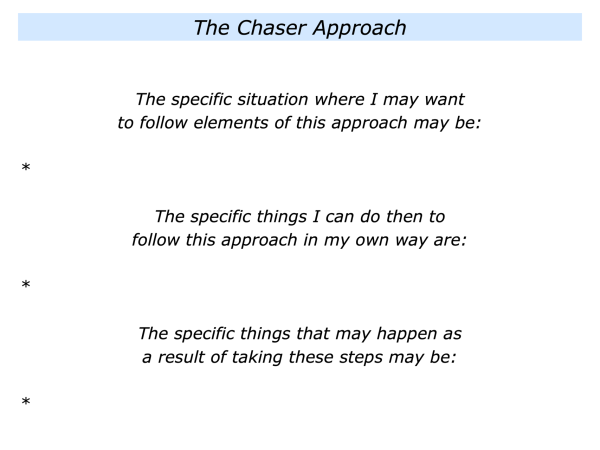
Let’s return to your own life and work. Looking ahead, can you think of a situation where you may want to follow elements of this approach? How can you do this in your own way?
If you wish, try tackling the exercise on this theme. This invites you to complete the following sentences.

Leave a Reply