



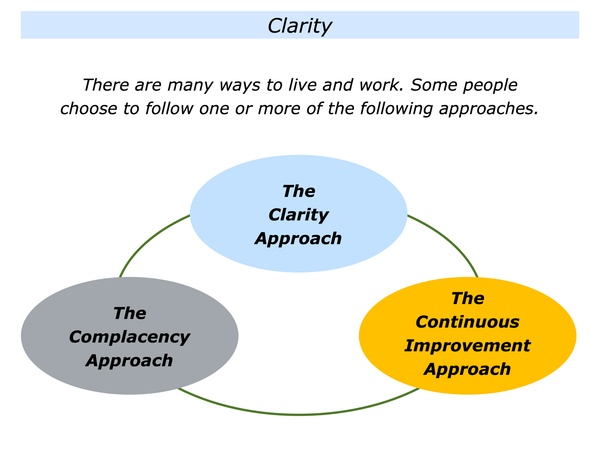
There are many ways to live and work. Some people, teams and organisations choose to follow one or more of the clarity, continuous improvement or complacency approaches.
People who follow the continuous improvement approach may build in time for celebration or even contentment. They are wary, however, of falling into the complacency approach.
Different people follow these approaches in different ways. Let’s explore how they may translate these into action.
The Clarity Approach
Great workers focus on clarity. They do this whether working as individuals, a team or an organisation. They keep focusing on the real results to achieve and the picture of success.
They may do this when planning a piece of work, doing a creative project or leading a sports team. They may do it when managing a crisis, turning around a team or helping an organisation to achieve sustainable success.
Such workers often start from their destination and work backwards. Bearing in mind what they can control in the situation, they focus on the following themes.
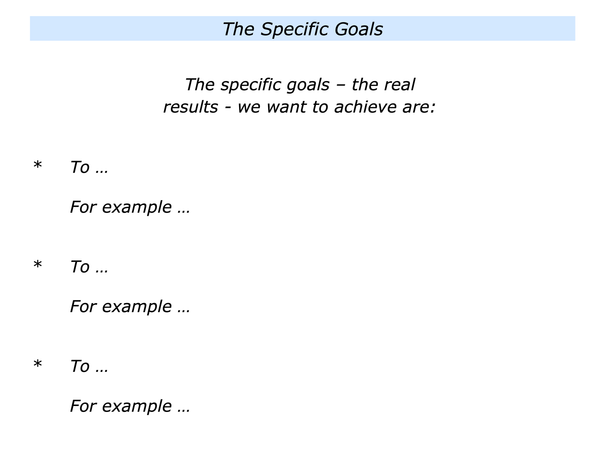
They clarify the specific goals – such as the real results – they want to achieve.
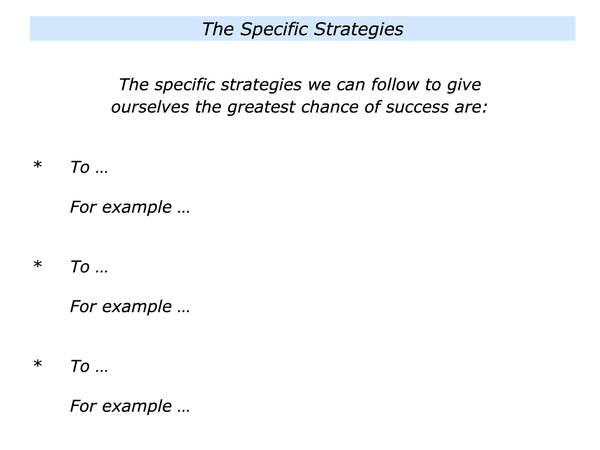
They clarify the specific strategies they can follow to give them the greatest chance of achieving the goals.
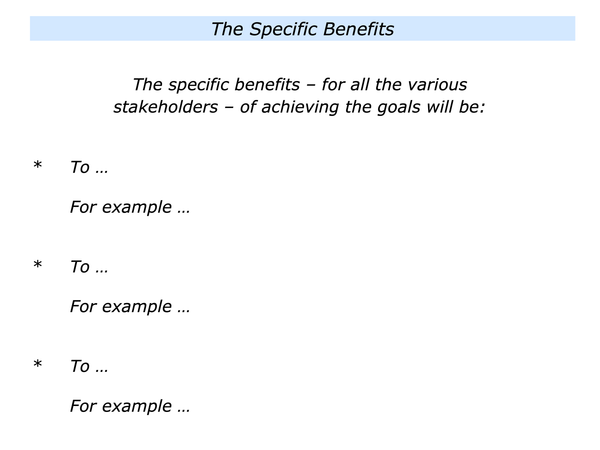
They clarify the specific benefits – to all the various stakeholders – of achieving the goals.
Some workers take further steps. They may, for example, clarify the pluses and minuses involved in doing the work. They then clarify how they can build on the pluses and manage any minuses.
Some also clarify their motivation rating. Bearing in mind the work involved, they rate their motivation – on a scale 0-10 – to do what is required to reach the goals. They make sure the rating is at least 8+/10.
Great teams, for example, then communicate the specific goals, strategies and benefits. They also make clear contracts with people about their best contributions towards achieving the picture of success.
Imagine that you lead a team and want to focus on clarity. Bearing in mind what you can control, it can be useful to explore the themes.
What are the goals – the real results – we want to achieve? What are the key strategies we can follow to give ourselves the greatest chance of success? What will be the benefits of achieving these goals?
If you wish, try tackling the exercise on this theme. This invites you to complete the following sentences.
The Continuous
Improvement Approach
Great workers often focus on continuous improvement. They do this when working as individuals, teams or organisations. They love to keep improving on the way towards achieving the picture of success.
Different people follow this approach in different ways. Whatever route they take, this calls for them being agile. They need to keep reading reality and doing what is required to deliver the goods.
Some people do this by following the Japanese concept of Kaizen. Some may take the following approaches when aiming to achieve the goals.
The Continuous
Improvement Approach
There are many versions of the continuous improvement approach. Whatever approach people take, it is important to keep reading reality and focus on what can be improved in the future.
Bearing this in mind, some individuals, teams and organisations focus on the following themes.
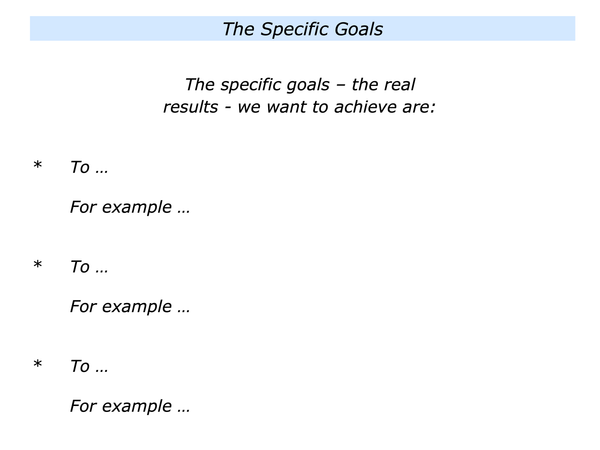
The Specific Goals: They clarify the specific goals – the real results – they want to achieve.
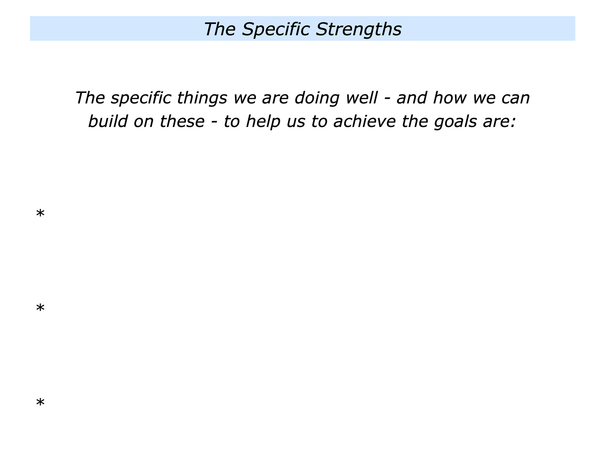
The Specific Strengths: They clarify the specific things they are doing well – and how they can build on these – that will help them achieve the goals.
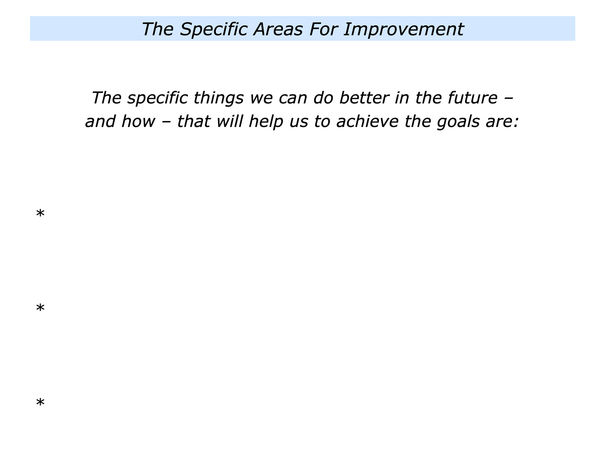
The Specific Areas For Improvement: They clarify what they can do better – and how – that will help them to achieve the goals.
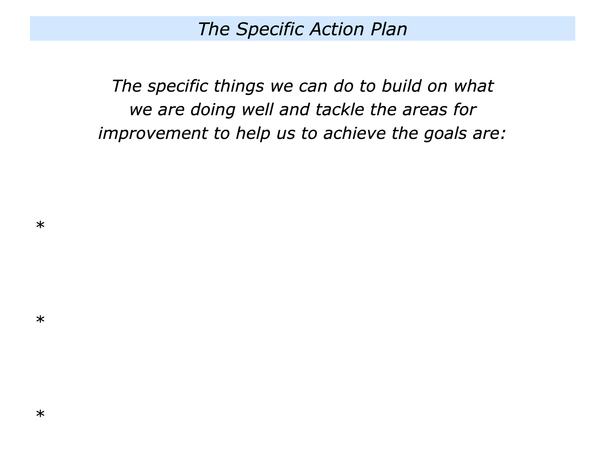
The Specific Action Plan: They clarify the action plan for building on what they are doing well and also improving on the way to achieving the goals.
Great workers then aim to implement these ideas and work towards achieving the picture of success.
The Green, Amber And
Red Zones Approach
People who take this approach start by refocusing on the picture of success. Bearing this in mind, they focus on the following themes.
The Green Zone: They clarify the specific things that are going well – and how they can build on these things – to achieve the picture of success.
The Amber Zone: They clarify the specific things where there are warning signs – and how they can tackle these – to achieve the picture of success.
The Red Zone: They clarify the specific things that are not going well – and decide what to do about these – to achieve the picture of success.
Great workers continually focus on the things that are in the different zones. They then aim to implement their ideas and work towards achieving the picture of success.
People who follow the continuous improvement approach are often very driven. Bearing this in mind, however, they may also focus on the following themes.
Celebration
They set aside time to rest, reflect and then refocus. Sometimes this involves them aiming: a) to see things in perspective; b) to reflect on what they have done well.
Different people do this in different ways. Sometimes this can lead to the next feeling – which may be a bit challenging for people who are driven.
Contentment
Sometimes a person may also experience a feeling of contentment. There are many views about this state. These include the following definitions of contentment.
A feeling of quiet happiness … A feeling of deep satisfaction … A feeling of having done your best … A peaceful ease of mind.
Contentment is like happiness and is sometimes the by-product of doing certain things. A person may enjoy this feeling after completing a piece of work. They may then enjoy a sense of peace or fulfilment.
Let’s return to your own situation. Imagine that you lead a team and want people to focus on continuous improvement. If you wish, try tackling one of the exercises on this theme.
Bearing in mind the goals to achieve, you can invite people to focus on the following areas. They can them aim to implement their ideas and work towards achieving the picture of success.
The Complacency Approach
Some people follow the complacency approach. They may do this as individuals, teams or organisations. Different people do this for different reasons.
Some people may feel they have made it and rest on their laurels. They forget to focus on continuous improvement may get overtaken by things that are happening in the world.
Some people may follow the entitlement approach rather than the earning things approach. They may have a been gifted money, status or have a sense of hubris. They believe their own hype and make poor decisions.
Some executives focus only on the structure of an organisation. They have not learned the lesson from Leadership 101: ‘Structure follows strategy’. They need to clarify and follow the strategy for achieving success.
People who follow the complacency approach may feel good for a time but then events can overtake them. Some people make the decisions required to recover. Some fall into managed decline.
There are many ways to live and work. Some people, teams and organisations choose to follow one or more of the clarity, continuous improvement or complacency approaches.
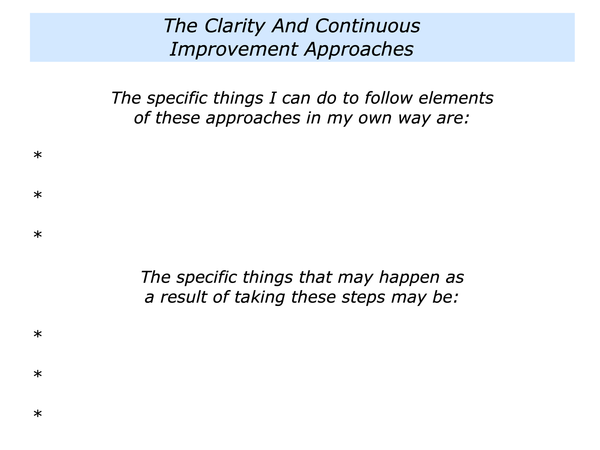
Let’s return to your own life and work. Imagine that you want to follow elements of the clarity and continuous improvement approach. How could you do this in your own way?
If you wish, try tackling the exercise on this theme. This invites you to complete the following sentences.

Leave a Reply