



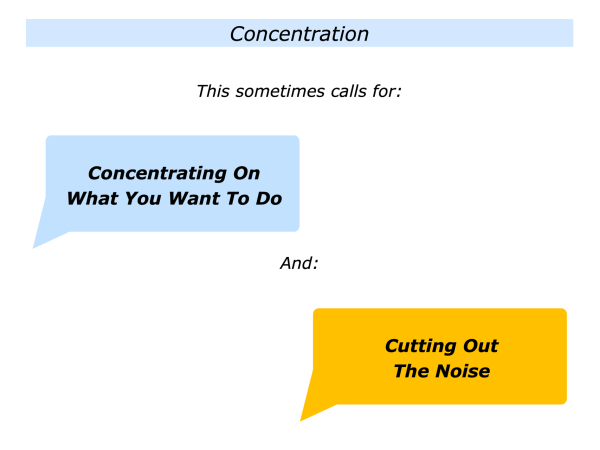
There are many ways to do fine work. One approach is to concentrate on what you want to do and cut out any distracting noise. Different people follow this approach in different situations.
Some people follow it as individuals when doing a piece of work, doing a creative project, playing a sport or doing another activity. Some follow it when providing leadership in teams or organisations. Let’s explore these themes.
Concentrating As An Individual
This approach often involves focusing on concentration, clarity and delivering concrete results. It also calls for cutting out both physical and psychological noise.
Imagine that you want to follow elements of this approach when doing a piece of work. This involves exploring the following themes.
Concentration
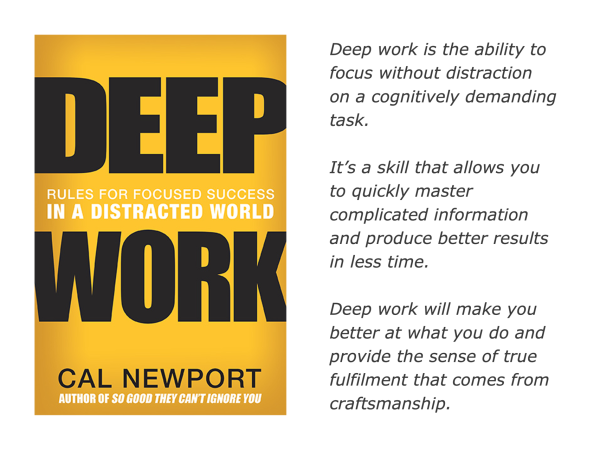
Different people choose different ways to concentrate and do what Cal Newport called deep work. This calls for being able to immerse themselves into doing a piece of work without distraction.
Some people start by focusing on what they can control in a situation. They then set aside a block of time where they can slow down, recentre and focus on what they are going to do.
Such people do their best to prepare properly and set things up to succeed. They then take the following steps.
They rehearse what they are going to do and then follow their ritual for move into action.
They are positively engaged and fully present when doing the piece of work.
They immerse themselves fully in the work and sometimes go into a state of flow.
Different people then concentrate in different ways. Some prefer to work in silence in order to focus on the work. Some actually like to have background music that is stimulating or soothing.
Different people also have different periods of time when they are able to concentrate fully. Much depends on the kinds of work they are doing and what is required to fulfil the task.
Some writers, for example, can work for an hour. They then need to take a break, go for a walk or do something else to refresh themselves. They are then able to return to the work with renewed energy.
Some people are in professions where they may need to concentrate for a long period of time. They may then need to build in small periods for reflection, however, in order to stay on top of their game.
You will have your own way of being able to concentrate. Whatever route you choose, it often involves focusing on the next step.
Clarity
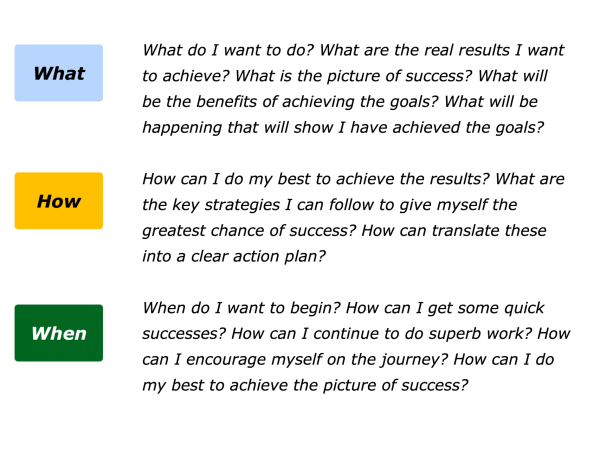
Great workers focus on clarity. They aim to be crystal clear on: a) what they want to achieve; b) how they can do their best to achieve these results; c) when they want to make this happen.
Such workers spend a lot of time exploring these themes before they embark on the work. They also keep focusing on them when doing the actual work.
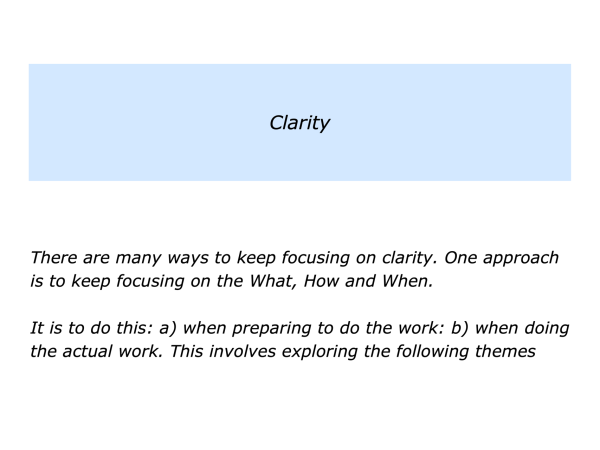
Different people follow this approach in different ways. Some keep focusing on the What, How and When. This involves exploring the following themes.
Great workers also keep reading reality and focus on continuous improvement. They immerse themselves in the work but also sometimes take time out to focus on:
The specific things that are working are how they can build on these;
The specific things that could be better and how;
The specific things they can do to implement these ideas.
Such workers then follow their ritual for moving back into action and, when possible, going into a state of flow. They do their best to get the desired concrete results.
Sometimes this also means taking the next step in order to be able to concentrate fully.
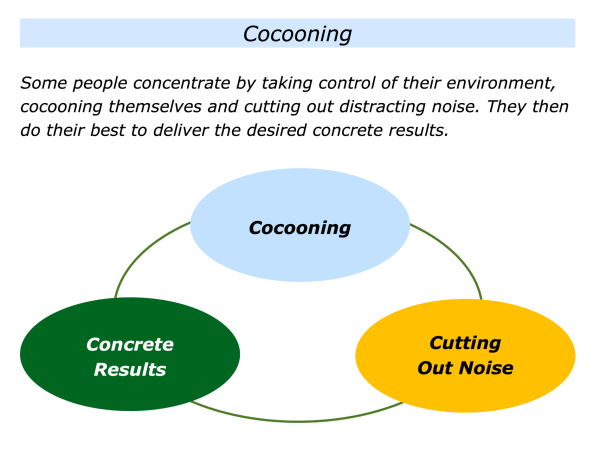
Great workers concentrate on the task in hand. They aim to take control of their environment, cocoon themselves and cut out distracting noise. They then do their best to deliver the desired concrete results.
Some people focus on being in charge of any physical noise. They may aim to find a quiet place, put on their headphones or do other things to create such a space.
Some people focus on being in charge of any psychological noise. They may have a positive mantra that they say to themselves before clicking into action or when tackling challenges.
Sometime this involves creating a positive script they say to themselves. Such as: ‘Be positive, be present, do your personal best’. They need to create their own script, however, that means something to them.
There are many forms of cocooning. Whilst Faith Popcorn popularised the term in the 1980s, it is an approach that has been followed by many people throughout history. Different people do cocooning in different ways.
Some do it by going into a sanctuary to gain comfort. Some do it by creating a safe place that is also stimulating. Some aim to do creative work by cutting off outside noise. Some do it by concentrating fully when tackling a challenge. Let’s explore these themes.
Cocooning For Creating
Some people follow the cocooning approach when doing creative work. Many writers, painters, sculptors, designers, thinkers and others have taken this route throughout history.
Such individuals aim to create a safe place that can also be stimulating They aim to focus fully when pursuing their work. They therefore protect themselves from various influences that may be distracting.
Some sensitive people may aim do work that helps to build a better world. They may therefore cocoon themselves by creating a positive environment and stop exposing themselves to negative things happening in the world.
Cocooning For Tackling Challenges
Some individuals follow the cocooning approach when tackling challenges. They often start by gathering lots of information before settling on their strategy. They then focus fully on following their chosen process for working to achieve their goal.
Many athletes, golfers and other sports people describe how they follow this approach. They talk about being in their bubble but also being present in the moment.
As mentioned earlier, they may have a positive mantra they say to themselves to keep focusing on the task in hand. They stay in the present rather than get ahead of themselves. Such individuals then do their best to achieve their picture of success.
There are many ways to do fine work. One approach is to focus on concentration, clarity and cutting out noise. It then involves focusing on the next step.
Concrete Results
Great workers sometimes reach their goals by being creative and adding that touch of class. Sometimes this can be a simple act of kindness. Sometimes it can be something spectacular.
The footballer scores a remarkable goal. The singer produces a memorable encore. The medical team works brilliantly to deliver a life-saving operation.
Great workers may also go into another dimension and give people a positive memory of life. They keep doing the basics and then add the brilliance on the way towards achieving the picture of success.
Concentrating As A Leader
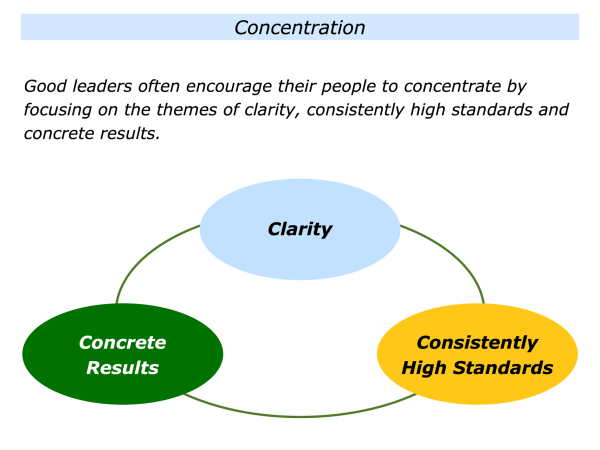
Good leaders encourage their people to concentrate on the organisation’s strengths. They then focus on clarity, consistently high standards and concrete results.
They build on what the organisation does best and work with the kinds of customers with whom they work best. They take this approach rather than trying to cover too many things at once or being distracted by any unhelpful noise.
Whilst they build on the organisation’s strengths, they also aim to express these in modern ways. This involves people being good at delivering today’s business but also shaping tomorrow’s business to achieve sustainable success.
Such leaders encourage their people to concentrate their efforts by focusing on the outcomes to achieve. Some do this by using the following framework when communicating with their people.
Clarity
Good leaders encourage people to channel their efforts by focusing on clarity. Some communicate the organisation’s purpose, principles and picture of success. They also show the benefits of achieving these goals.
They often describe the goals in outcome terms. Different leaders do this in different ways. Much depends, of course, on the kind of organisation they are leading.
The leader of a company may focus on the things it aims to deliver in terms of the Three Ps. They describes the company’s aims in terms of profitability, product quality and people.
The leader of a hospital will follow a different criteria. They may describe the outcomes it aims to achieve in terms of patient care, professional excellence and staff morale.
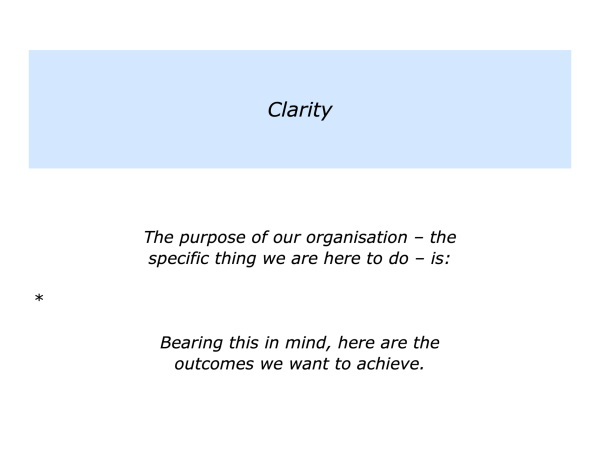
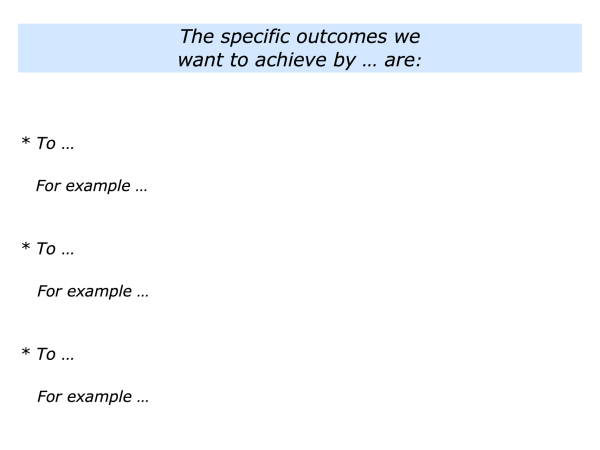
As mentioned earlier, much depends on the work of the organisation. Some leaders use elements of the following framework, however, when communicating clarity to their people.
Consistently High Standards
Good leaders encourage their people to follow the organisation’s principles and deliver consistently high standards. Again, much depends on the kind of work done by the organisation.
The CEO of a company may encourage their people to focus on the following principles. First, to have a positive attitude. Second, to always behave in a professional way. Third, to do their best to help the company to achieve its picture of success.
The leader of a hospice may encourage their people to focus on the following principles. First, to be compassionate. Second, to provide the best possible care for both the person and their families. Third, to find ways to support both themselves and their colleagues in their daily work.
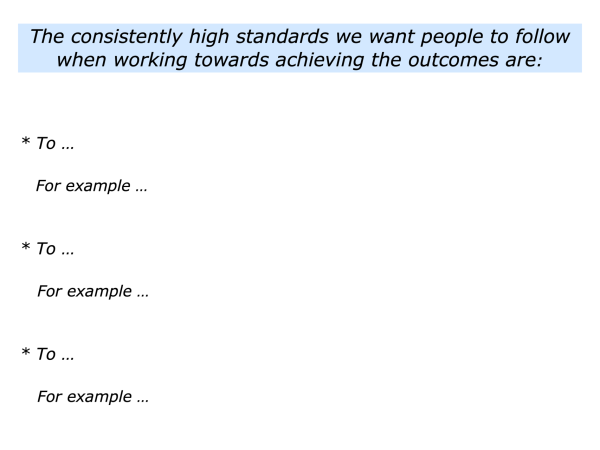
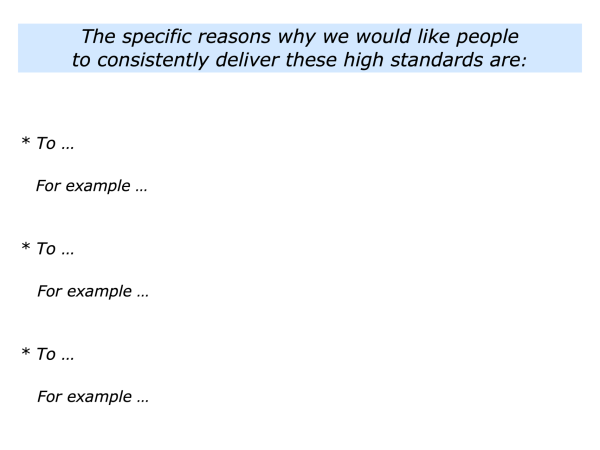
Some leaders use elements of the following framework when communicating the desired standards to their people.
Concrete Results
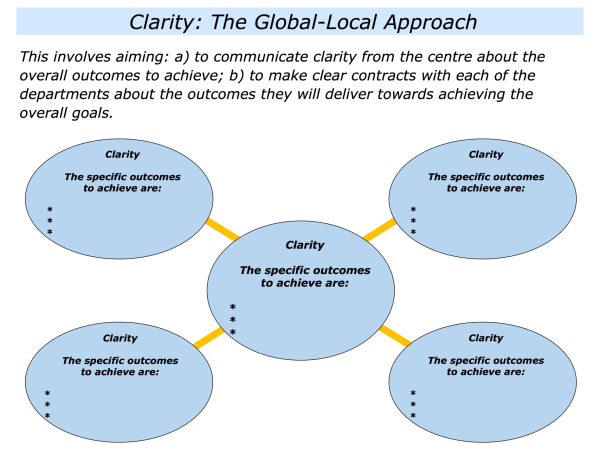
Good leaders encourage their people to keep focusing on the clarity and consistently high standards. Some then follow the Global-Local approach to encourage people to channel their efforts toward delivering the desired concrete results.
Such leaders communicate clarity from the centre about the overall outcomes to achieve. They then make clear contracts with each department about their contributions to achieving the picture of success.
Different leaders do this in different ways. One approach is for them to invite each department to take the following steps:
To describe the specific outcomes they will deliver towards helping the organisation to achieve its overall goals;
To describe the specific things they will do to proactively keep people informed about their progress towards delivering the outcomes;
To describe the specific kinds of support they would like to help them deliver these outcomes.
Good leaders than manage by outcomes rather than by tasks. They encourage, educate and enable people to do superb work and deliver the desired concrete results.
Such leaders also recognise that there may be challenges along the way. When appropriate, they therefore encourage people to focus on the outcomes to achieve. They may then say something along the following lines:
“Let’s go back to focusing on the desired outcomes. Bearing in mind what we can control, let’s explore how we can do our best to deliver these results.
“Looking ahead, there are several options we can pursue. These include the following: a) To … b) To … c) To … There may, of course, be other options.
“Bearing these in mind, what may be the option – or combination of options – we can follow to deliver the desired results? Is this something you are prepared to do?
“Looking ahead, how can we follow this route and do our best to deliver the desired outcomes? What support may you need to make this happen and deliver the goods?”
Good leaders encourage people to concentrate their efforts on clarity, consistently high standards and concrete results. They then do their best to enable them to achieve the picture of success.
Such leaders also recognise that there may be times when this can be challenging. This is particularly the case when, for example, aiming to shift a culture. Let’s explore this theme.
The Success Stories Approach
Good leaders follow this approach in certain situations. They may be taking over a large team, for example, where many people may not be prepared to do what is required to help the organisation to shape a successful future.
Some leaders focus on the themes of clarity, consistently high standards and concrete results by following the success stories approach. Bearing in mind the principles they believe the organisation can follow to build a successful future, they take the following steps.
They build on the positive people in the organisation. These may be individuals, teams or departments that demonstrate the principles that the organisation can follow to shape a successful future.
They work with these people to do positive projects or build prototypes that embody the desired principles. These may be with customers, colleagues or other stakeholders. The key to get some early wins and then deliver success.
They publish success stories that highlight how people followed the principles to deliver success. They then invite people to choose whether they want to follow these principles to help the organisation to shape a successful future.
Such leaders keep producing such success stories to show what good looks like. They reward the behaviour they want repeated and encourage people to keep following the desired principles.
Different leaders follow different frameworks when producing such success stories. Here is one of the most common ones that they use to highlight the principles people can follow to shape a successful future.
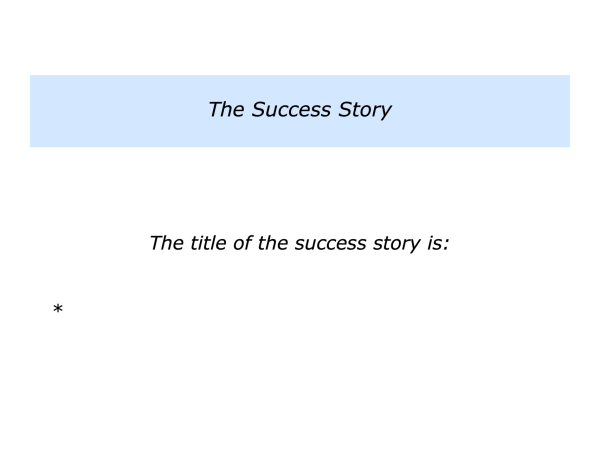
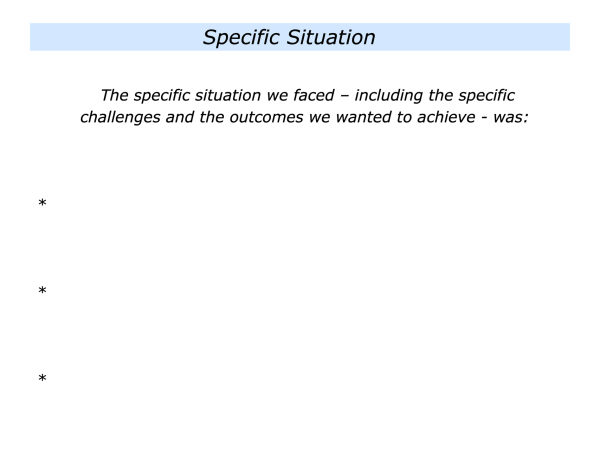
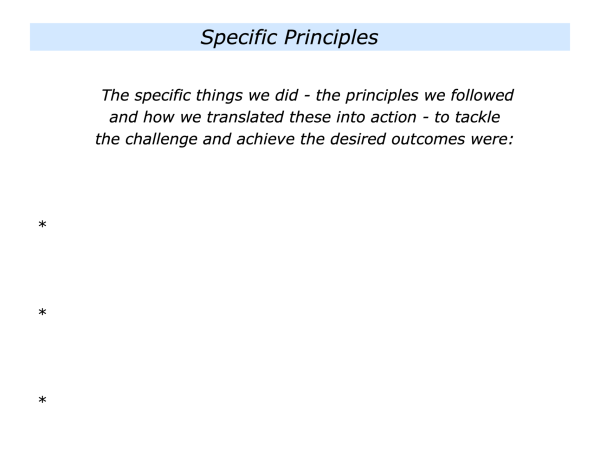
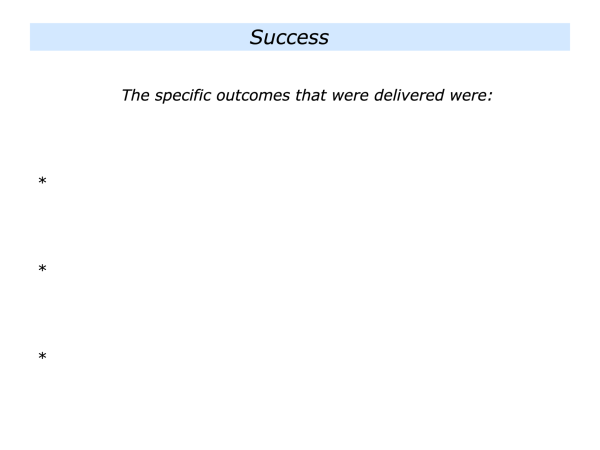
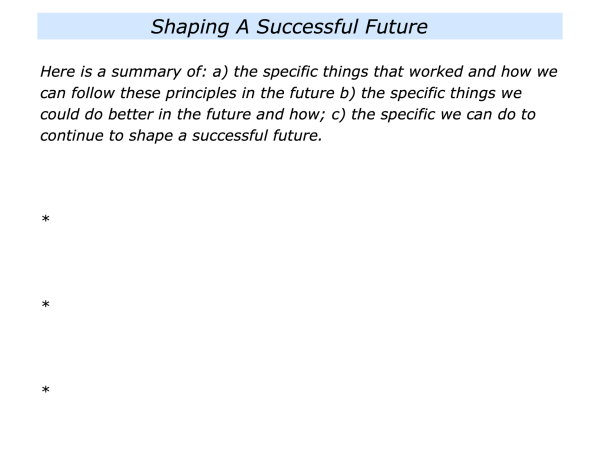
There are many ways to do fine work. One approach is to concentrate on what you want to do and cut out any noise. Different people follow this approach in different situations.
Some people follow it as individuals when doing a piece of work, doing a creative project, playing a sport or doing another activity. Some follow it when providing leadership in teams or organisations.
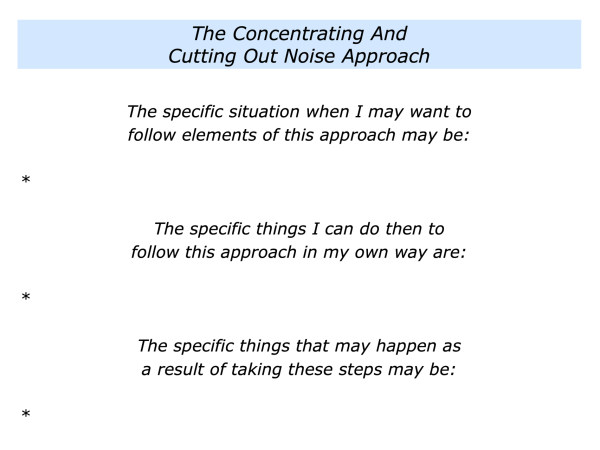
Let’s return to your own life and work. Looking ahead, can you think of a situation where you may want to follow elements of this approach? How can you do this in your own way?
If you wish, try tackling the exercise on this theme. This invites you to complete the following sentences.

Leave a Reply