


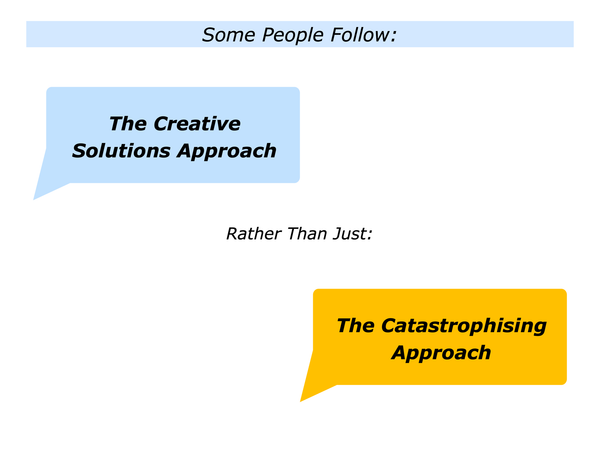
There are many ways to live life. Some people aim to follow the creative solutions approach. They do this when making decisions and managing situations in their personal and professional lives.
Some people follow the catastrophising approach. They continually focus on things that can go wrong. Whilst it is important to plan for challenging events, this calls creativity rather than just catastrophising.
Different people follow these approaches in different situations. Let’s explore these themes.
The Creative Solutions Approach
People who follow this approach try to buy time when tackling a challenge. They aim to helicopter above a situation, gather information and see the big picture. They may then aim:
To clarify what is actually happening – or what has happened – and what may happen if these things continue;
To clarify whether they need to tackle any immediate issues and, if so, to do what they can to manage the situation;
To clarify what they can control in the situation, the possible ways forward and the potential picture of success.
Different people then use different methods for clarifying their aims. Some clarify the real results to achieve. Some borrow from military terms and aim to clarify ‘the desired end state.’
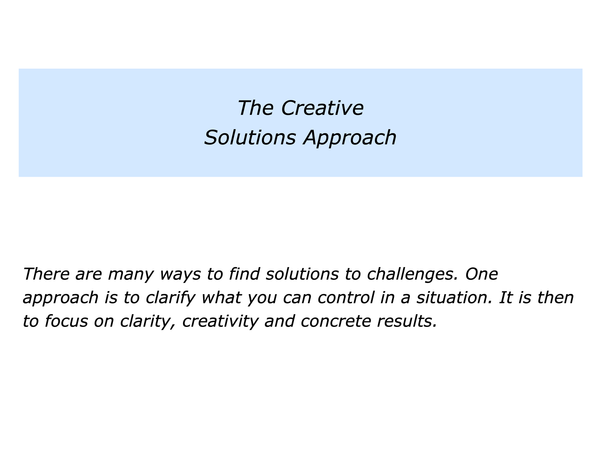
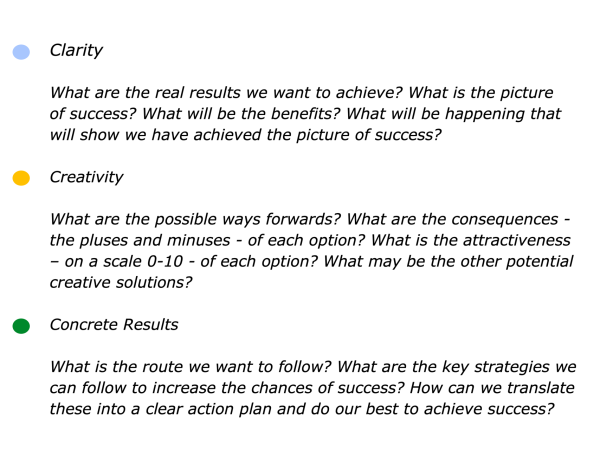
Some people find creative solutions by using the Three C approach. Bearing in mind what they can control in the situation, they work through the stages of focusing on Clarity, Creativity and Concrete Results.
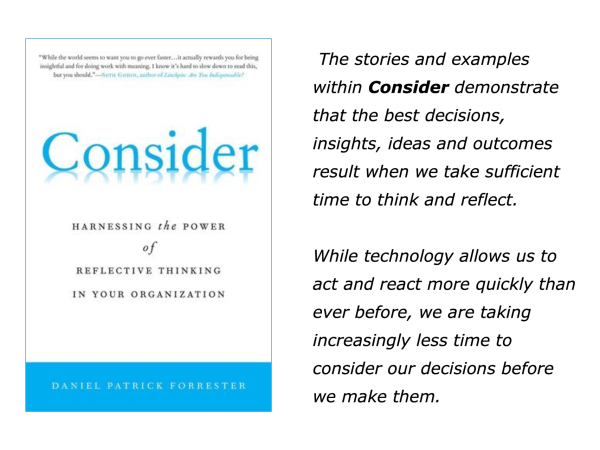
There are many books written about elements of the creative solutions approach. Daniel Forrester explains one approach in his book Consider: Harnessing the power of reflective thinking in your organization.
The following section provides some background from his website. You will, of course, have your own approach to making decisions.
Consider
This original work distilled the lessons in leadership and habits of reflective thinking that made the difference within the recent financial crisis, war in Iraq and in recovering from the oil spill in the Gulf of Mexico.
“STOP, THINK, AND DON’T DO SOMETHING STUPID!”
This is the warning Dr. Robert Bea drills into his Civil and Environmental Engineering students at the University of California in Berkeley.
Bea wants to dramatize what he terms the inevitable “oh shit” moments that present themselves-before an actual engineering calamity like the Deepwater Horizon/BP disaster happens.
Reflection supplies an arsenal of ideas and solutions to the right problems. Forrester shows us that taking time and giving ourselves the mental space for reflection can mean the difference between total success and total failure.
Different people use different methods to find solutions to challenges. As mentioned earlier, however, many apply elements of the following approach.
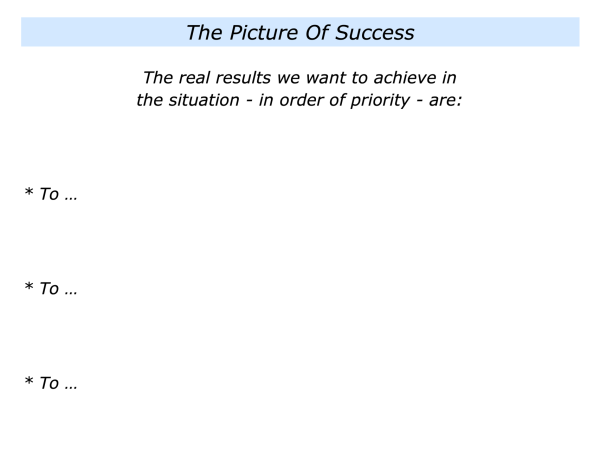
They clarify the real results to achieve in the situation – the picture of success;
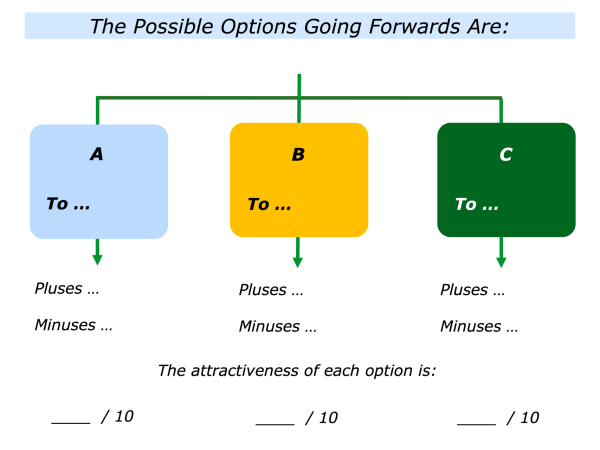
They clarify the potential options – together with the pluses and minuses of each option – for working to achieve the picture of success;
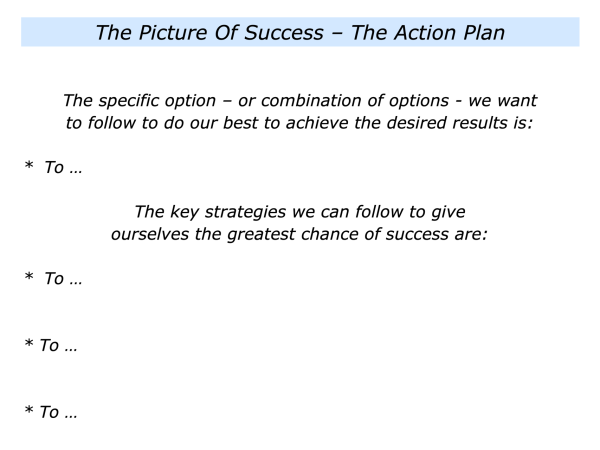
They clarify the option they want to follow – and the key strategies they can follow – to give themselves the greatest chance of achieving the picture of success.
The Catastrophising Approach
Some people follow the catastrophising approach. They use a lot of their energy to think about what can go wrong in their lives or the world. But they may find that this does not help themselves or other people.
Certainly it can be vital to plan for challenging events, but there are different ways to take this step. The following section describes one approach.
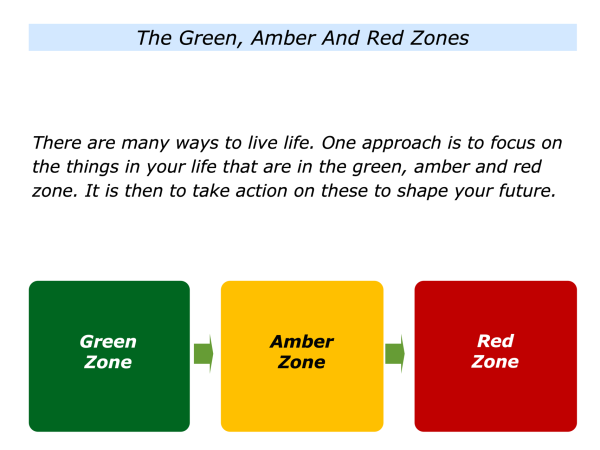
The Green, Amber And Red
Zones Approach In Your Life
This approach invites a person to be proactive and look at the things that may be in the green, amber and red zones in their life. It is then to act on these and aim to get positive results.
Imagine that a person wants to follow elements of this approach. This can involve them focusing on the following themes.
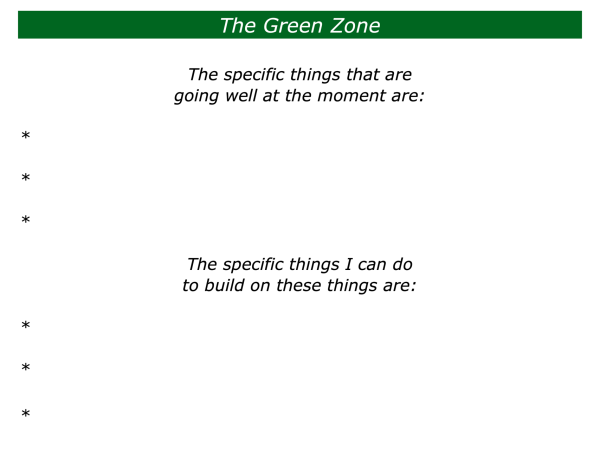
The Green Zone
Looking at their life, what are the things that are going well at the moment? They may be enjoying time with their children, doing satisfying work or doing other activities. How can they build on these things and keep developing in their life?
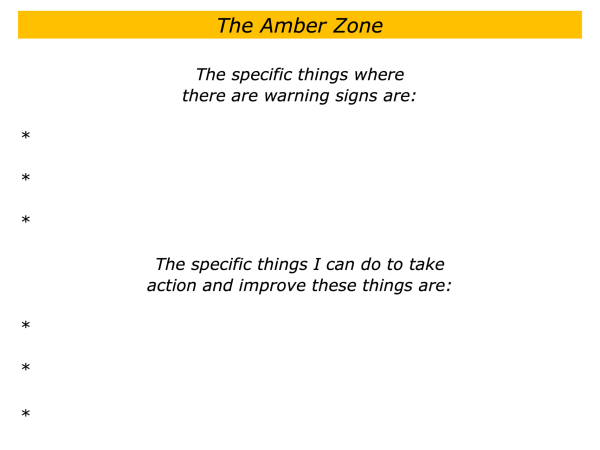
The Amber Zone
Looking at their life, are there any things that may be in the amber zone? Where may there be warning signs? They may detect these signals in their health, some relationships, financial matters or aspects of their work. How can they take action to improve some of these things?
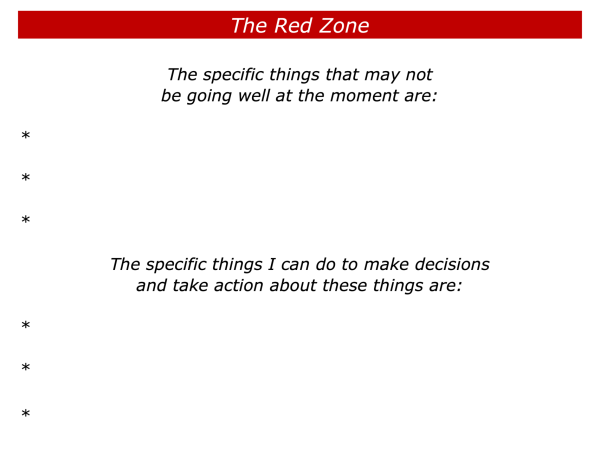
The Red Zone
Looking at their life, are there any issues that are in the red zone? Are there any that are causing difficulties or could do so in the future? Are there any recurring problems that create collateral damage for themselves or other people?
Bearing in mind what they can control, what do they want to do about these issues? Sometimes it may be possible to solve some of them. Sometimes a person may simply need to find a way to move on and use their energy in a positive way.
Many people find this exercise helps them to be proactive and stay ahead of the game. They are then more able to make considered decisions and find creative solutions to challenges. Here is the exercise on this theme.
There are many ways to live life. Some people aim to follow the creative solutions approach. They aim to do this when making decisions and managing situations in their personal or professional lives.
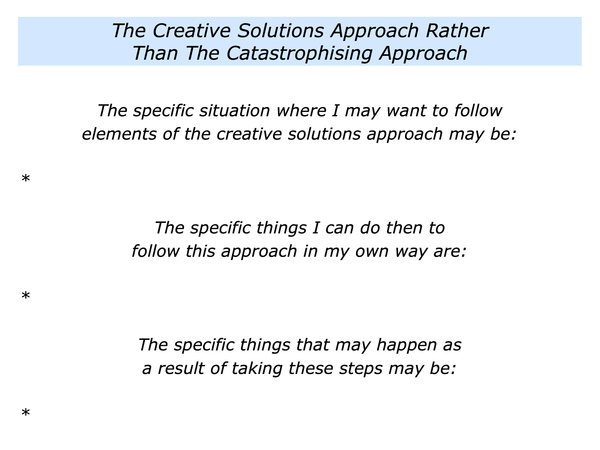
Let’s return to your own life and work. Looking ahead, can you think of a specific situation where you may want to follow elements of this approach? How can you do this in your own way?
If you wish, try tackling the exercise on this theme. This invites you to complete the following sentences.

Leave a Reply