



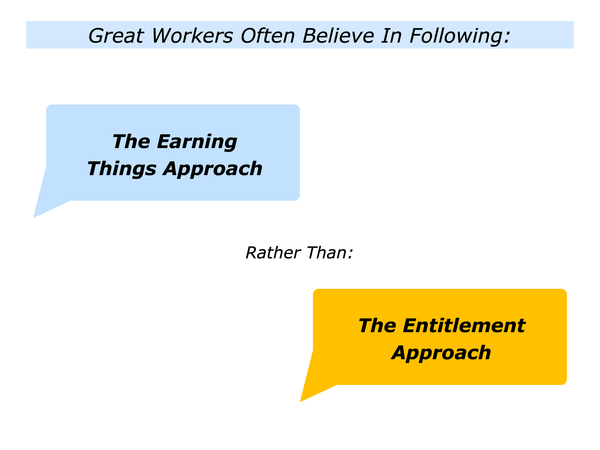
Great workers often believe in the ethic of earning things rather than being entitled to things. Different people follow this approach in different ways in their lives and work.
Some people aim: a) to do activities where they enjoy the journey – even the tough part – as much as reaching the goal; b) to apply themselves and earn things; c) to do their best to achieve excellence.
Such workers keep returning to the theme of earning things. This is at the heart of what they do. They love to throw themselves into the work and apply their knowledge to deliver success.
They don’t like to get something for nothing. They may spurn the idea of earning money from shares, for example, because they prefer to earn it through their own efforts.
As mentioned earlier, some people follow this approach by focusing on the themes of enjoyment, earning things and excellence. Let’s explore these steps.
Enjoyment
Great workers focus on the specific activities that give them positive energy. They then aim to build on their strengths and perform superb work. They focus on the activities where:
They are in their element – at ease and yet able to excel … They see the destination quickly – they go ‘A, B … and then leap to Z’ … They have a track record of finishing.
Such workers look forward to doing the work. As mentioned earlier, they enjoy the journey as well as reaching the goal. They believe in doing the grunt work on the way to doing good work and sometimes even great work
They are often good at planning their days and organising their time in blocks. They then aim to get some quick wins, do deep work and do their best on the way to achieving success.
Earning Things
Great workers love putting in the effort required to do good work. They often use their strengths, strategic thinking and skills to apply themselves to the task.
Such workers have an almost spiritual view of the importance of earning things. They believe it is vital to put in the hours required to develop their craft. They see themselves as lifetime apprentices who will never become masters.
When it comes to funding, they believe in applying their gifts to earn money. They do not believe in earning money from shares or other people’s labours. They want to apply their gifts to help people in real-life situations and enable them to achieve success.
They love to pursue their craft. They take this approach whether working as counsellors, carpenters, designers or pursuing another path. They recognise that:
You never retire from your vocation.
John Wooden, the legendary American College basketball coach, took this approach. He never mentioned winning, but his teams won more titles than any other in College basketball history.
During his early career he began developing what later became known as his famous Pyramid of Success. This consisted of guiding principles that athletes could follow both on and off the court.
The base of the Pyramid consists of phrases such as: Industriousness; Friendship: Loyalty; Cooperation; Enthusiasm. Behind each of these words is an explanation.

The word Industriousness, for example, is explained in detail. This includes the phrases.
In plain and simple English this means hard work. Very hard work.
There is no substitute for very hard work when it comes to success.
I have not known, heard of, or read about any individual anywhere who achieved real success without working extremely hard.
In fact, the great successes we all know about are individuals who almost always have greatly outworked their competition.
There are several levels to the Pyramid of Success. It culminates in the principle of Competitive Greatness. This is explained as:
Perform at your best when your best is required. Your best is required each day.
Looking at your own life, when have you done your best to earn something? You may have been starting a business, studying for an exam, saving for a flat, striving to join a team or whatever. You put in the work rather than simply felt you were entitled to the prize.
How did you set the goal? How did you aim to do the right things in the right way every day? How did you encourage yourself on the journey? What were the lessons you learned along the way? How have you applied this knowledge in your life and work?
Excellence
Great workers believe in the old maxim that excellence is a habit. Whilst building on their expertise and experience, they believe in earning their corn each day.
Superb actors, artists, artisans and other workers believe in preparing properly. Whatever their age or experience, they rehearse what they are going to do. They then click into action and do their best to achieve the desired results.
Such workers aim to do work that is effective, excellent and maybe even extraordinary. Sometimes they do work that goes into another dimension and gives people a positive memory for life.
Great leaders bear these things in mind when recruiting people. They look for people who have a track record of believing in earning things rather than in entitlement.
They then create a positive environment in which motivated people can do superb work. They also remind people of the importance of earning things, however, rather than feeling they are entitled to things.
Such leaders communicate the standards they expect people to meet when joining the organisation. Before the first working session, they may greet newcomers by giving them the following messages.
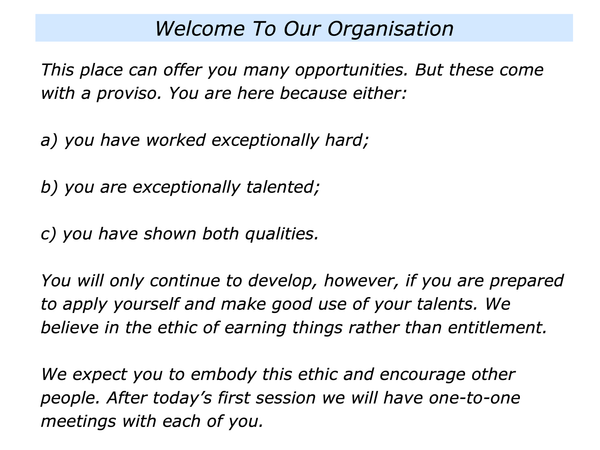
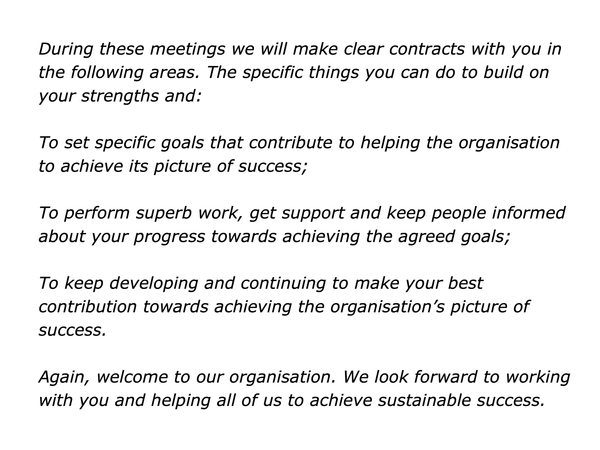
There are many ways to live life. Some people believe in following the earning things approach rather than the entitlement approach. They believe in doing their best to achieve their picture of success.
Let’s return to your own life and work. Can you think of a specific activity where you may want to follow elements of this approach? How can you follow this in your own way?
How can you focus on the specific activity you enjoy? How can you set specific goals? How can you then go through the process of earning things and doing your best to deliver excellence?
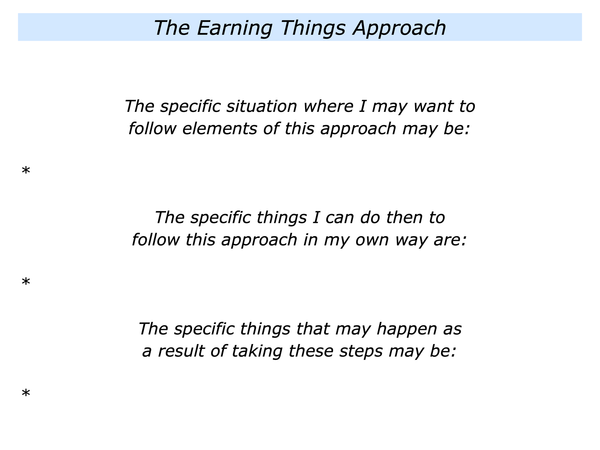
If you wish, try tackling the exercise on this theme. This invites you to complete the following sentences.

Leave a Reply