


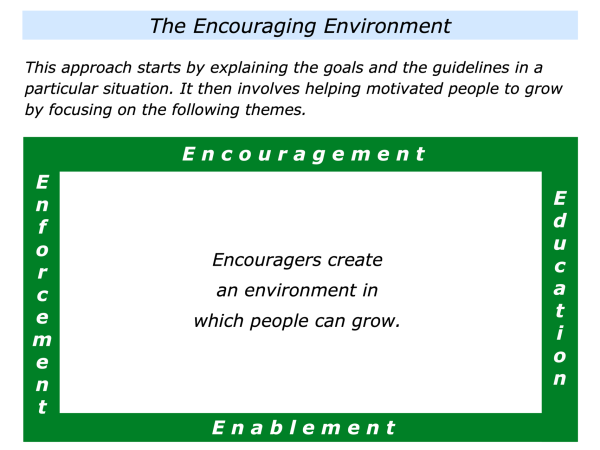
There are many ways to help people. One approach is to create an encouraging environment that enables motivated people to grow.
Encouragers are like good gardeners. They like to create an environment in which people can develop. They may do this when acting as parents, teachers, coaches, leaders or in another role.
Some start by explaining the guidelines that people can follow in a particular situation. They then aim to encourage, educate and enable motivated people to grow.
Encouragers may also need to take another role to protect the environment. They need to be prepared to enforce the guidelines to ensure that people are helped rather than hurt and can continue to grow.
This is a model that I first learned when running therapeutic communities. But it is an approach that can be applied in schools, sports teams and also work places that want to help motivated people to reach certain goals.
Different people follow this approach in different situations. Imagine that you are a leader. The following section explores how you can follow this approach in your own way.
Explaining The Approach
Good leaders start by explaining the culture to people before they join. As mentioned earlier, this is an approach that I have seen work in successful therapy programmes, teams and organisations.
Such leaders aim to make the professional deal clear before people join. They may also find that it is sometimes important to remind people of the professional deal at certain times in an organisation’s life.
Different leaders do this in different ways. Some aim to describe the organisation’s goals and the guidelines to follow by outlining the following themes.
They explain the organisation’s purpose, principles and picture of success.
They explain the reasons for the principles and also the benefits – to all the various stakeholders – of achieving the picture of success.
They explain how people can follow the principles – together with examples that bring these to life – and help to achieve the picture of success.
When running therapeutic communities, for example, we began by explaining the deal to people who wanted to join.
The community’s responsibilities were to provide an encouraging environment and to follow certain guidelines. It was also to pass on practical tools that motivated people could use to achieve their personal goals.
The individual’s responsibilities were to take responsibility and follow the community’s guidelines. It was also to do their best to help themselves and other people to achieve their personal goals.
The Community’s Responsibilities Are:
* To …
* To …
* To …
The Individual’s Responsibilities Are:
* To …
* To …
* To …
Many successful organisations also make the professional deal clear. They communicate both the organisation’s and the individual’s responsibilities in working to achieve the goals.
The person is then invited to reflect and decide if they want to opt into contributing to the culture. If so, they make clear contracts about their best contribution towards achieving the goals.
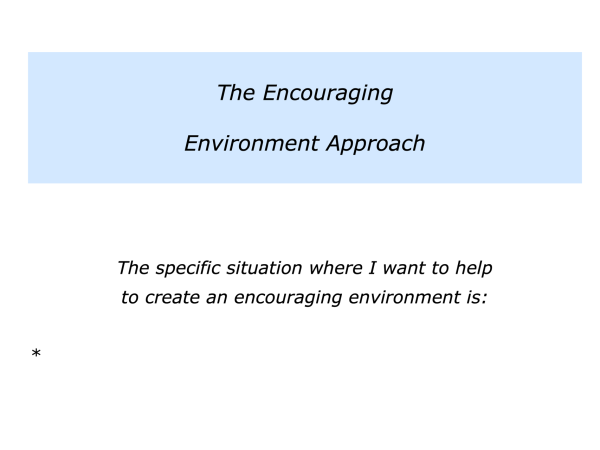
Let’s return to your own work. Can you think of a particular situation where you want to help to create an encouraging environment. You may want to focus on one in your professional life.
If you wish, try tackling the exercise on this theme. This invites you to start by describing the specific situation where you may want to help to create an encouraging environment.
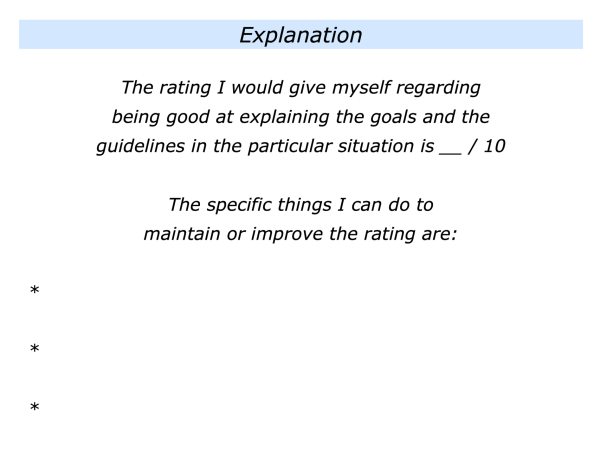
Let’s move on to the next stage. Looking at this particular situation, how good do you think you are at explaining to people the goals and guidelines to follow?
How would you rate yourself on a scale 0-10? What are the specific things you could do to maintain or improve the rating? If you wish, try tackling exercise on this theme.
Imagine that you have explained the goals and guidelines to follow in a particular situation. It can then be time to focus on the following theme.
Encouragement
Good leaders, for example, are often positive and predictable. They aim to create an encouraging environment in which motivated people make their best contributions towards achieving the professional goals.
Some leaders have a positive presence. They are warm, welcoming and show a sincere interest in people. They also expect people to behave in a professional way, however, and to do their best in situations.
Some believe in helping people: a) to build on their strengths; b) to manage the consequences of any weaknesses. They then encourage people to work towards their personal or professional goals.
Some leaders follow the philosophy of ‘catching people doing something right’. This is an approach that has been used by many encouragers in education, sports, business and other fields. Here is an overview of the approach.
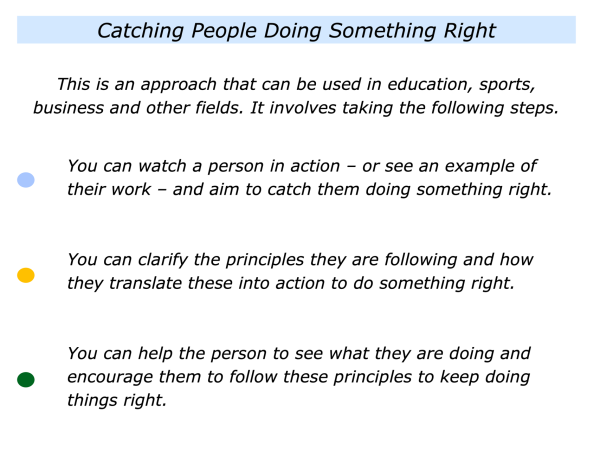
One of my early mentors emphasised this theme when we met during the late 1960s. They expressed this in the following way.
“When looking at people, try to have positive eyes. Look for when they are doing things right. Anybody can tell you what people do wrong. The key is to look for what people do right.
“Try to focus on their specific actions – the specific things they do and say – to get the right results. It is then to encourage them to do more of these things in the future.”
Ken Blanchard, the author of many books on leadership, underlined the value of this approach. He explained this in the following way.
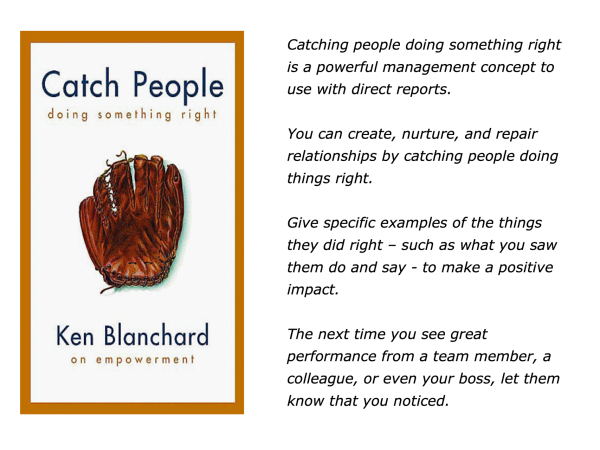
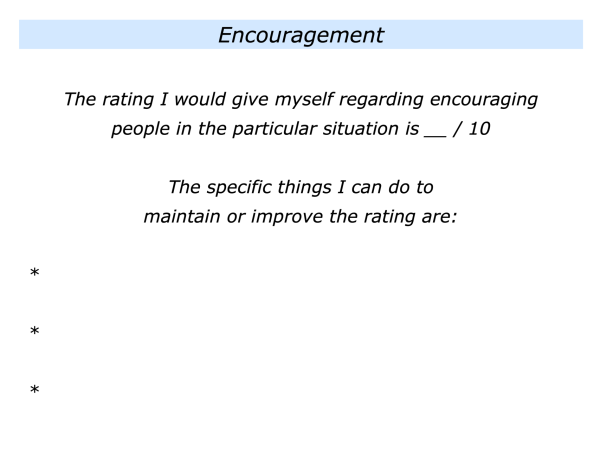
Let’s return to your own life. Imagine that you want to encourage people in particular situation in your professional life. Looking at this situation, how good do you think you are at encouraging people?
How would you rate yourself on a scale 0-10? What are the specific things you could do to maintain or improve the rating? Here is the exercise on this theme.
Education
Good encouragers sometimes go beyond supporting people. When appropriate, they move on to the next step in helping people to achieve certain personal or professional goals.
When appropriate, some move into the role of being educators. They may pass on knowledge, wisdom and models that people can use to achieve positive results.
Good leaders, for example, continually aim to show people what good looks like. Different leaders do this in different ways. Some produce success stories that highlight when people do fine work.
When doing so, they sometimes use the following framework.
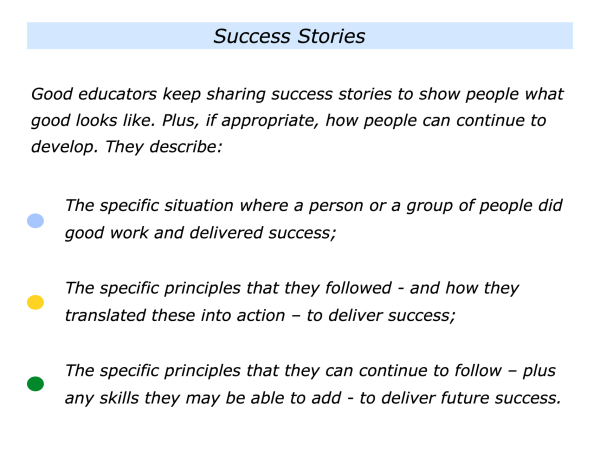
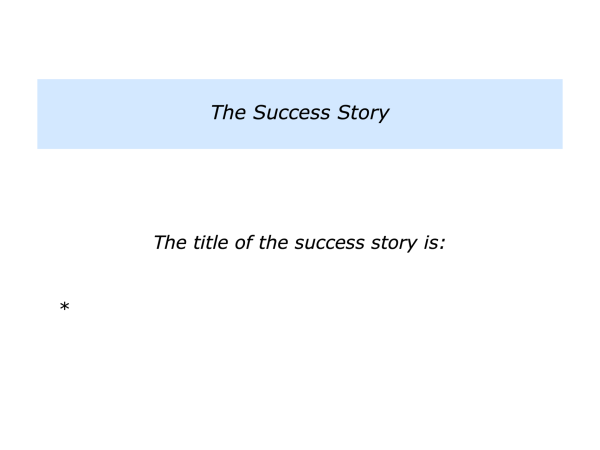
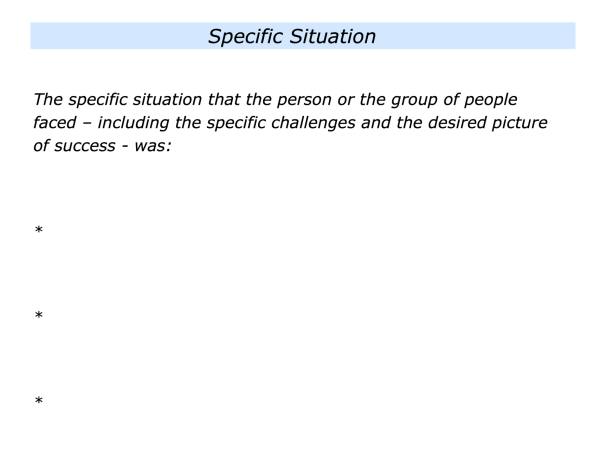
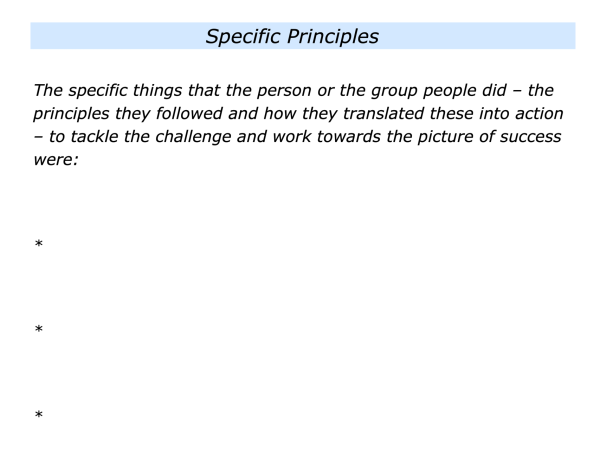
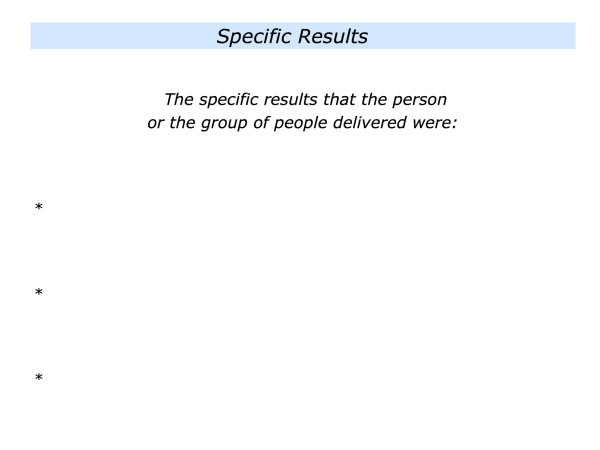
Good encouragers sometimes act like educators and help people to keep adding to their repertoire of skills. This offers people more choices and more freedom to shape their futures.
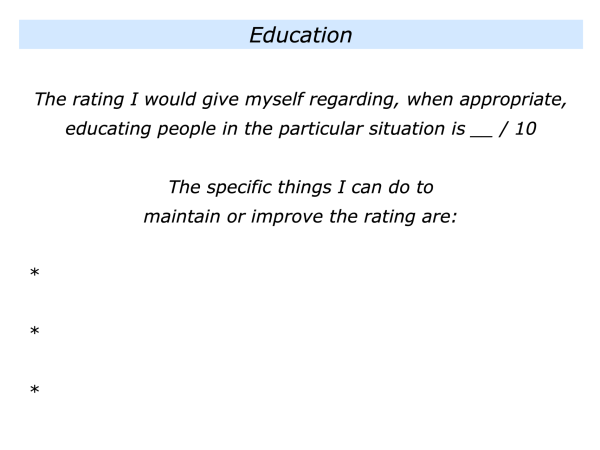
Let’s return to your own work. Imagine that you have chosen to focus on a particular situation in your professional life. Looking at this situation, how good do you think you are at, when appropriate, educating people?
How would you rate yourself on a scale 0-10? What are the specific things you could do to maintain or improve the rating? Here is the exercise on this theme.
Enablement
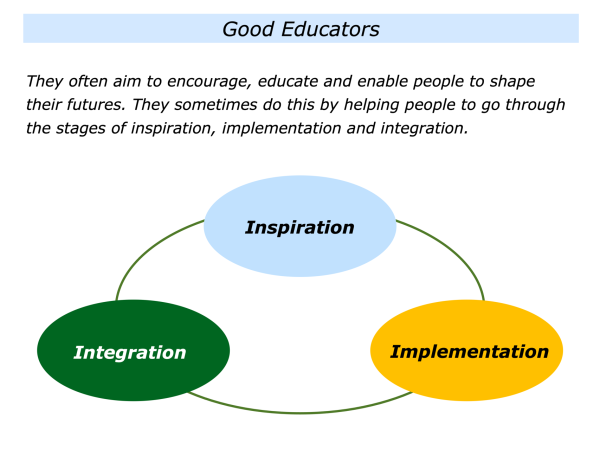
Good encouragers sometimes enable people to continue to develop and work towards certain personal or professional goals. Some do this by following elements of one approach taken by good educators.
Such educators often focus on inspiration, implementation and integration. They start by creating an inspiring environment and clarifying what people want to learn.
They help people to set specific goals and offer them with implementation tools that work. They then help people to integrate the learning in their own ways on the route towards achieving their goals.
Good leaders sometimes enable people to shape their futures. Some do this by encouraging people to focus on continuous improvement. There are many models for taking this approach.
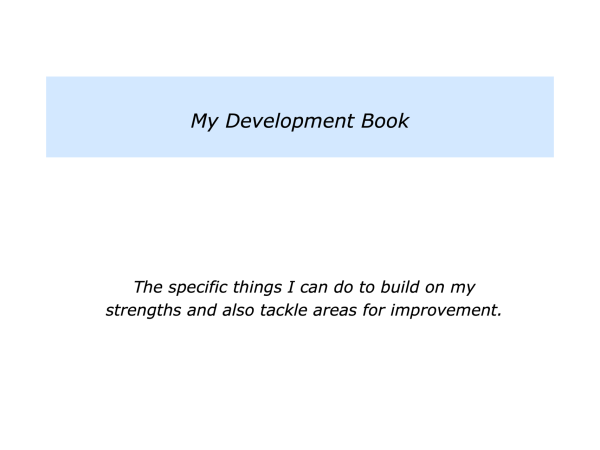
Looking back at my own career, for example, I have often encouraged people to keep something called My Development Book.
This approach encourages people to focus on the specific things they are doing in their lives or work. It then invites them to complete the following sentences.
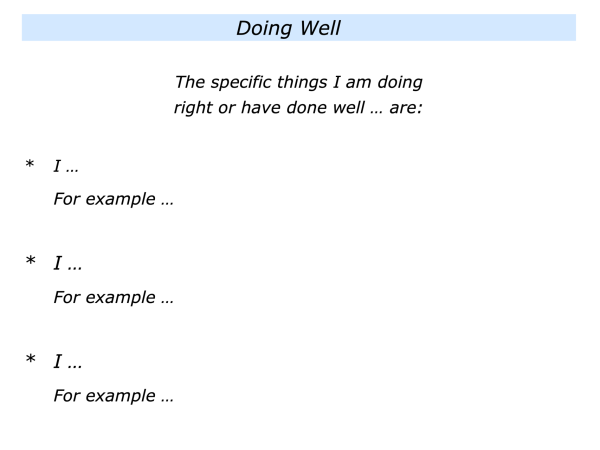
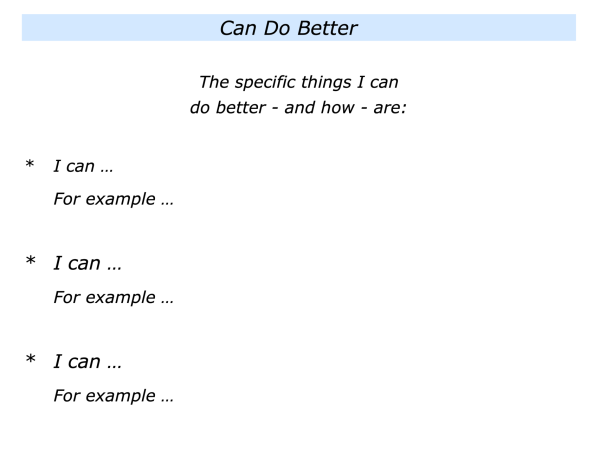
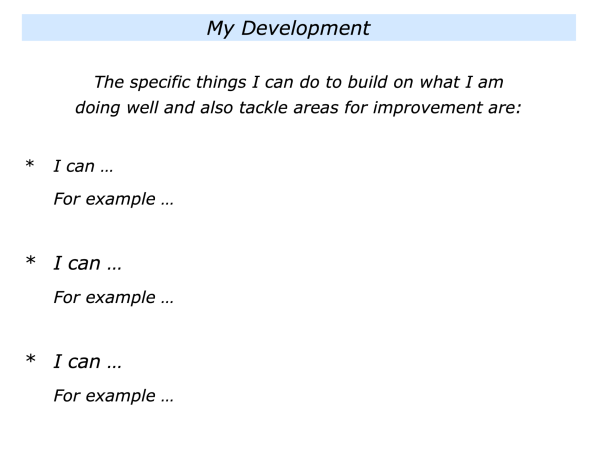
There are many ways to enable people to shape their futures. One approach is to provide them with practical tools that work. Another is to enable them get into the habit of self-evaluation and focusing on continuous improvement.
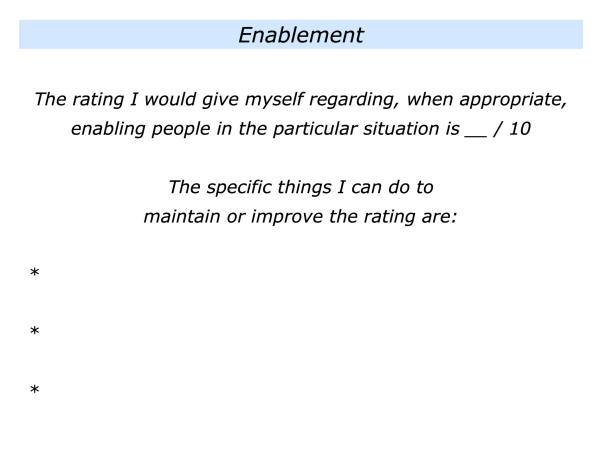
Let’s return to your own work. Imagine that you have chosen to focus on a particular situation in your professional life. Looking at this situation, how good do you think you are at enabling people?
How would you rate yourself on a scale 0-10? What are the specific things you could do to maintain or improve the rating? Here is the exercise on this theme.
Enforcement
Good encouragers are custodians of the culture. Sometimes this involves them needing to be prepared to enforce the guidelines and protect the environment from those who may want to spoil it for others.
Good leaders, for example, believe it is important for people to follow the required professional standards. They are therefore prepared to act if somebody behaves in a way that is unprofessional or hurts others.
Such leaders then meet with the person who may be causing the difficulties. They may then say something along the following lines.
“Let’s go back to the original session we had regarding the guidelines – such as the professional standards – we want people to follow to help us to reach the goals.
“As you know, the organisation’s purpose, principles and picture of success is …
“The reasons why we encourage people to follow these principles are because …
“I am going to ask you to take time to reflect and decide if you want to follow these principles in the future.
“If so, then we can look at how you would like to follow these and translate them into action.
“It is your choice regarding whether or not you want to follow the principles. So take some time to reflect and then get back to with your decision.
“Depending on the decision you take, we can then look to the next steps to take in the future.”
Good encouragers are also prepared to take this approach. This is because they want to protect the environment for the people who aim to follow the guidelines and do their best to achieve certain goals.
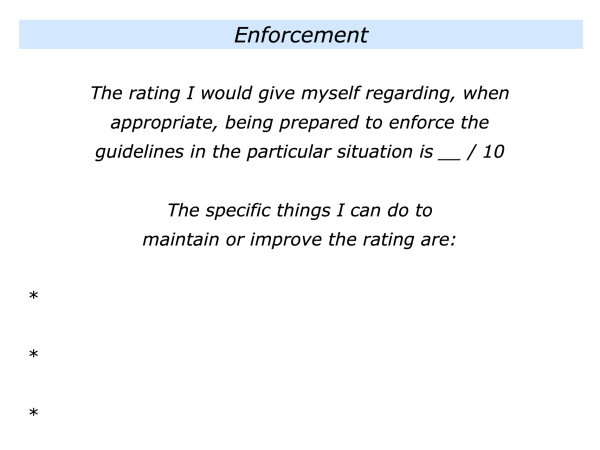
Let’s return to your own work. Imagine that you have chosen to focus on a particular situation in your professional life. Looking at this situation, how good do you think you are at, when appropriate, being prepared to enforce the guidelines?
How would you rate yourself on a scale 0-10? What are the specific things you could do to maintain or improve the rating? Here is the exercise on this theme.
There are many ways to help people. One approach is to create an encouraging environment. It is then to aim to encourage, educate and enable people to grow.
As mentioned above, sometimes it can also be important to enforce the guidelines in order to protect the environment. It is then to continue to help people to develop and grow.
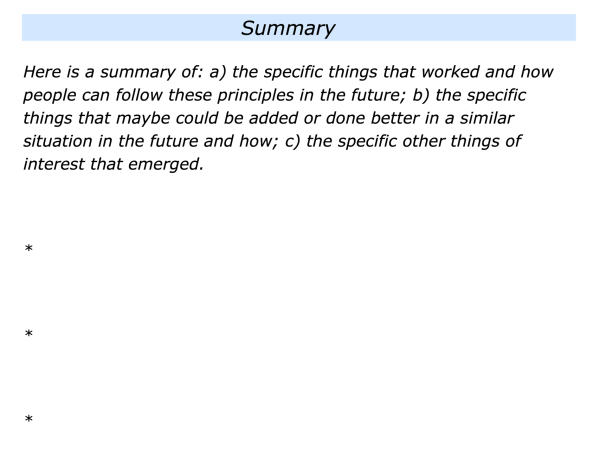
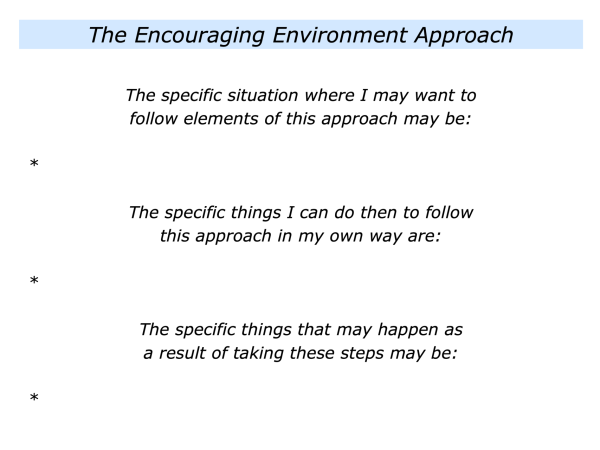
Let’s return to your own life and work. Looking ahead, can you think of a situation where you may want to follow elements of this approach? How can you do this in your own way?
If you wish, try tackling the final exercise on this theme. This invites you to complete the following sentences.

Leave a Reply