



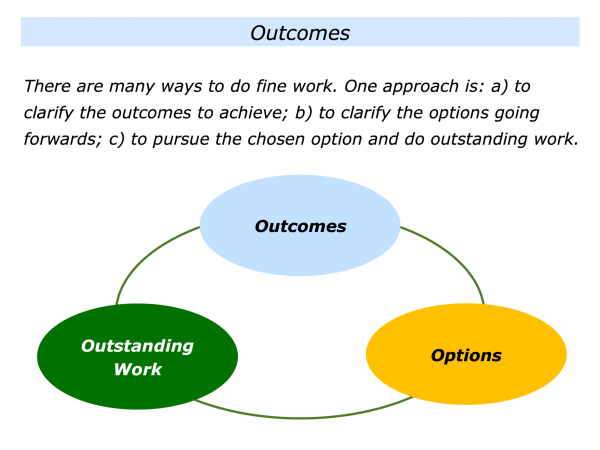
There are many ways to do fine work. One approach is: a) to clarify the outcomes to achieve; b) to clarify the options for going forwards; c) to pursue the chosen option and do outstanding work.
Different people follow this approach in different ways in their lives and work. Whichever route they take, however, they often focus on the following themes.
Outcomes
Imagine that a person is aiming to tackle a challenge or achieve a specific goal. They will often start by gathering information about what is happening in a situation. Bearing in mind what they can control in the situation, they will then focus on the outcomes they want to achieve.
Different people will, of course, want to achieve different outcomes in different situations. They may want to achieve economic, emotional or other outcomes. Let’s look at some examples.
A person may want:
To feel more in control of a situation … To encourage their child … To feel happier … To help a person to succeed … To follow a healthier lifestyle … To build on their strengths and do satisfying work.
To become the best they can be in a certain activity … To manage a transition successfully … To find solutions to a specific challenge … To achieve a specific goal in their life or work … To feel more at peace.
A leader of an organisation may want:
To build a successful organisation … To ensure it delivers good quality work … To improve people’s morale … To build a positive culture in which motivated people deliver peak performances.
To ensure the organisation achieves certain goals … To ensure people deliver today’s business whilst being in good shape to deliver tomorrow’s business … To help the organisation to achieve ongoing success.
Sometimes it can be important for a person to go beyond the headline aims they want to achieve. They may need to go deeper and be crystal clear on the desired outcomes by exploring the following questions.
Clarifying The Outcomes
What are the real results – the outcomes – that I want to achieve? What is the picture of success? What will be happening that will show that I have achieved these outcomes?
Good decision makers recognise that clarity is crucial. It is vital to clarify the real results to achieve – the real ‘What’ – before moving on to the possible ways forward. Let’s look at some examples.
The leader of a team started by saying they wanted to improve the morale in the team. They initially aimed to do this by attempting to turnaround a couple of negative people in the team.
Bearing in mind what they could control, we focused on the real results they wanted to achieve. These settled on the following aims. They wanted:
To build a positive and successful team;
To lead a team of people who aim to be positive, professional and make their best contributions towards achieving the team’s goals;
To help these people to perform superb work, find solutions to challenges and do their best to achieve the picture of success.
Let’s consider some other examples of how a person’s original aims can change. These are just the headlines. Each person went on to be more specific about the outcomes they wanted to achieve.
Person A originally said:
“I want to help my child who is dyslexic to do better at school.”
They settled on:
“I want to help my child to build on their strengths, set specific goals and achieve success.”
Person B originally said:
“I want to stop feeling stressed.”
They settled on:
“I want to feel more in control in certain situations.”
A person may sometimes want to achieve lots of goals related to their chosen topic. If so, it can be useful to list these in order of priority. They can then focus on working towards achieving their top priority goals.
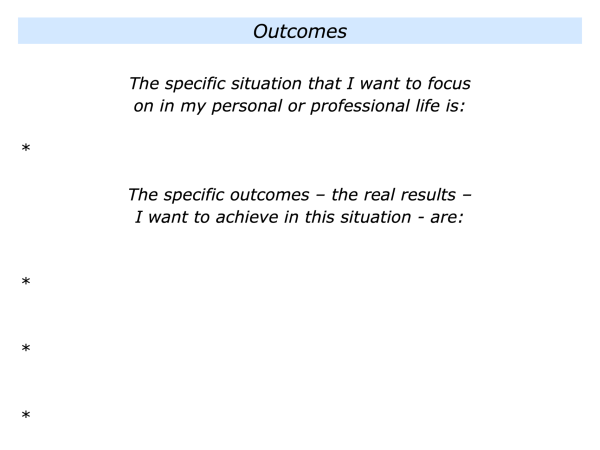
Let’s return to your own life and work. Looking ahead, can you think of a situation where you may want to follow elements of this approach? What may be the personal or professional situation?
What are the real results – the outcomes – you want to achieve? What will be happening that will show you have achieved the picture of success? What will be the benefits of achieving these goals?
If you wish, try tackling the exercise on this theme. This invites you to complete the following sentences.
Options
Imagine that a person has clarified the real results – the outcomes – they want to achieve in a situation. They can then use their creativity to explore the possible options for working towards achieving their goals.
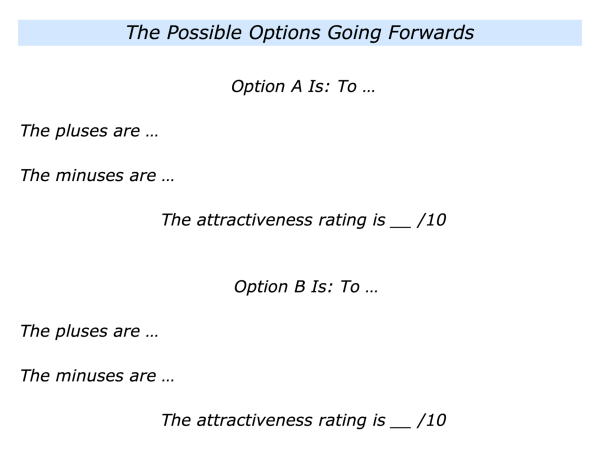
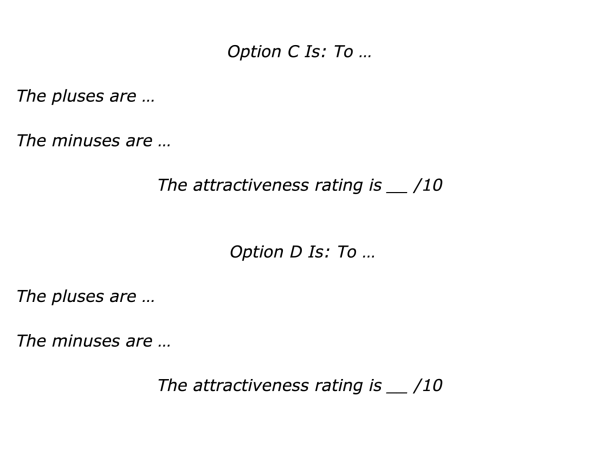
Bearing in mind what they can control, they may then aim to explore: a) the possible ways forward; b) the pluses and minuses of each option; c) the attractiveness of each route.
Sometimes it is important for a person to brainstorm all the possibilities – even those they may not pursue. This can help to get all the options on the table.
Different people do this in different ways. Some may then make a map of their potential options for working towards achieving their goals.
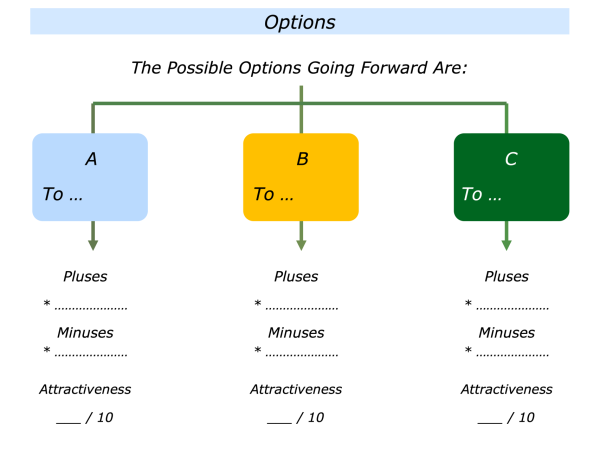
A person may then take time to let the ideas incubate. They may also explore any other potential solutions by considering the following questions.
What are the real results to achieve? What are the possible options going forward? What are the pluses and minuses of each option? How attractive are each of these options?
Are there any other potential creative solutions? What are the best parts of each option? Is it possible to combine these into another potential way forward?
What do we know works in this kind of situation? When have I tackled a similar situation successfully? What did I do right then? What were the principles I followed? How did I translate these into action?
When have other people tackled a similar situation successfully? What did they do right then? What were the principles they followed? How can I follow some of these principles in my own way?
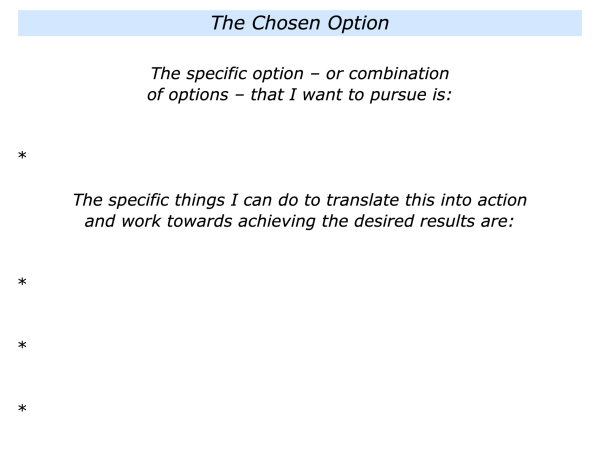
Bearing all these things in mind, what is the route I want to follow? How can I translate this into action? What else can I do to increase the chances of achieving the goals?
Let’s return to your own life and work. Imagine that you have clarified the outcomes you want to achieve in a situation.
Looking ahead, what are the possible options you can pursue? What are the pluses and minuses of each option? What is the attractiveness of each route?
What is the route – or combination of routes – you want to follow? How can you translate this into action? How can you get an early success? How can you then work to achieve the desired results?
If you wish, try tackling the exercise on this theme. It will then be time to go onto the next stage.
Outstanding Results
Imagine that a person has taken the following steps when focusing on a specific situation in their personal or professional life. They have aimed:
To clarify the specific outcomes – the real results – they want to achieve;
To clarify the possible options going forward together with the pluses and minuses of each option;
To clarify the specific option they want to follow and their action plan for working towards achieving the desired results.
Moving into action, they may then aim to follow their chosen strategies and get some early successes. They may then aim to do their best to deliver outstanding results.
A person may follow these steps when aiming to encourage a person, tackle a challenge or reach a specific goal. They may do it when acting as a parent, educator, artist, athlete, medic or in another professional role.
They may do this by building on their strengths and following strategies that work. They may do it by aiming to deliver consistently high standards and, when appropriate, adding that touch of class.
Let’s return to your own life and work. Imagine that you have clarified the outcomes you want to achieve in a specific situation. This could be in your personal or professional life.
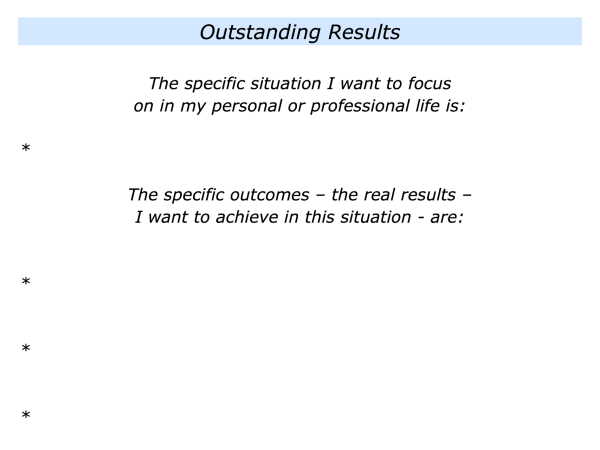
Looking ahead, how can you follow your chosen strategy? How can you anticipate and manage any potential challenges? How can you perform superb work and deliver outstanding results?
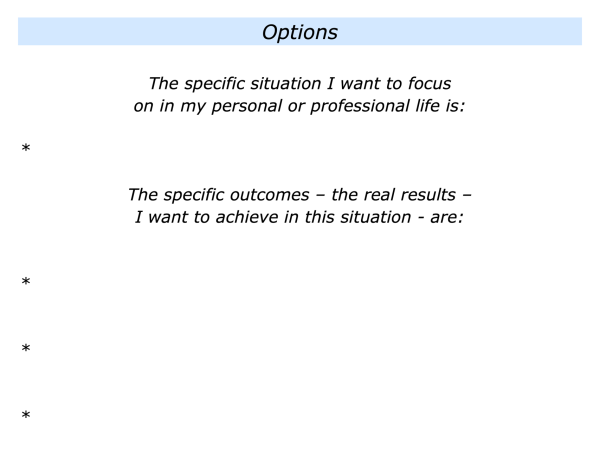
If you wish, try tackling the exercise on this theme. This invites you to describe how you can do your best to achieve the desired picture of success.

Leave a Reply