



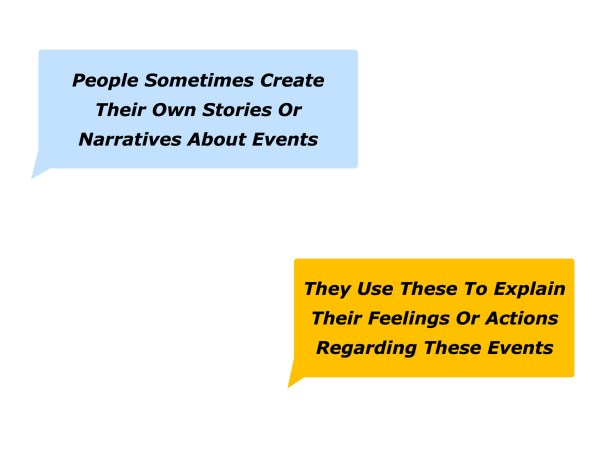
People often choose the way they respond to events. Some create their own story or narrative – their interpretation or presentation of what happened – to explain these events to themselves or other people.
A person may base this story or narrative on the feelings they have. They may then look for examples that reinforce the way they feel or interpret such events.
Some people may take this approach after ending a relationship or leaving a work place. Some may take it when experiencing a particular event or situation in their lives or work.
Some people may create positive stories to encourage themselves or other people. Some may create negative stories to justify their feelings or actions regarding what happened. Let’s explore these different approaches.
The Negative Approach
Some people may take a negative approach regarding a particular event or experience. Different people may do this in different ways and for different reasons.
Sometimes this may be based on the reality of what actually happened.
Sometimes it may be based on their feelings about what happened.
Sometimes it may be based on their interpretation of what happened.
A person may then create a story or a narrative to justify their feelings or actions. They may feel that they have been wronged or that others have behaved badly. This may or may not be the case, but it can be a position they choose to take.
Such a person may also keep looking for examples that confirm or justify their approach. They keep sticking to their view and resort to what we know is called confirmation bias.
Sometimes another person may try offer the person another view or explanation. But this may not work. Once a person has decided on their position, they may focus on reinforcing their beliefs.
There may be some occasions, however, when a person actually does choose to change their views and even behave in another way. This can happen if either:
They experience a life-changing event that gets them to reasess their values;
They have a Eureka Moment and then decide to focus on behaving in another way;
They see that changing their view or behaviour will be more beneficial to themselves or other people.
As mentioned earlier, however, many people choose to maintain their story or narrative. This gives them a reason to continue to behave in a certain way in their lives or work.
Some people take another approach to interpreting and reacting to events. Let’s explore this theme.
The Positive Approach
People who take this approach are often positive realists. They have a positive attitude but are good at reading reality. They are good at seeing both successful and unsuccessful patterns.
They may sometimes respond to situations on a feelings level but then aim to see the big picture. They may buy time to gather information and see what is actually happening.
Such a person may have a pattern of taking responsibility. They may do this when focusing on relationships, work or other events. Bearing in mind what they can control in the situation, they may then explore the following themes.
They may focus on the positives in the situation;
They may focus on the possible opportunities;
They may focus on the possible solutions to challenges.
A person who takes this approach has often developed an internal locus of control. Bearing in mind what they can control, they focus on how they can shape the future. They then do their best to achieve the picture of success.
Such a person may also have a developed a positive script that they aim to follow in their life. Different people follow different scripts in their lives and work.
Some people may follow positive scripts, some people may follow negative scripts. The scripts they follow can have consequences for themselves and other people.
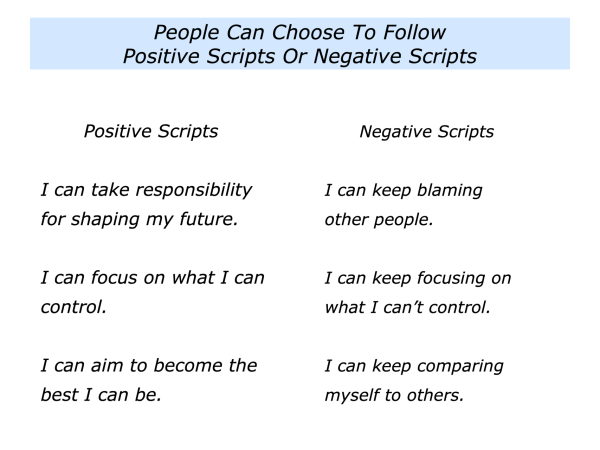
There are many ways to live life. Some people choose to respond to events by creating a positive or negative story or narrative. They then use this to describe the event to themselves or other people.
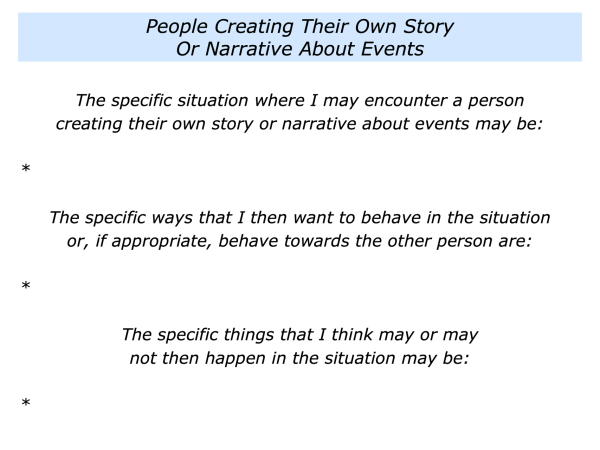
Let’s return to your own life and work. Looking ahead, can you think of a situation where you may encounter a person follow elements of these approaches?
Bearing in mind what you can control, how do you want to behave in the situation? How do you want to behave towards the other person? What do you think may or may not then happen in the situation?
If you wish, try tackling the exercise on this theme. This invites you to complete the following sentence.

Leave a Reply