



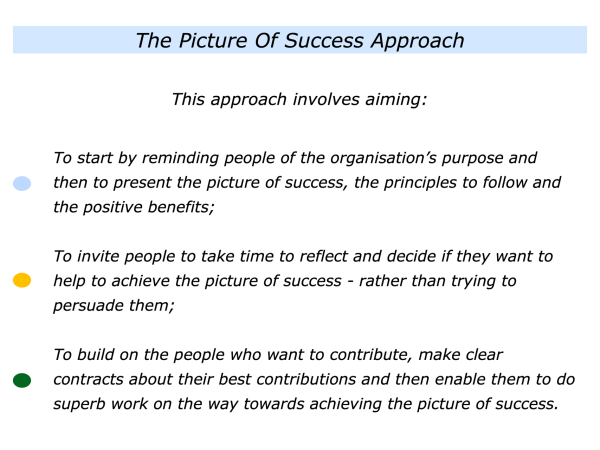
This is an approach that can be used when leading teams or organisations.
The first step is to remind people of the organisation’s purpose. This is because it can be important for people to understand the reasons for working towards certain goals. It then involves aiming:
To present the picture of success, the principles to follow and the positive benefits;
To invite people to take time to reflect and decide if they want to help to achieve the picture of success – rather than trying to persuade them;
To build on the people who want to help, make clear contracts about their best contributions and then enable them to do superb work on the way towards achieving the picture of success.
This approach is different from trying to persuade people who may not be interested or have their own agendas.
It is to work with the people who want to volunteer in rather than those who have other views. Let’s look at one example of translating it into action.
The Picture Of Success Approach
Good leaders sometimes take the following steps. They may gather people together and say something along the following lines.
Welcome to today’s session.
Today I am going to share with you our aims for the next year. As you know, the purpose of our organisation is:
* To …
Bearing this in mind, I will share our goals for the next year – the picture of success. I will also explain the principles we want to follow and the benefits of achieving the goals.
This will be followed by giving you the chance to ask questions for information. There will also be the chance to add ideas to the goals.
The next step will be for you to take time to reflect and decide if you would like to help to achieve the goals. If so, we can move on to the next stage.
This will involve making clear contracts about your best contributions towards achieving the aims. We will also clarify the support you may need to do superb work on the way towards achieving the picture of success.
Bearing these things in mind, here is an overview of our aims for the next year.
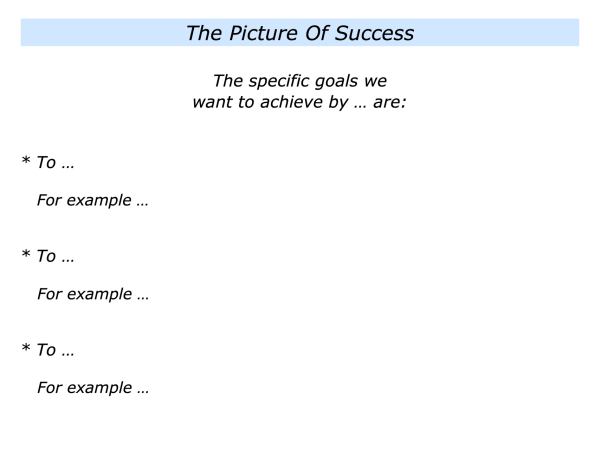
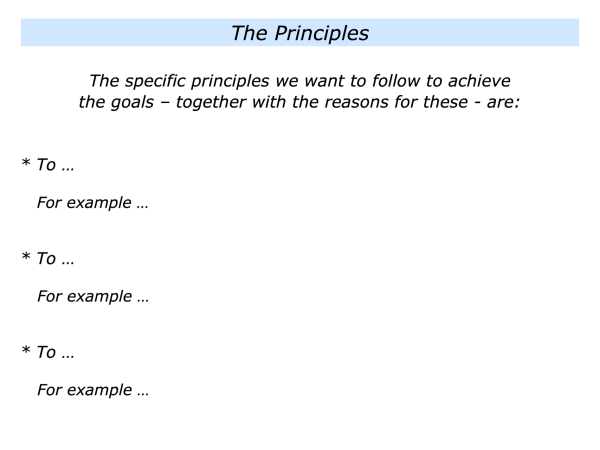
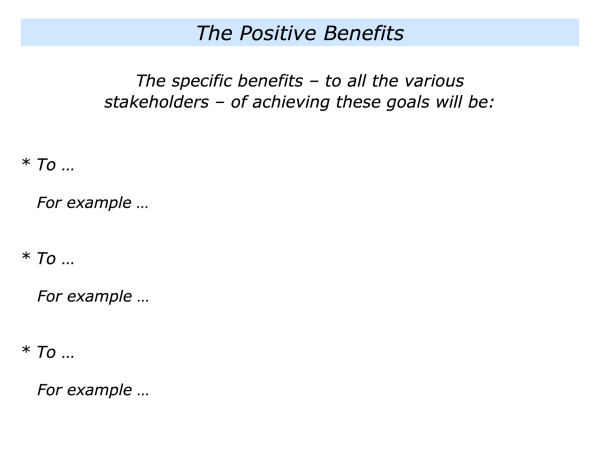
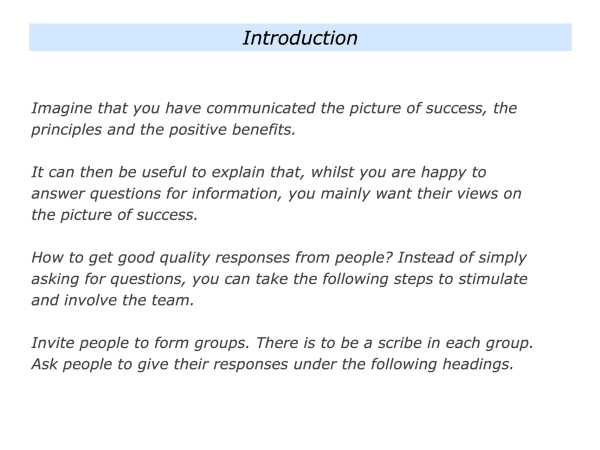
Imagine that the leader has presented the picture of success, the principles and the positive benefits.
They may then aim: a) to answer some questions for information; b) to invite people to reflect and clarify the contribution they would like to make.
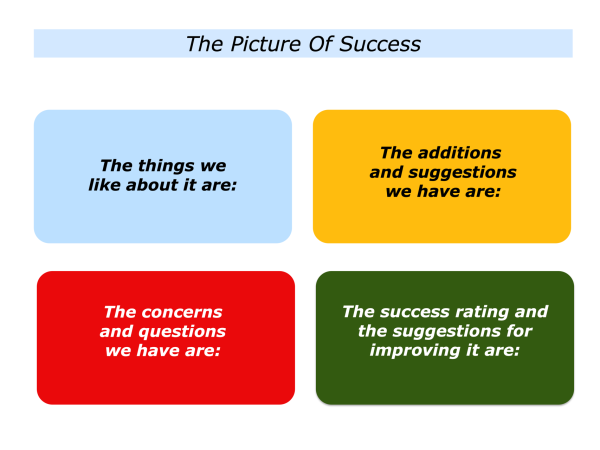
Some leaders may add another stage. They give people the opportunity to go into groups and do several exercises. They invite people to focus on the picture of success and consider the following themes.
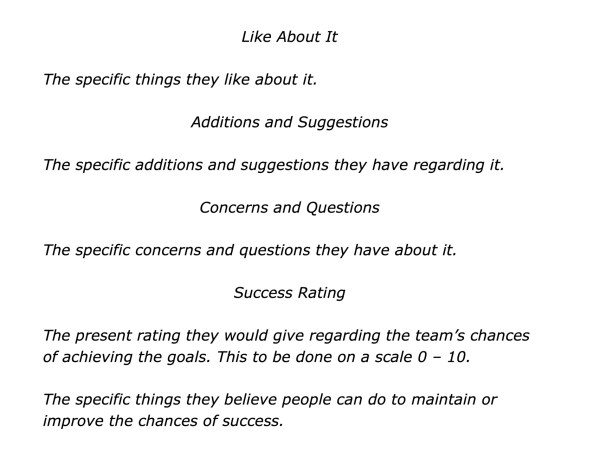
Like About It – The specific things they like about it.
Additions and Suggestions – The specific additions and suggestions they have regarding it.
Concerns and Questions – The specific concerns and questions they have about it.
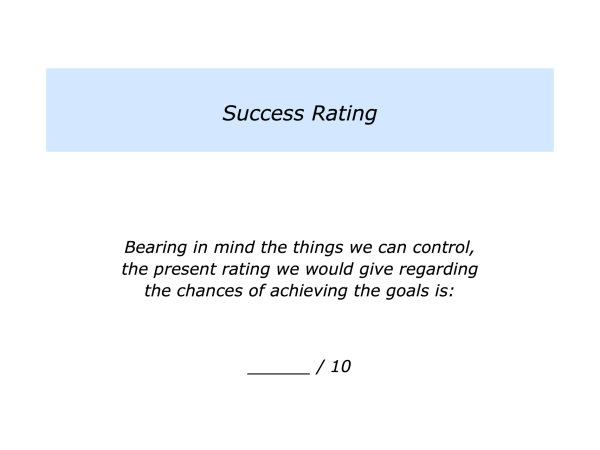
Success Rating – The present rating they would give regarding the chances of achieving the goals. This to be done on a scale 0 – 10.
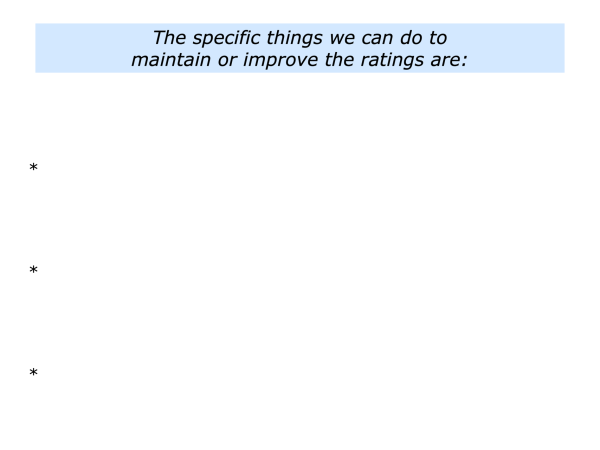
The specific suggestions people have regarding what can be done to maintain or improve the chances of success.
Such leaders then invite people to present back their ideas. Some of these may then be incorporated into the action plan for achieving the picture of success.
Imagine that you want to take this approach. The following pages provide an introduction and instructions for the exercise.



Imagine that a leader has either given people the opportunity to ask questions for information or to do the exercises described above. Such a leader may then say something like the following lines.
I would now like you to take time to reflect and decide if you would like to contribute towards achieving the goals. If so, we can then make clear contracts about:
The specific contribution you want to make towards achieving the goals;
The specific support you may need when working towards achieving the goals;
The specific things you will do to proactively keep people informed about your progress towards helping to achieve the goals.
Bearing these things in mind, take time to reflect. When appropriate, you can then meet with me or your manager to focus on the next steps.
Thank you for your time today. I look forward to working with you to achieve the picture of success.
Such leaders build on the people who want to contribute towards achieving the goals. They do not get into arguments or try to persuade people who do not want to do so.
Sometimes this can involve bringing in people who want to contribute towards achieving the aims. It may also involve aiming to be moral and helping some people to move on in, as far as possible, a positive way.
——————-
Different leaders follow the picture of success approach – rather than the trying to persuade people approach – in different situations. When doing so, they may follow the steps described at the beginning of this piece.
Such leaders often start by reminding people of the organisation’s purpose. This is because it can be vital for people to understand the reasons for working towards certain goals. They then aim
To present the picture of success, the principles to follow and the positive benefits;
To invite people to take time to reflect and decide if they want to help to achieve the picture of success – rather than trying to persuade them;
To build on the people who want to help, make clear contracts about their best contributions and help them to do superb work on the way towards achieving the picture of success.
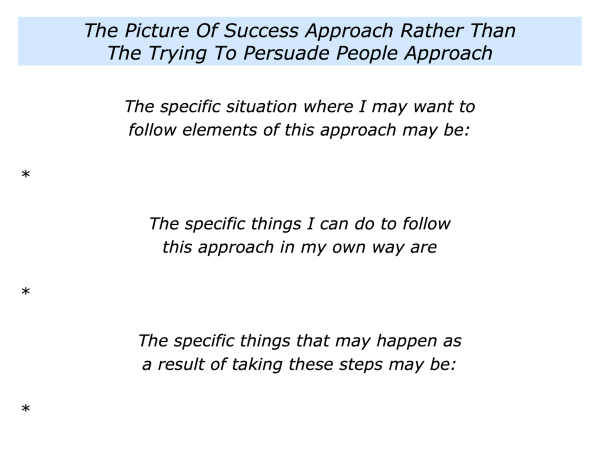
Let’s return to your own life and work. Looking ahead, can you think of a situation where you may want to follow elements of this approach? How can you do this in your own way?
If you wish, try tackling the exercise on this theme. This invites you to complete the following sentences.

Leave a Reply