


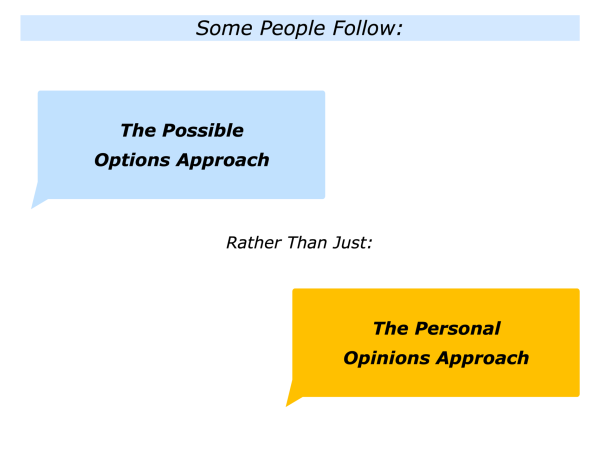
Some people follow the possible options approach when acting in certain roles. Bearing in mind the goals to achieve, they outline the various options going forwards.
They may also outline the pluses and minuses of each option. When asked for a view, they may describe the option most likely to achieve the goals. They also outline the consequences of taking such a route.
Some people simply voice their personal opinions. Their views may be based on emotion, evidence or other factors. They may also consider themselves to be experts on many matters whether or not they have expertise in those areas.
Different people follow these approaches in different situations. Let’s explore how they may translate these into action.
The Possible
Options Approach
Some individuals follow this approach when working in certain professional roles. They may be acting as a specialist, government advisor, expert, medical consultant, mentor or in another capacity.
Some people may follow this approach in an informal personal situation when asked for advice by somebody who is seeking help on a particular topic. They may then, in a non-judgemental way, share possible ways forwards.
Different people follow this approach in different ways in the different situations. Let’s explore these themes.
The Professional Situation
A person who takes this approach in professional situations may follow certain guidelines. When asked to research ideas or outline the potential options going forwards, they sometimes take the following steps.
They clarify the brief and the real results that people want to achieve when tackling the issue – the picture of success.
They clarify the role they are to play and any guidelines – Dos and Don’ts – to bear in mind when considering how to achieve the picture of success.
They clarify the specific ways to share the information when they present the possible options for working towards achieving the picture of success.
They may want to have enough time to do proper research when clarifying the possible ways forwards. But much may depend on the specific situation and the required time frame.
Such a professional may have already done research on various potential issues. They may have gathered information and used their imagination to take the following steps.
They will have clarified the many potential future scenarios and the results to achieve in each scenario.
They will have clarified the possible options – and the pluses and minuses of these options – in each scenario.
They will have clarified the most attractive strategic option – and also stress tested it – regarding each scenario.
Such a professional may have done lots of prework. They recognise, however, that it is important to approach any new brief with an open mind and a willingness to explore all the possibilities.
There may also be times, however, when they are put on the spot and asked to give a quick response. Such a person may then say something along the following lines.
“There are several options that immediately come to mind. These include, for example …
“Another approach would be to gather more information before making the final decision.
“I could then get back to you quickly with the possible options and the ones most likely to achieve success.”
Let’s assume that such a professional has been asked to focus on a particular issue. They are then to present the possible options to a Chief Executive Officer or Leadership Team.
Such a professional will make sure they fully understand the brief. They may then say something along the following lines when presenting to the key people.
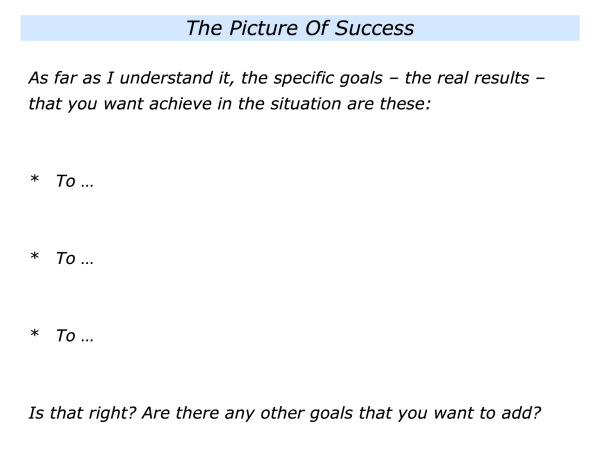
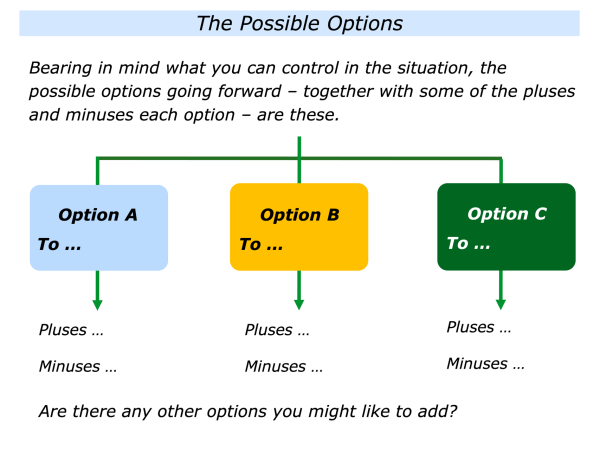
Such a professional will show respect for the person or team that will ultimately make the decision. They will aim to present the information in a diligent way and, if appropriate, encourage people to add to the options.
They will also respect the decision maker’s authority when deciding the way forwards. Depending on the role they play, they may then support the decision and help to translate into action.
There may be occasions, however, when they find it difficult to back the chosen way forwards. Such a person may then make a decision about whether or not they can play a certain role in translating it into action.
Many professionals enjoy doing diligent work and offering potential options. They see this as a possible way to help people to shape a positive future.
The Personal Situation
Some people may also offer possible options in more informal personal situations, but they may only do this when appropriate.
Imagine that a friend or somebody else has asked for their view on the possible ways forwards in a situation. They may then say something along the following lines.
“You will obviously make your own decision about the way forwards. If you wish, however, I can share some possible ideas and you could use these in your own way. Would that be okay?”
If so, they may take some of the following steps. They will do this in an encouraging way and again emphasise it will be up to the person to make their own decision.
They will clarify what the person wants to explore and gather more information about the specific situation.
They will clarify the real results the persons wants to achieve and what they may have already tried in the situation.
They will clarify if it is then okay for them to share some ideas about the possible options and ways forward in the situation.
The person may then explain the possible options. They will describe these in a non-judgmental way and, at the same time, see if any of these ideas resonate. They say something along the following lines.
“Looking ahead, there are several options going forwards. There are, of course, pluses and minuses with each option because there may not be a perfect solution.
“Bearing in mind what you can control in the situation, here are some possibilities. Some may not seem realistic, but it can be useful to explore all of the options before then making a decision.
“Option A is to …
“Option B is to …
“Option C is to …
“As I said, there are pluses and minuses to each option. And there may, of course, but other options.
“It may therefore be useful to take time to reflect. Then, if you wish, we can explore the option – or combination of options – that you may want to pursue.
“We could also look at how to translate this into action and increase the chances of success.”
Imagine that a person is sharing the possible options with a friend or somebody else. As mentioned above, it can be helpful for them to take the following steps.
They can share the options in a non-judgemental way and, if appropriate, explain more about how to translate some of these into action.
They can look for signs that show which of the possible options going forwards may resonate with the person.
They can conclude by asking the person if they would like to add any other ideas or explore any of the options further.
Let’s assume they have taken some of these steps. It will then be time to give the friend or other person chance to reflect. If appropriate, they may say something along the following lines.
“These are some of the possible ways forward. It may be useful to take time to reflect and maybe even consider other options.
“If you wish, we can then explore these further. Whatever route you take, it will be important to follow the option that you believe in.
“We can then focus on how you can build on what you can control in the situation and do your best to achieve success.”
Imagine that a person has taken this approach after being asked for their views. They will continue to respect the other person’s right to take their time and pursue their chosen route.
Some people follow the offering possible options approach in professional or personal situations. Some people choose to take another approach.
The Personal
Opinions Approach
Some people enjoy voicing their personal opinions. They may do this in conversations, meetings or relationships. They do so when expressing their views about events, situations or people.
Such people may base their opinions on feelings, evidence or their interpretation of facts. They may base them on certain beliefs or examples that reinforce their confirmation bias.
People who take this approach may voice their opinions about many aspects of life. They may have little expertise in certain areas but this does not stop them proclaiming their beliefs about such matters.
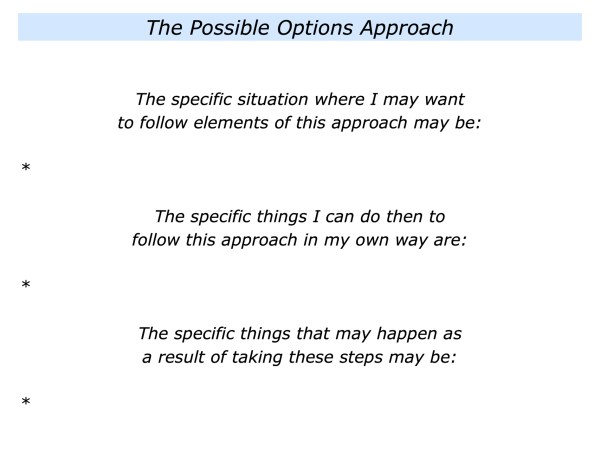
Let’s return to your own life and work. Looking ahead, can you think of a situation where you may want to follow elements of the possible options approach? This could be in your personal or professional life.
What may be the specific situation where you could follow this approach? How could you do this in your own way? What may happen as a result of taking these steps?
If you wish, try tackling the exercise on this theme. This invites you to complete the following sentences.

Leave a Reply