



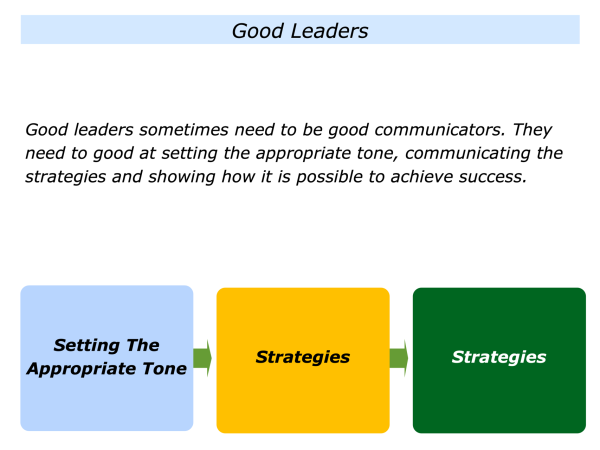
There are many models for providing good leadership. Some of these focus on the importance of communicating a clear purpose, principles and picture of success.
Different leaders may use different frameworks when communicating with their people. Whichever approach they use, however, it can be important for them to focus on the follow themes.
Setting The Appropriate Tone
Good leaders start by setting the appropriate tone. Much depends, of course, on the specific situation and circumstances. But it is vital for them to read the situation and communicate in a way that encourages people.
Some leaders recognise when it is important to set a positive tone. They may do this when holding a kick-off meeting or presenting the future strategy to a team, organisation or even a country.
Such leaders may go beyond simply presenting a positive vision. They may aim to bring this to life by moving from the concept to the concrete and giving practical examples that resonate with people.
They recognise that people are more likely to be motivated if they see the benefits of working to achieve certain goals. Bearing this in mind, they may also describe the benefits – to all the various stakeholders – of achieving the picture of success.
Good leaders also recognise when the tone may need to more serious but also show people the possible ways forwards. They may then describe the challenge and also the specific strategies for achieving success.
Some leaders recognise when the tone needs to be empathetic and show people that they understand their circumstances. They may then also aim to describe the practical things that will be done to improve the situation.
Setting the appropriate tone is crucial. Getting it right can create the platform for future success. Getting it wrong can create feelings that can be hard to overcome.
Imagine that a leader has aimed to present a vision. As mentioned earlier, different leaders will do this in different ways. Some may use the following framework.

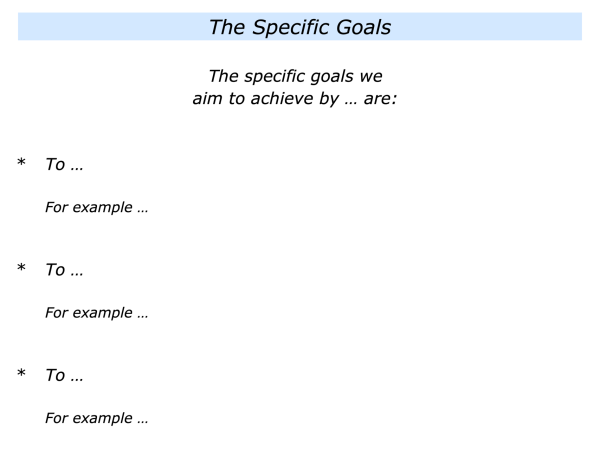
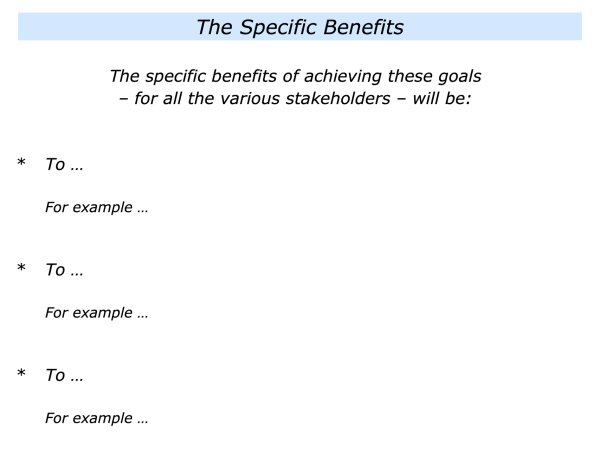
Imagine that a leader has set the right tone. If appropriate, they may then move on to the next stage.
Strategies
Good leaders communicate the aims to achieve and the benefits of reaching these goals. This covers the What and the Why. They may then move on the How, Who and When.
Such leaders aim to give people the big picture. They recognise that knowledge workers, for example, like to know the context and the reasons for following certain strategies to reach the goals.
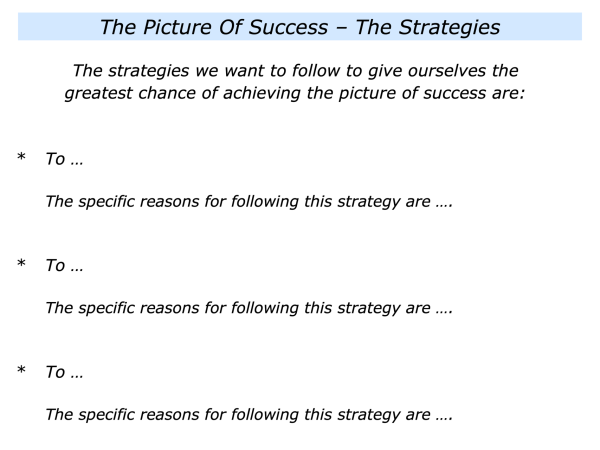
Different leaders explain these in different ways. Some take the following approach. They aim: a) to explain the strategies to follow; b) to explain the reasons for following these strategies.
They may also describe the following roles that people may take. First, the mission holders – the people who will be responsible for driving each strategy. Second, the responsibilities of various people for delivering each part of the strategy.
Different leaders use different frameworks when taking this approach. Here is a shortened version that some may follow. They may then add the responsibilities of the mission holders and the other people who will contribute to achieving the goals.
Success
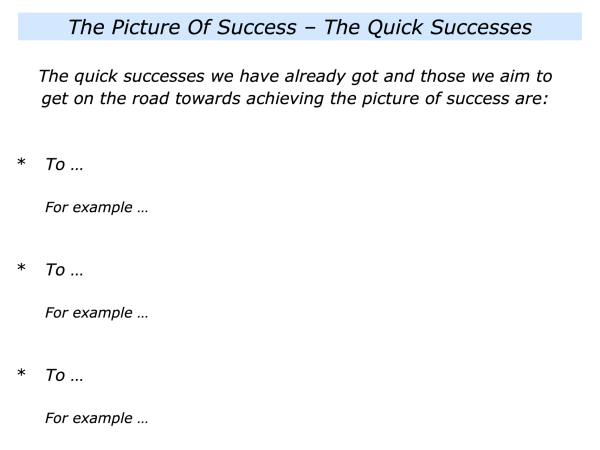
Good leaders recognise that people buy success rather than the theory of success. Bearing this in mind, they will have already done some behind the scenes work on getting some quick successes.
Such leaders describe the visible results may have already been delivered or that are in the pipeline. They build momentum by highlighting these quick wins and, in the process, help to build momentum.
They recognise that these need to be real successes, however, rather than just window dressing. They therefore keep focusing on delivering wins that will contribute to achieving the longer-term picture of success.
Different leaders will obviously highlight different things. Whichever route they take, however, they may communicate something along the following lines.
Good leaders often need to be good communicators. One of their most important roles is to set the appropriate tone. They are then more likely to be able to create the platform for achieving success.
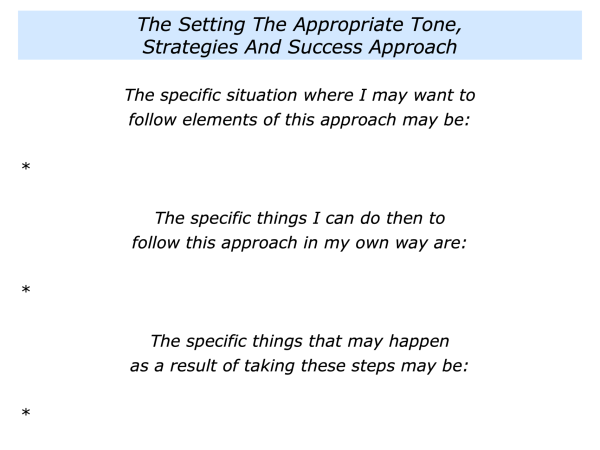
Let’s return to your own work. Can you think of a situation where you may want to follow elements of this approach? This could be when leading a team or an organisation.
How can you set the appropriate tone? How can you communicate the picture success, the strategies and the quick successes? What may happen as a result of taking these steps?
If you wish, try tackling the exercise on this theme. This invites you to complete the following sentences.

Leave a Reply