



Imagine that you lead a team. There are many models for putting together people who will combine their strengths to do superb work and deliver success.
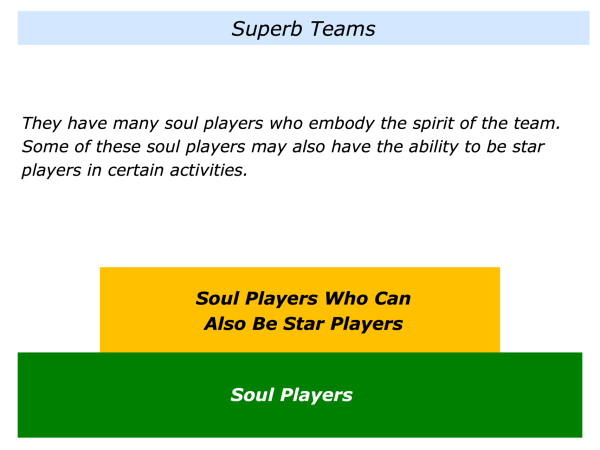
One approach is to have many soul players who embody the spirit of the team. Some of these soul players may also have the ability to be star players in certain activities.
There are many ways to encourage such people and, when appropriate, help them to deliver star performances. This can create win-wins for both the individuals and the team.
Superb teams are often made up of people who have similarity of spirit and diversity of strengths. Diversity of spirit is a recipe for disaster and can lead to lots of collateral damage.
Spirit gets the team so far towards reaching their goals. But sometimes it is the diversity of strengths that enables them to produce something special when it matters.
Superb teams start by defining the spirit – the principles – they want people to demonstrate. They believe that attitude is non-negotiable but they want characters not clones.
They also recognise that people will express the spirit in different ways. But it is vital that people always demonstrate high professional standards in their work.
Such teams may also sometimes employ outside specialists who embody the spirit. They then make clear contracts about how such people can make a positive contribution to helping the team to achieve success.
Imagine that you want to follow elements of this approach in your own way. Let’s explore how you can make this happen.
Soul Players
Soul players embody the spirit of the team. They have a strong work ethic and aim to deliver high professional standards every day. They provide the spine of the team and make sure it always gets to at least 8/10.
Some people who make such a contribution may be in the senior team. Some may be managers. Some may be individual workers. Some may be support staff who help others to succeed.
Such people believe that, providing they do a good job, their loyalty will be rewarded. They may suffer in silence, however, if others aim to grab the attention.
Superb teams recognise it is important to reward such people for their contributions. Because otherwise they may find that one day such a person may hand in their resignation. One person described this in the following way.
“For years my partner kept telling me to move on. I felt loyal to the company, however, and put in lots of hours that nobody noticed.
“My previous team leader used to meet with each of us off-site every six months. They took the time to find out how things were going and if we needed support.
“The new boss did not seem interested. They spent a lot of time with the vocal people in the team. I carried on, however, because that was my job.
“But then the company put in a performance management system where people had to be ranked along a bell-curve.
“That was the last straw. I was told that I must increase my profile in order to stay out of danger.
“But that is not my nature. Fortunately I had kept contact with my previous team leader. I now work for them in their new company.”
Superb teams make sure that more than two-thirds of their team are soul players. Such salt-of-the-earth people can also sometimes become star players in a particular niche. But they are happy to put in a daily shift that provides the platform for success.
Such teams find many ways to encourage such soul players. They may, for example, take the following steps.
They keep in touch with the soul players, make sure they have the practical support needed to do the job and also explore their future career aspirations.
They have regular events – such as informal lunches – where they meet with the soul players and invite them to suggest practical things the team can do to keep improving its performance.
They continually produce success stories that show how the soul players have followed the team’s principles, performed superb work and helped the team to achieve success.
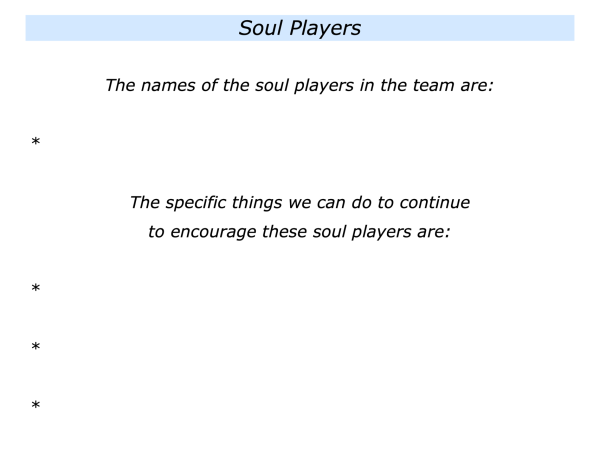
Imagine that you want to keep encouraging the soul players. If you wish, try tackling the exercise on this theme. This invites you to do the following things.
First, write the names of the soul players in the team. Second, describe some of the practical things the team can do to encourage these soul players. Here is the exercise on this theme.
Soul Players Can Build On Their Strengths
And Sometimes Be Star Players
Soul players embody the spirit of the organisation. Many also have specific strengths that they can use to deliver star performances. Bearing this in mind, superb teams take the following steps.
They encourage people by giving them the support they need to deliver consistently high standards.
They encourage people to build on their strengths and focus on the specific activities where they can continue to do superb work.
They encourage people to, if they wish, focus on specific projects and pieces of work where they can deliver star performances.
There are many ways to help people to build on their strengths and, if appropriate, deliver superb work. One approach is focus on a person and explore the following themes.
What are the person’s strengths? What are the specific activities in which they deliver As rather than Bs or Cs? When are they in their element – at ease and yet able to excel?
When do they come alive? What are the activities that give them positive energy? What are the things they feel passionately about where they may have the ability to deliver peak performances?
What is their successful style of working? Looking back, when have they done what for them were – in the broadest sense of the work – satisfying projects?
What did they do right then? What were the principles they followed? How did they translate these into action? How can they follow these principles in the future?
How can I spend time with the person to clarify their strengths and the specific things they would like to do in the future? How can I then help them to do stimulating work that helps the team to achieve success?
This is one approach to helping a soul player to build on their strengths and make their best contribution to a team. The following section describes another way.
This approach takes more time but can also be rewarding. You can also adapt it by focusing on some parts but not on others. Here is an overview of the approach. Again, you can adapt this in your own way.
The Encouraging People To Describe
Their Preferred Working Style Approach
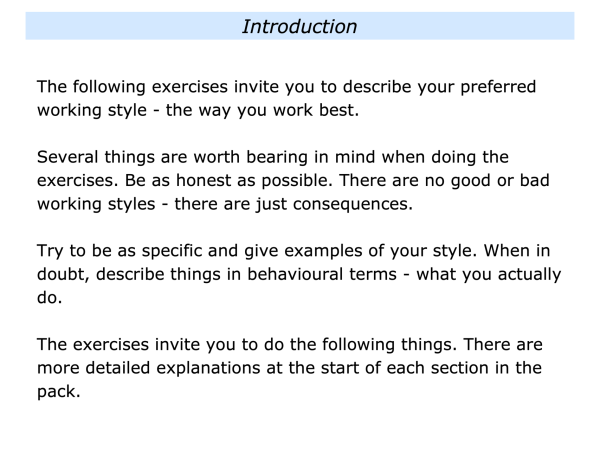
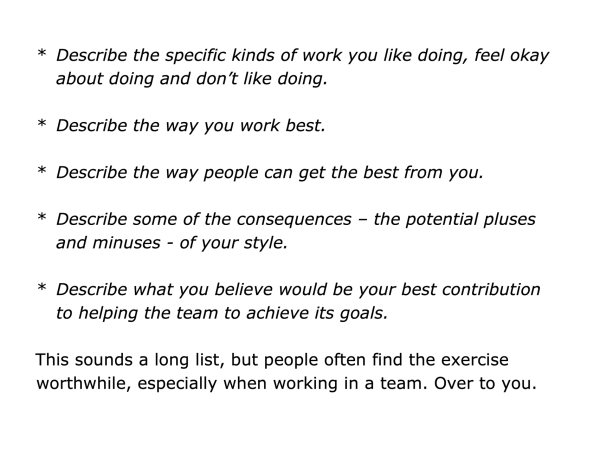
This is an approach that can be used in one-to-one meetings. It invites each person to focus on their preferred working style. This includes inviting them:
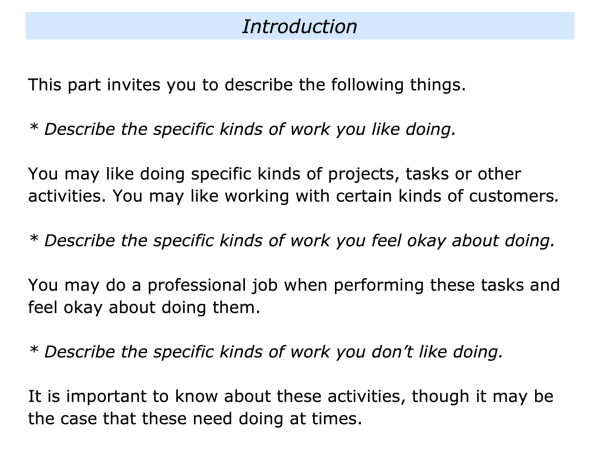
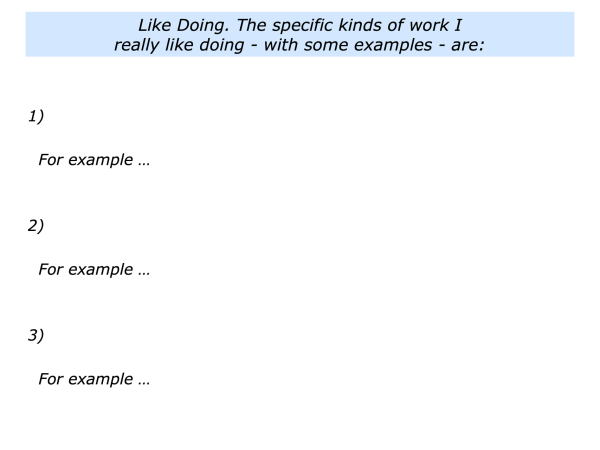
To describe the specific kinds of work they like doing, feel okay about doing and don’t like doing;
To describe the way they work best and the way people can get the best from them;
To describe some of the consequences – such as the potential pluses and minuses – of their style;
To describe what they believe would be their best contribution to helping the team to achieve its goals.
Several points are worth bearing in mind when introducing the exercise to a person.
Ask them to be as honest as possible. There are no good or bad working styles – there are just consequences.
Ask them to be as specific as possible. When in doubt, they are to describe things in behavioural terms.
Talk them through each part of the pack, perhaps giving examples from your own style to bring it to life.
Here is the pack that you can invite a person to do. There is an introduction to each part. You can then meet with the person to explore their answers together.
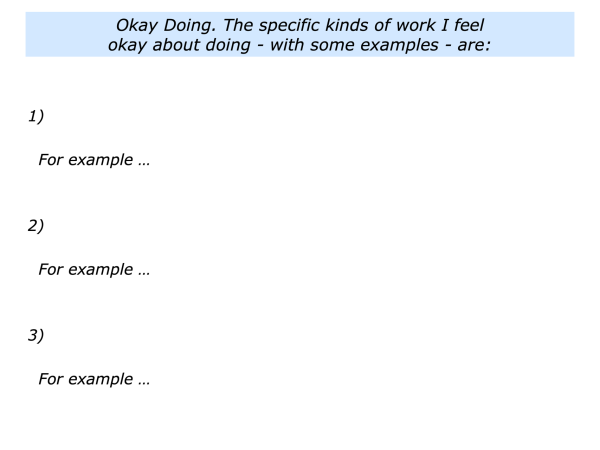
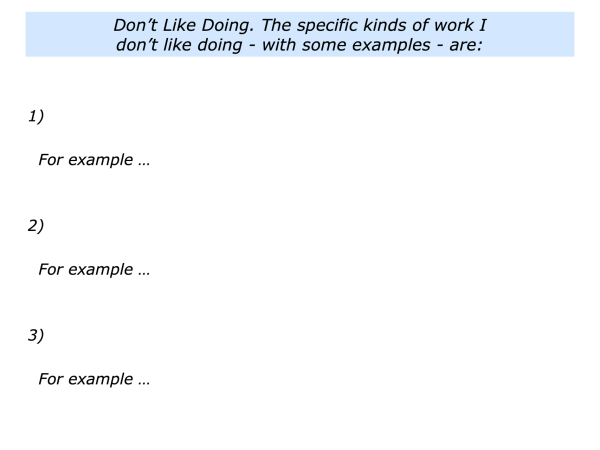

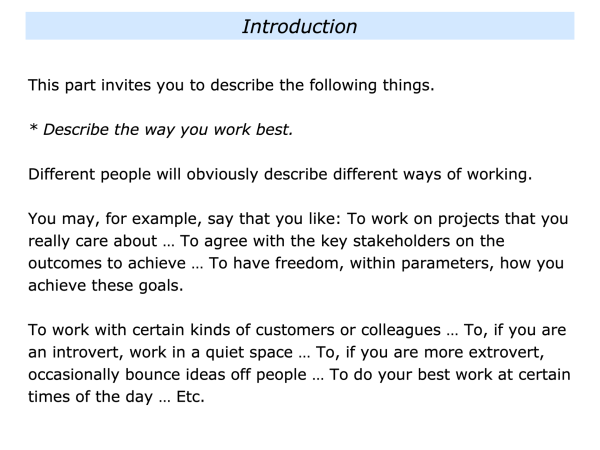
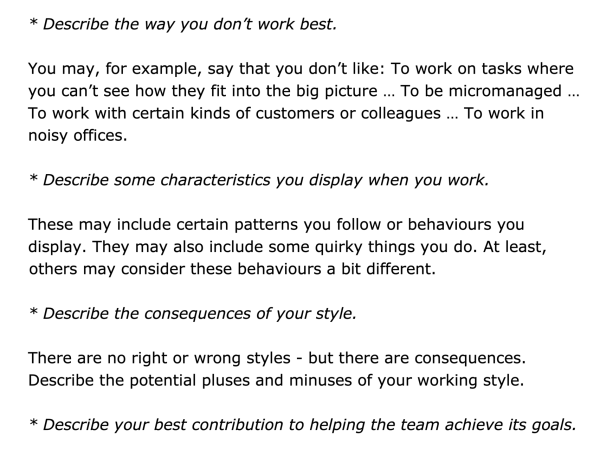
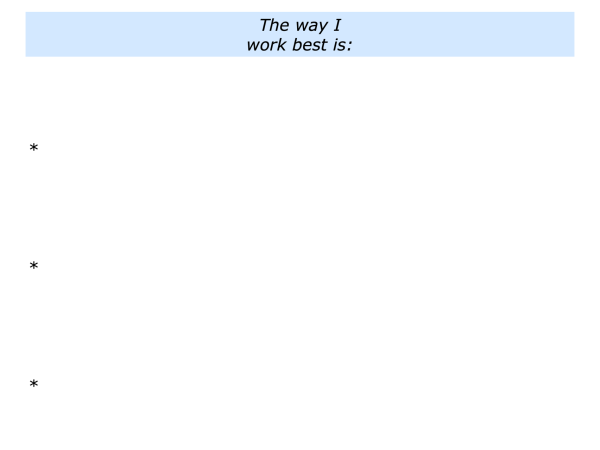
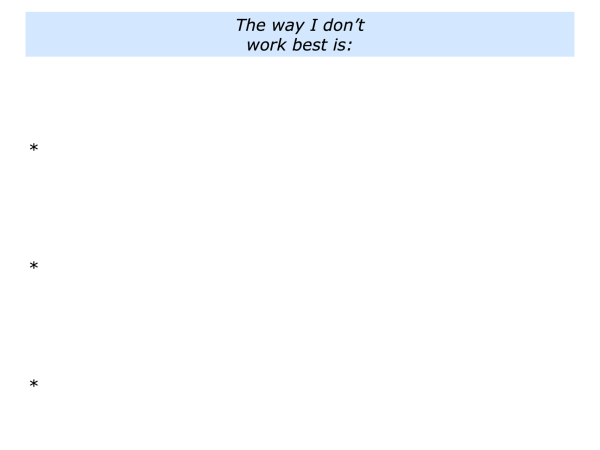
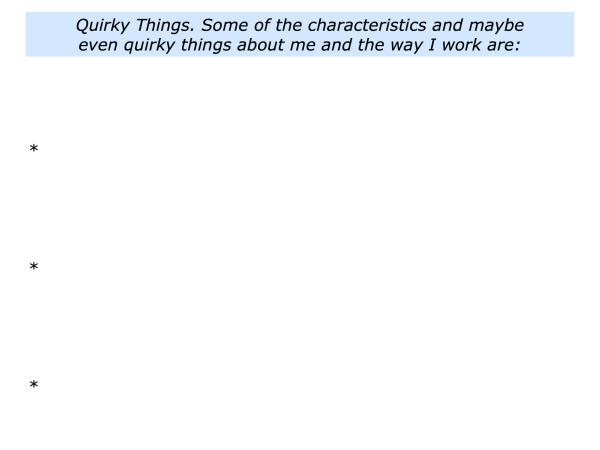
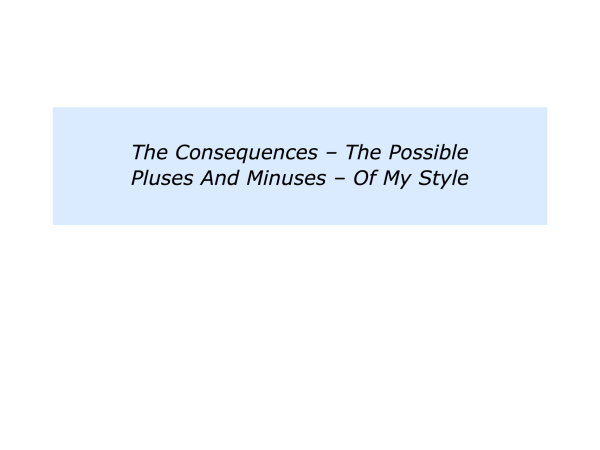
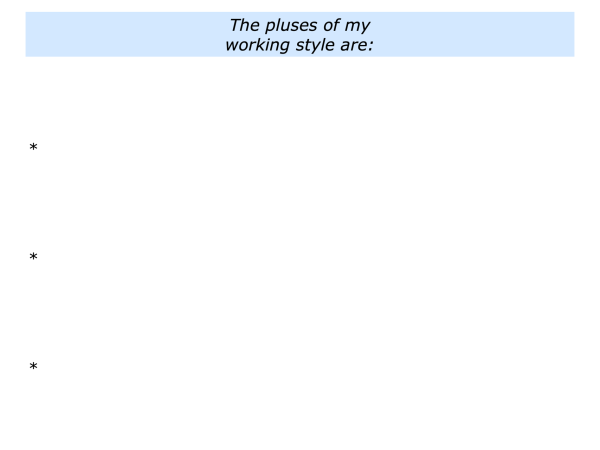
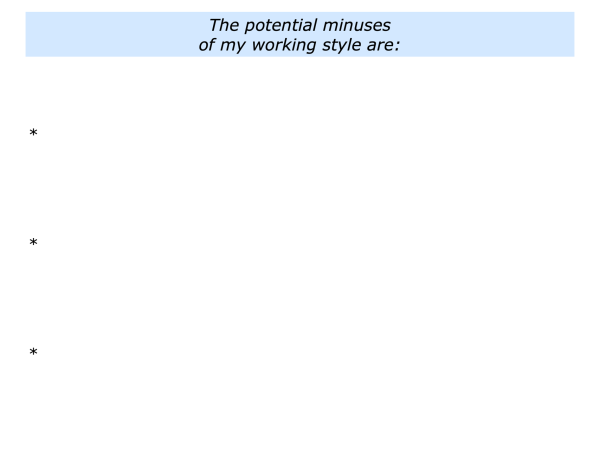
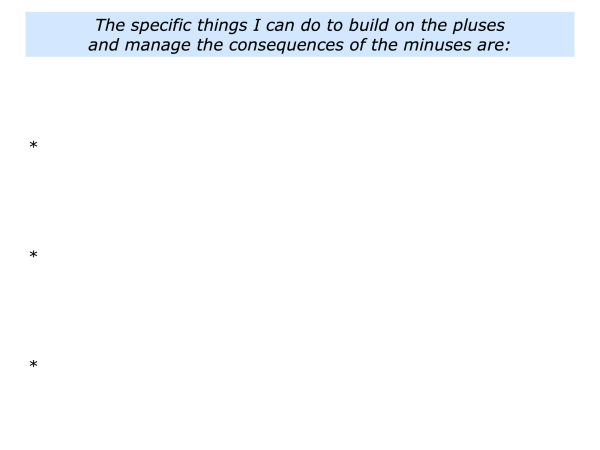

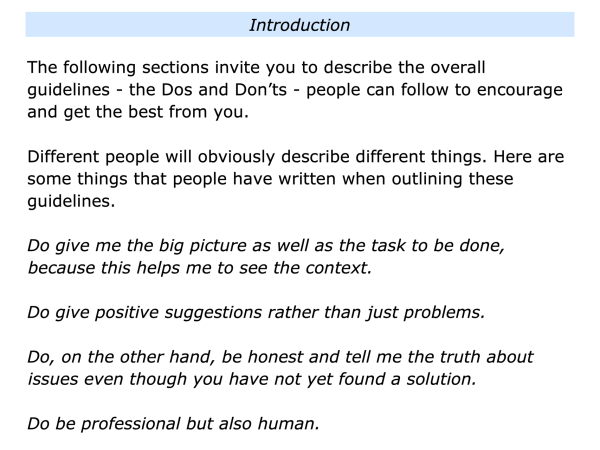

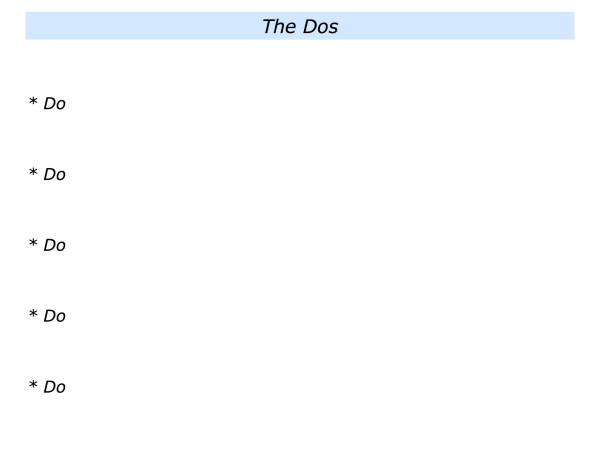
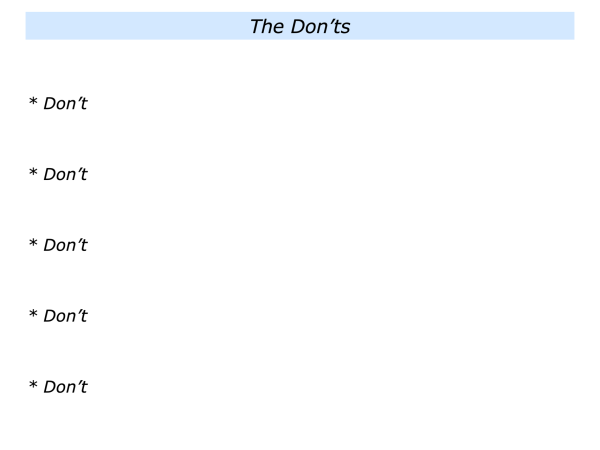
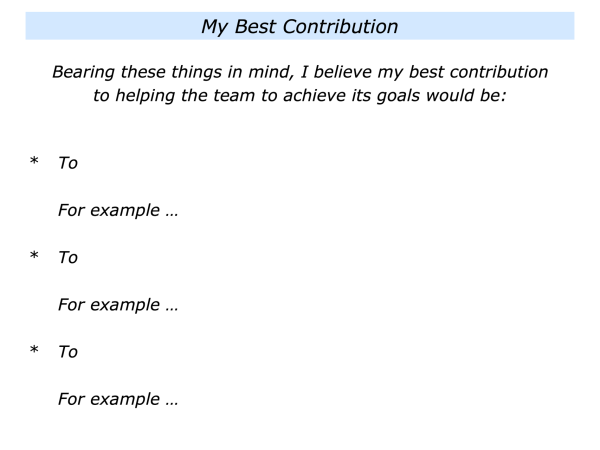
Imagine that a person has completed all or some parts of this exercise. You can then have a one-to-one session where, if you appropriate, you can aim:
To clarify how you can give them support in the activities where they want to continue to do superb work;
To clarify how they can build on their strengths and, if appropriate, do specific projects or activities where they can make a superb contribution;
To clarify how they can continue to maintain their wellbeing and make their best contribution to the team.
There are many ways to build superb teams. One approach is to have many soul players who embody the spirit of the team. Some of these soul players may also have the ability to be star players in certain activities.
There are also many ways to encourage such people and, when appropriate, help them to deliver star performances. This can create win-wins for both the individual and the team.
If you wish, try tackling the final exercise on this theme. This invites you to do the following things.
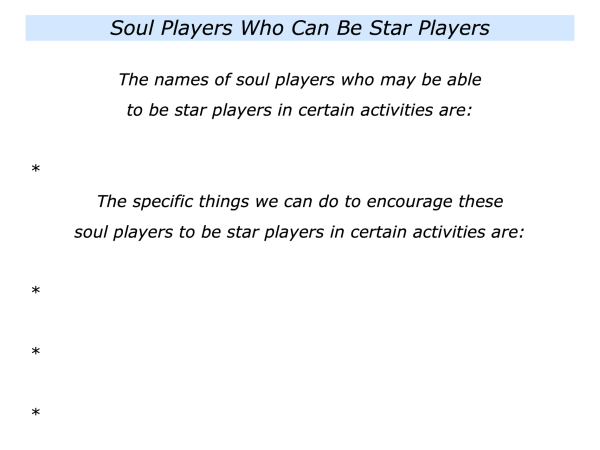
First, write the names of the soul players in the team who may have the ability to be star players in certain activities.
Second, describe the specific things the team can do to encourage these people to deliver star performances.
Superb teams continue to employ people who have similarity of spirit and diversity of strengths. They then encourage these people to use their strengths to help team to deliver success. Here is the final exercise on this theme.

Leave a Reply