


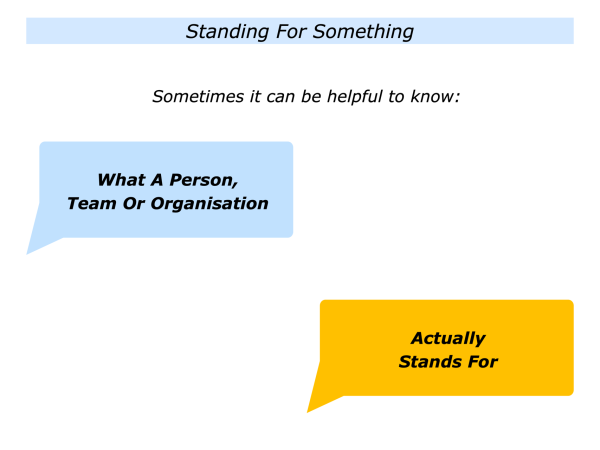
There are many ways to understand certain aspects of life. One approach is to know what a person, team or organisation stands for. When doing this, it can be useful to explore the following questions.
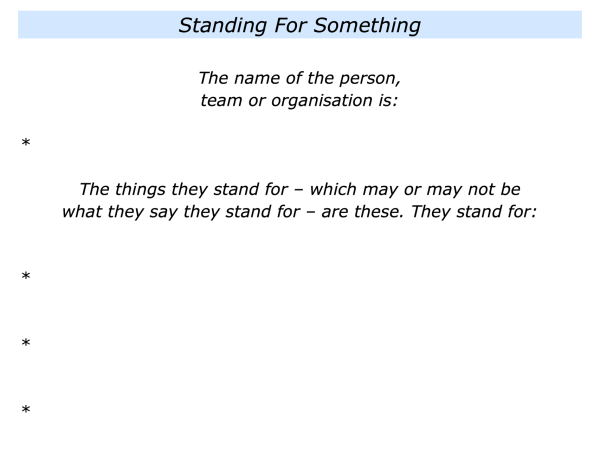
What does the person, team or organisation stand for?
What is their philosophy and what are the principles they believe in following?
What do they actually do – rather than just what they say they do – and what are the consequences of their behaviour?
Looking around the world, can you think of a person, team or organisation that stands for something? You may or may not like what they represent but, looking beyond their words, you know what they stand for.
David Attenborough, for example, has stood for appreciating the wonders of nature and caring for the planet. Anita Roddick, who founded The Body Shop, stood for running an ethical but also savvy business.
Maria Montessori, the pioneering educator, stood for helping each child to find and develop their talents. Jurgen Klopp, the football manager, stood for playing a certain brand of football.
Médecins Sans Frontières stands for providing medical treatment for people who need it most. Amnesty International stands for freeing political prisoners.
Some politicians say they stand for working people but actually stand for making more money for themselves. Some businesses say they care for their people but actually only care for profits.
Here is the exercise on this theme. This invites you to complete the following sentences.
People like to know what others stand for. There are many reasons why, for example, people cast their political vote. One of the main reasons is them asking:
Will this person or political party improve my life?
Whether somebody votes for them again often depends on if the person or political party fulfils their promise. There are, however, sometimes other considerations.
When looking at a person or a political party, somebody will focus on the following themes. They may make a decision based on whether:
They like what the person or party stand for;
They don’t like what they stand for;
They don’t know what they stand for.
Some politicians draw criticism, for example, because people do not know what they stand for. The politician may seem to be flaky, continually changing their positions or simply reacting to events.
Leaders in some fields do have a guiding philosophy – a backbone – and principles they follow. People may or may not like their approach, but at least they know what such leaders stand for.
There are many ways to live life. One approach is to focus on the things that people, teams or organisations stand for. It is then to recognise how they translate these into action.
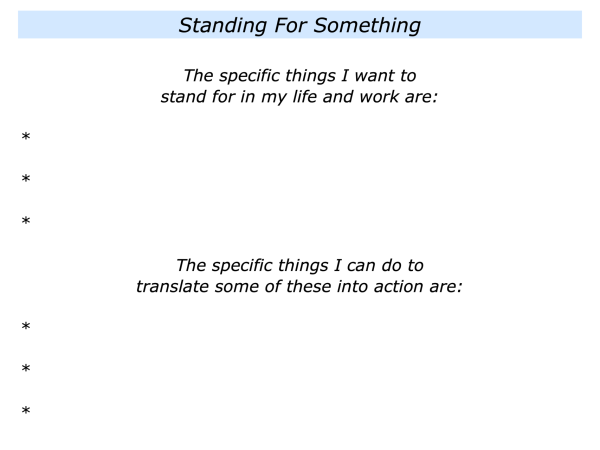
Let’s return to your own situation. What are the things you want to stand for in your life and work? Different people describe different things when answering this question. Here are some they mention.
Standing For Something. The specific things
I want to stand for in my life or work are:
Encouraging people … Being kind … Being grateful … Appreciating life … Creating beauty … Giving people hope … Helping people to build on their strengths … Caring for the planet.
Imagine that you have written some of the things you want to stand for in your life and work. The next step will be to focus on how you can translate these into action.
If you wish, try tackling the final exercise on theme. This invites you to complete the following sentences.

Leave a Reply