



There are many ways to live life. Some people reach a point where they aim to start anew but also build on their strengths. They may do this in their personal or professional lives.
Some people follow this approach as individuals. Some follow it when leading a team, organisation or company. They then do their best to achieve their picture of success.
Different people follow this approach in different situations. Let’s explore how they may translate it into action.
Some People Aim
To Start Anew
Some people follow this approach as individuals. They may do so for different reasons, however, when reaching a certain point in their lives or work.
Some people may do this in a reactive way after having a shock. They may experience a particular challenge, setback or potentially life changing event.
Some people may do this in a proactive way. They may reach a point where they take time to reflect and focus on what they see as really important in life.
Some individuals may recognise they have an addictive personality. They may then choose to give up a negative addiction and follow a positive addiction that has healthier consequences for themselves and other people.
Different people choose different routes to start anew but still build on their strengths. The following section describes some of these approaches. Some are more radical than others.
The White Room Exercise
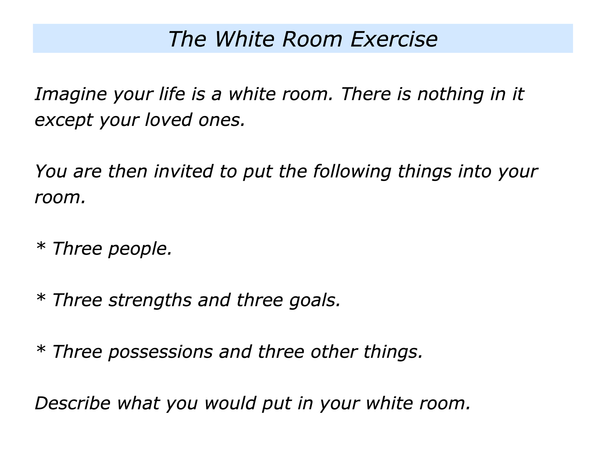
There are many exercises that invite people to focus on their priorities and life goals. Some people amass lots of things in their lives. These can take energy away from focusing on some of the important things in life.
Imagine that you want to start anew and spring clean your life. This exercise invites you to look ahead and focus on the following things.
Three People
Let’s assume that you have already included your loved ones. Who are the other people you would like to put into your into your white room? If appropriate, you may want to explore the following themes.
Who are the people that give me positive energy? Who are those with whom I can be myself? Who are those who encourage me? Who are those with whom I feel alive?
Here is the exercise on this theme. You can, of course adapt it in your own way.
Three Strengths
What are your strengths? Which of these would you like to build on? Which would you like to put into your white room? If appropriate, you may what to explore some of the following questions.
What are my strengths? What are the deeply satisfying activities in which I deliver As rather than Bs or Cs? When am I in my element – at ease and yet able to excel?
What are the things that give me positive energy? When do I flow, focus and finish? What are the things I feel passionately about where I may have the ability to deliver peak performances?
Looking at your talents, what are the three strengths you would like to put into the white room? Try completing the following exercise.
Three Goals
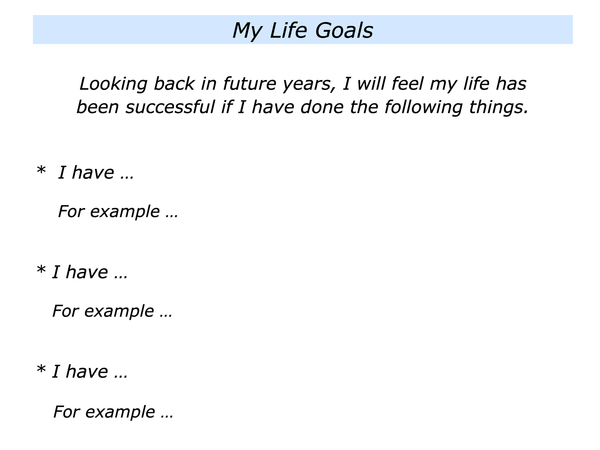
What are the goals you want to put into your white room? Some people focus on personal goals, some on professional goals, some combine elements of both.
One approach is to clarify your lifetime picture of success. Imagine that you are looking back in future years. What are the things you want to have done by then that for you will mean you have had a successful life?
People often mention three themes when tackling this exercise. They want to have built positive relationships, to have made a positive contribution and to have had positive experiences.
Returning to The White Room exercise, describe the three goals you want to put into the room. You can then focus on how to achieve these aims.
Three Possessions
Time to treat yourself. List the three possessions you want to put into the room. What are the thing you treasure, give you pleasure or help you to do your work.
It’s okay to be creative when doing this part of the exercise. One person chose to expand the rules by saying:
“Assuming I am allowed to put in my home, bank balance and pets, I would put in the electrical equipment in need – such as my laptop, phone and TV. Plus I would also put in my car.
“At the same time, I would have a good clear out. We have so much stuff in the house and garage that we never use. Just looking at it takes energy.”
So what possessions would you put in your room? Try completing the following exercise.
Three Other Things
Imagine that you have worked through the previous sections. It is then time for one final step. What may be the three other things you want to put in your white room?
Some choose to put in personal characteristics – such as having a positive attitude, being grateful or other qualities. Some choose to put in music, their garden or other items.
As mentioned earlier, there are many ways for people to focus on what is important in life. One approach is to do the spring cleaning exercise. They can then focus on their priorities in life.
If you wish, try tackling the final exercise on this theme. This invites you to describe the other things you would like to put in your white room. Here is the exercise.
The Focusing On The Important
Things In Life Approach
What are the things that you believe are important in life? Different people give different answers to this question. These sometimes focus on the following themes.
The specific things that for
me are important in life are:
To care for my loved ones … To encourage people … To do my best in life and feel at peace.
To continue to be grateful … To serve something greater than myself … To do positive work that helps to people or the planet.
To make the most of my talents … To give people positive memories for life … To give hope to both present and future generations.
Different people arrive at focusing on what is important in life in different ways. This can involve some of the following approaches.
The Shock Approach
Some people have a shock that leads them to focusing on what it important in life. This can take different forms. Let’s look at some examples.
A person may have a serious illness that encourages them to review their priorities. Vulnerability is a great teacher. People who go through such an experience may say things like:
“Life is short. Make the most of each day.”
A person may have a personal or professional shock. They may lose a loved one, have a divorce or be made redundant. This can lead to a Eureka Moment where they choose to change their lives.
The Taking Stock Approach
A person may reach a point where they see things in perspective and take stock of their life. They may aim to clarify: a) what they have already done in their life; b) what they want to do in the rest of their life.
Different people do this in different ways. Much depends, of course, on their situation. One person expressed this in the following way.
“My situation was fortunate but there came a point where I felt exhausted. I helped to found a company that kept increasing its value. But then we reached a critical stage.
“One option was to expand the company with a view to having a big financial event. The potential prize might be great but it was not guaranteed. There would also be a price to pay.
“I had previously enjoyed my work but it had turned into a grind. This had an effect on me and my family. Looking ahead, I did not fancy five years of not enjoying work with the hope of maybe get a future pot of gold.
“Bearing this in mind, I made several decisions. These involved giving up some of my share options and taking the following steps.
“First, to spend more time at home helping our teenage children and my partner. This was important as our children grew up and developed their interests in dancing, sports and other activities.
“Second, to recraft my role in the company to play to my strengths and do the things I felt enthusiastic about. This helped me to make my best contribution to the company.
“Third, to take care of my psychological health. This led to doing several creative projects and also acting as a mentor for young entrepreneurs in our local community.”
As mentioned earlier, this person was in a fortunate position. They decided to do things that gave them positive energy, however, rather than be miserable working towards a potential future paradise.
The Serving Something
Greater Than Yourself Approach
A person may reach a point where they choose to serve something greater than themselves. They may aim to follow a spiritual faith, a vocation or a sense of mission.
People who take this approach find their priorities change. They then sometimes take the following steps:
They start each day by focusing on what they believe are the most important things in life;
They clarify the practical things they want to do that day to focus on these things;
They translate these ideas into action and get a sense of satisfaction from serving something greater than themselves.
There are many ways for a person to spend their days. One approach is for them to focus on what they believe to be the most important things in life.
Imagine that you want to follow elements of this approach. How can you keep focusing on your top priorities? What are the practical things you can do to translate these into action? What may be the benefits of taking these steps?
If you wish, try tackling the exercise on this theme. This invites you to complete the following sentence.
The Keep Doing, Start Doing
And Stop Doing Approach
The following piece explores how this approach can be used by individuals. It can also be adapted by teams and organisations that want to shape a positive future.
Imagine you have reached a point in your life where you want to refocus your energies. What are the things you want to keep doing? Here are some things people mention when doing this exercise.
Keep Doing. The things that I
want to keep doing in my life are:
To be grateful … To count my blessings … To do things that give me positive energy … To encourage my loved ones … To spend time with positive people … To do my best to stay healthy.
To build on my strengths … To do satisfying work … To spend time with the customers with whom I work best … To pass on knowledge that helps people to succeed … To do my best.
What may be some of the things you want to start doing? You want to start doing certain physical things. Such as eating healthier food, walking more or doing other activities.
You may want to start doing certain psychological things. Such as focusing on what is important in life, building on your positive attitude or doing other things.
If you wish, try tackling the exercise on this theme. When doing so, it can be important to focus on starting just a few things rather than making a long list. You are then more likely to develop a successful habit.
What may be some of the things you want to stop doing? And, most importantly, what do you want to do instead? Let’s look at some examples.
You may want to stop focusing on the things you can’t control and focus on what you can control.
You may want to stop worrying about things you have done in the past and focus on what you can do better in the future.
You may want to stop working for long stretches of time and instead build in times for rest and recovery.
If you wish, try tackling the exercise on this theme.
Imagine that you have explored these three areas. If you wish, you can then translate these into clarifying a specific action plan.
You can aim to follow this by continuing to focus on what you want to keep doing, start doing and stop doing. Here is the exercise on this theme.
This section has explored how individuals may want to start anew and build on their strengths. There may be times, however, when groups of people want to take this approach. Let’s explore this theme.
Some Teams And Organisations
Aim To Start Anew
Some teams, organisations or businesses may be experiencing a crisis, changes in the market or the need to readjust their strategy. The people in a business, for example, may ask themselves:
“Bearing in mind our strengths, if we was starting
the business again today what would we do?”
Different people then focus on different themes. Bearing in mind their strengths, those in a business may explore the following areas.
Products: They clarify the specific products and services they would offer to help their customers to achieve success.
Potential Customers: They clarify the specific customers – their target group – with whom they work and can help to achieve success.
People: They clarify the specific people they would employ in what roles to help the business and the customers to achieve success.
Different people do this in different ways. Let’s explore how one leadership team took this approach.
Starting Anew – The Approach
Taken By One Leadership Team
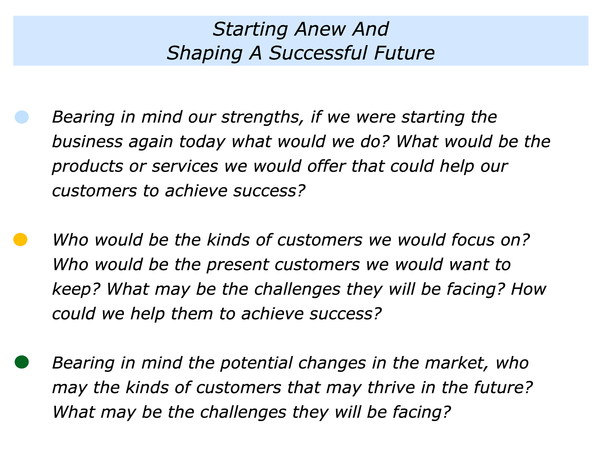
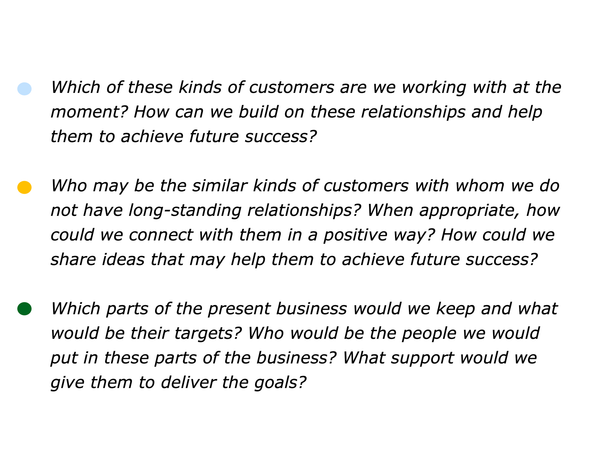
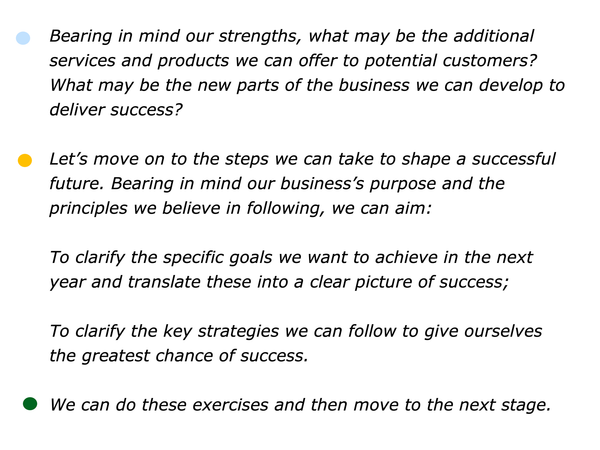
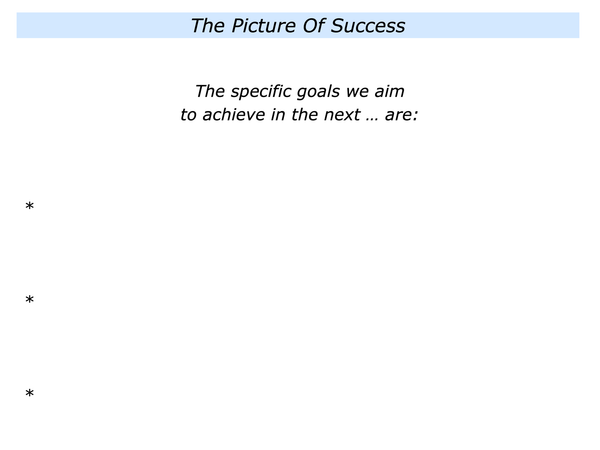
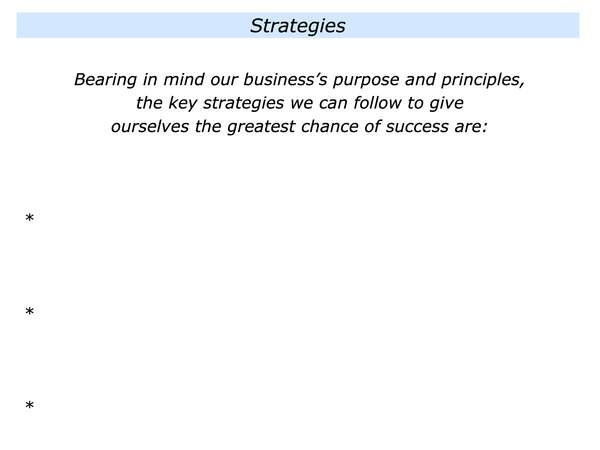
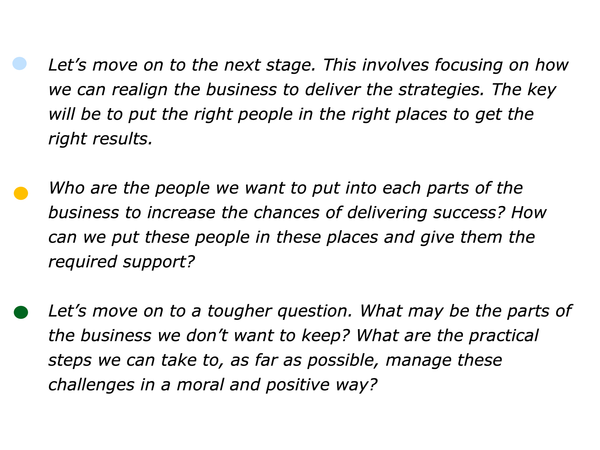
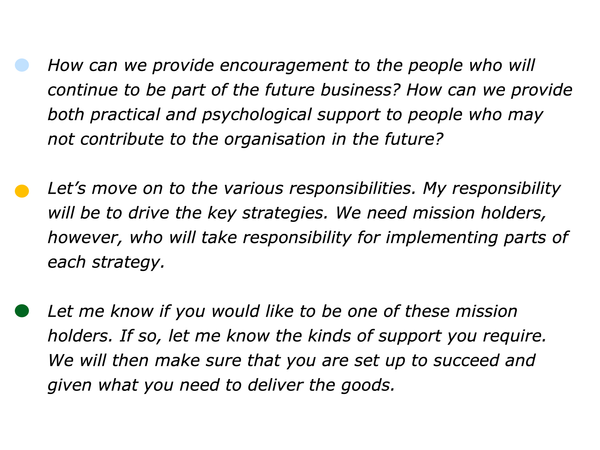
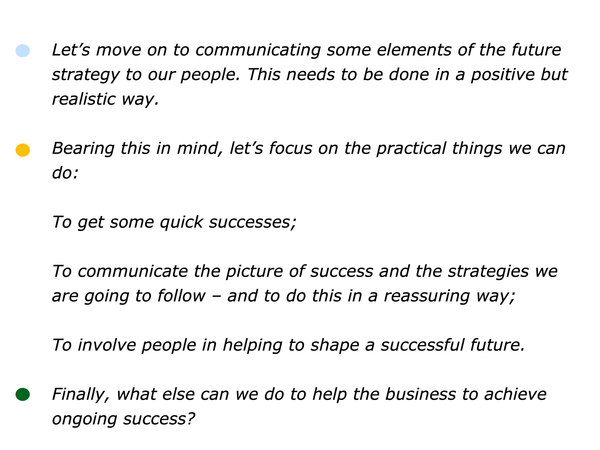
One business leader held several sessions with the leadership team when taking this approach. When doing so, they invited people to work through the following themes. You would adapt this approach in your way.
There are many ways to live life. Some individuals, teams and organisations aim to start anew but also build on their strengths. They then do their best to achieve their picture of success.
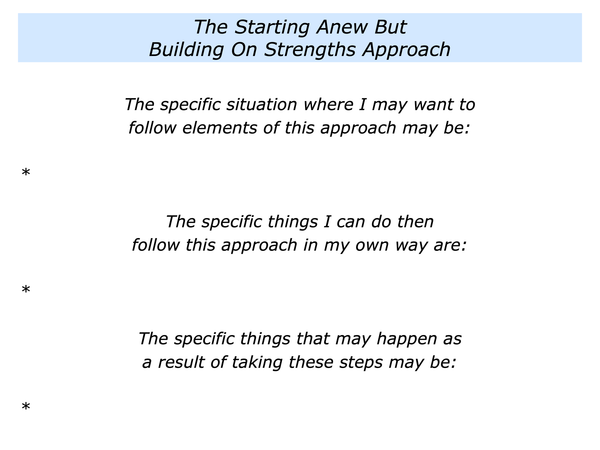
Let’s return to your own life and work. Can you think of a situation where you may want to follow elements of this approach? This could involve focusing on yourself as an individual or when working in a team or organisation.
How could you follow this approach in your own way? How could you then follow through on the actions you decide to take? What do you think may happen as a result of taking these steps?
If you wish, try tackling the exercise on this theme. This invites you to complete the following sentences.

Leave a Reply