



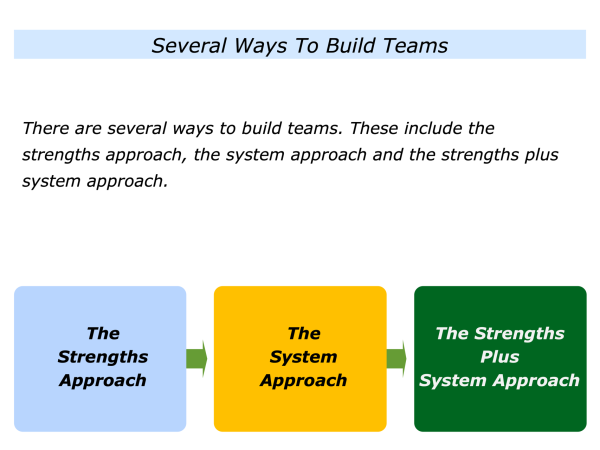
There are many ways to build teams. The following section looks at three well-known approaches. There are, of course, pluses and minuses to each approach.
The Strengths Approach
This approach involves encouraging people to build on their strengths to work towards a specific goal. Whilst it does involve providing some structure, it relies on people working well together to achieve the aims.
Leaders who take this approach may gather people who they believe have great talent or potential. They then aim to provide an environment in which such people can flourish.
The Real Madrid football team, for example, often aims to collect such galácticos. They then encourage these stars to follow a certain game plan and make magic.
Some leaders follow a similar approach. They believe that if they can gather together enough people with certain star qualities then, by providing a certain structure, this can deliver the goods.
Sometimes this approach can work. People can follow the guidelines, apply their talents and reach the goals. This can sometimes involve them producing moments of magic.
Sometimes it does not work. People may ignore the guidelines and start following their own agendas. This can result in factionalism, conflict and people working only as individuals rather than as a team.
Sometimes the team will succeed but still does not have any consistent principles it can follow when times get tough. People may then fall into looking for excuses rather than combining their talents to achieve a compelling goal.
The System Approach
This approach involves people being instructed to follow a set system rather building on their strengths. The system is sacrosanct and relies on people implementing specific processes on the way to achieving certain goals.
Sometimes this approach works. There are many types of activities where it is necessary to follow specific systems. Such activities call for compliance and consistency on the way to achieving the aims.
Sometimes it does not work. There may also be instances where the system used to work perfectly but conditions have changed. Some people still try to make the old system more efficient but the market or the world has evolved.
The system approach can seem attractive. It gives the impression of being in control and increasing the chances of predictability. But there are also downsides.
Sometimes it can lead to hubris and failing to read the new reality. It may also force people to subjugate their strengths and fit into boxes that suppress creativity. This can lead to the system falling into entropy.
The Strengths Plus
System Approach
This approach encourages people to build on their strengths and coordinate these to do superb work. People can then maintain consistency and, when appropriate, add the creativity needed to achieve success.
The leaders that take approach often talk about the principles – rather than the system – they want people to follow. They then translate these principles in specific strategies that people can follow to achieve success.
This approach is strengths based but also systematic. It starts by clarifying the team’s strengths and the results to achieve. It then focuses on how to coordinate people’s strengths to achieve the picture of success.
Different leaders follow this approach in different ways. Some take the following steps to making this happen.
They communicate the team’s purpose, principles and picture of success.
They create a positive environment in which motived people can employ their strengths to achieve the picture of success.
They then encourage, educate and enable people to perform superb work and do their best to achieve the picture of success.
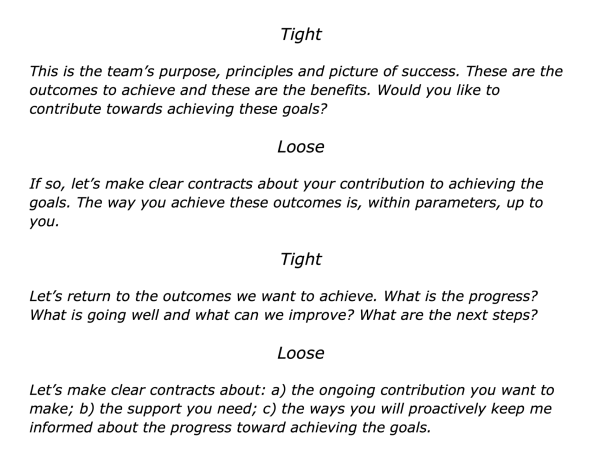
Some leaders take these steps by using the Tight-Loose-Tight-Loose approach. Rune Ulvnes developed this model in 2009. Since then he has enabled people to apply the approach in many ways.
People who take this approach often aim to manage by outcomes rather than by tasks. They focus on the Tight-Loose themes and explain these by saying something along the following lines to their people.
There are many ways to build teams. Some people follow the strengths approach, some follow the system approach, some follow the strengths plus system approach.
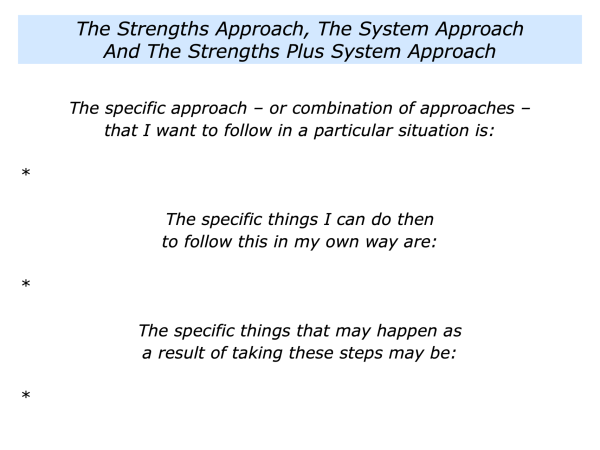
Looking ahead, can you think of a situation where you may want to follow one or a combination of these approaches? How can you then follow this in your own way? What may happen as a result of taking these steps?
If you wish, try tackling the exercise on this theme. This invites you to complete the following sentences.

Leave a Reply