



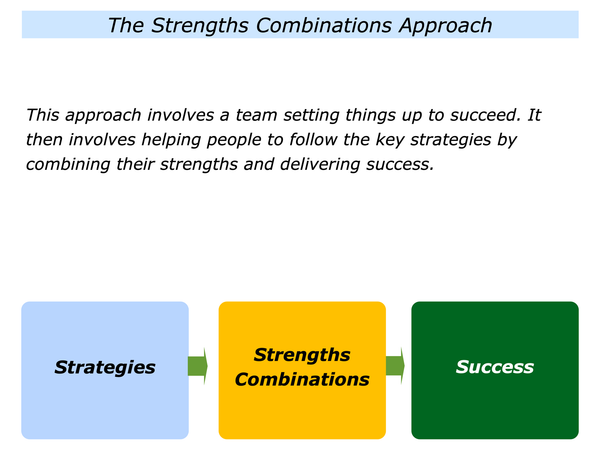
Great teams aim to set things up to succeed and follow strategies that work. They then coordinate people’s strengths to achieve the picture of success.
Such teams go beyond focusing on each person’s contribution. They build combinations of people who combine their strengths to do superb work and deliver success.
The strengths combinations approach can be used when working with pairs, trios, teams and larger groups. It can be applied in sports, music, creative projects and other fields.
Great teams bear several things in mind when taking this approach. They recognise that it is vital:
To have leaders and coordinators who know how to lead such teams;
To have a clear strategy for achieving a compelling picture of success;
To have people with the right spirit and strengths required to achieve the picture of success.
Different teams apply this approach in different ways. Let’s explore how it can be translated into action.
Setting Up The Team To Succeed
And Following Strategies That Work
Imagine that you aim to lead a team to achieve a certain goal. The first step will be to set-up things to succeed rather than fail. This often involves aiming to follow strategies that work.
Great teams take this step whether planning to climb a mountain, lead a team or do another project. Bearing in mind what they can control in the situation, they often take the following steps.
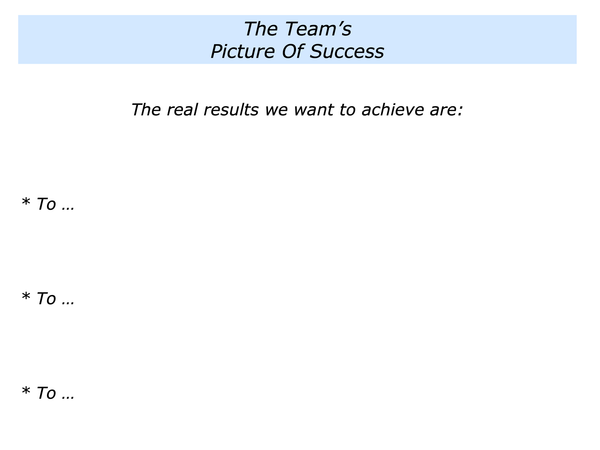
They clarify the real results to achieve – the picture of success;
They clarify the key strategies they can follow to give themselves the greatest chance of success;
They get the right resources – such as the right people and the right support – required to achieve success.
Imagine that you are clear on: a) the results to achieve; b) the strategies that people can follow to achieve success. The next step will be make sure you have the right people.
Bearing this in mind, you may want to ask yourself the following questions.
What are the kinds of people we want in the team? What is the spirit – the attitude – they need to demonstrate? How can we make sure they demonstrate these characteristics?
What are the strengths we need to achieve the goal? What are the strengths we already have in the team? What are the strengths we need to add?
How can we find people who have these strengths? How can we check their track record of delivering certain results? How can we do our best to select such people?
How can we let them know about: a) the goal we want to achieve; b) the spirit they will need to demonstrate – such as helping others to succeed; c) the specific contribution they may want to make towards achieving the goal?
How can we give people the opportunity to present their potential contributions? When they make these presentations, what are we looking for in terms of: a) the potential personal contributions; b) the potential combinations of people who could make contributions?
Imagine that you have put together your team. Everybody knows the attitude they need to demonstrate. They also say that they want to combine their strengths to achieve the picture of success.
It can then be time to start on the actual work. You can do this by focusing on the following theme.
Strengths Combinations
Great teams clarify the strategies they can follow to achieve their aims. They then coordinate people’s strengths to do superb work and achieve the picture of success.
They often start by communicating the picture of success. They then take the following steps.
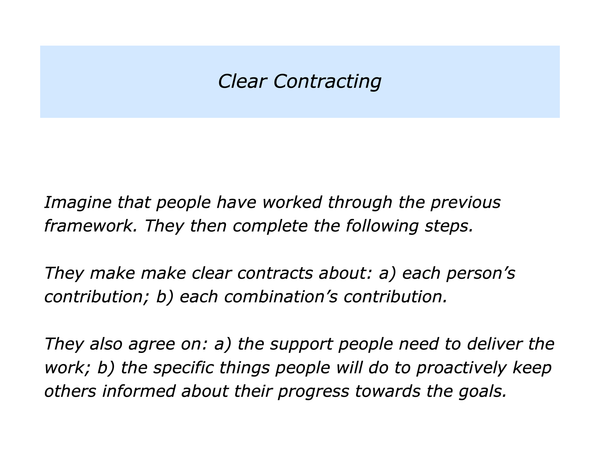
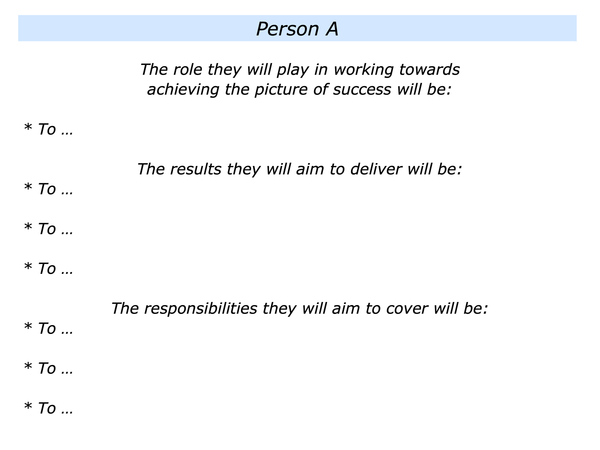
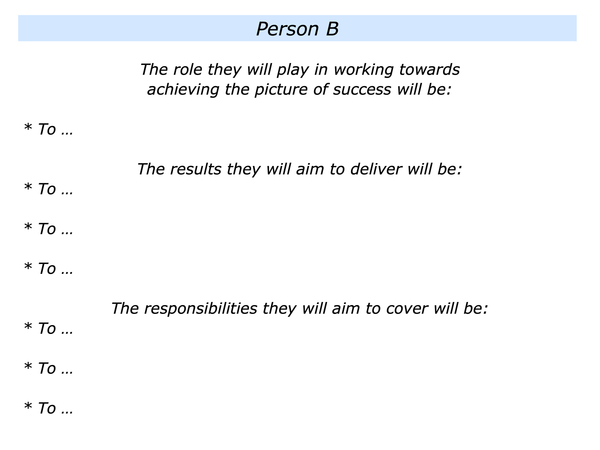
They make clear contracts with people about how they can use their strengths to make their best contributions;
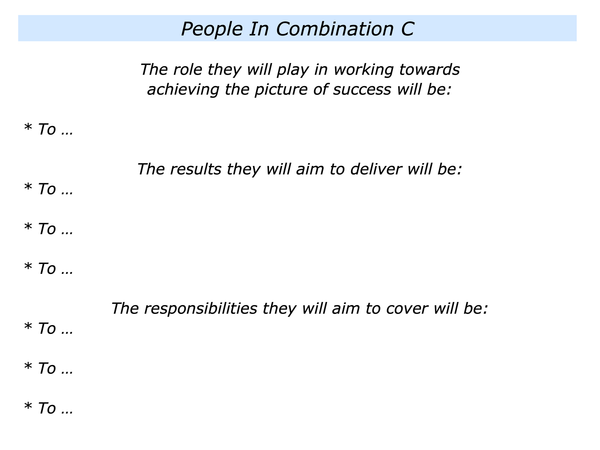
They sometimes put together combinations of people – pairs, trios or other groups – who can combine their complementary strengths to do superb work;
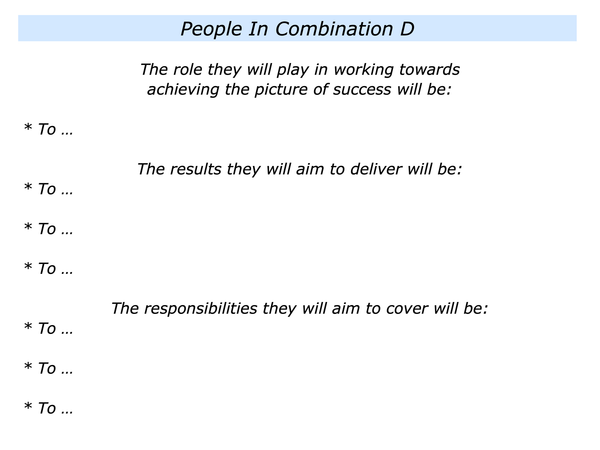
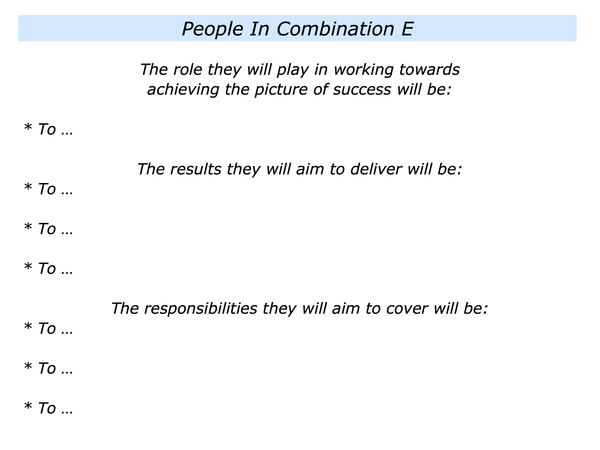
They clarify whether these people are prepared to combine their strengths to do such work and, if so, they make clear contracts with them about:
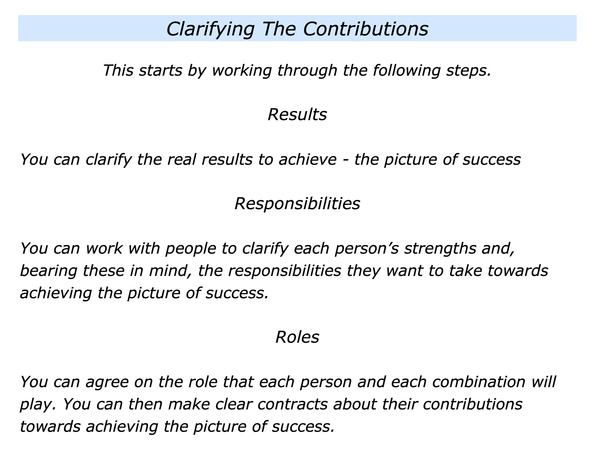
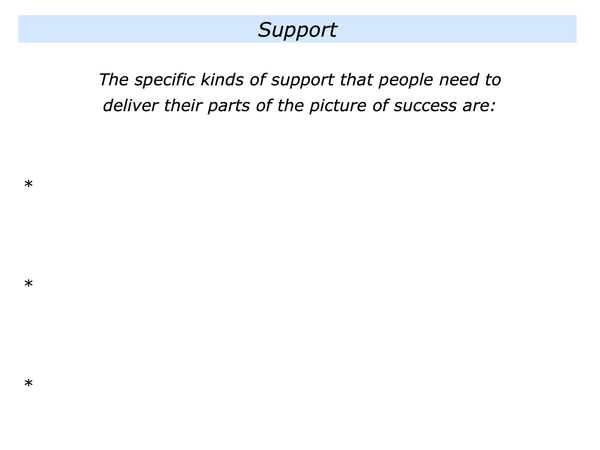
a) the specific outcomes to achieve; b) the specific things they can contribute – as individuals and in their units – towards achieving these aims; c) the specific support they need to achieve the outcomes.
Imagine that you are going to meeting with people to clarify their contributions. In this case you may be focusing on how people can combine their strengths to achieve success. Here are some themes to bear in mind when taking these steps.
Great teams ensure that their people rehearse pursuing the agreed strategies. This is particularly vital when people are working in combinations.
Such teams translate the strategies into action plans. They clarify the specific things people can do: a) to follow the strategies; b) to manage any potential challenges.
People keep focusing on these plans until everybody is clear on what they will do in every situation. Sports teams for example, go out onto the practice field. They aim:
To rehearse following the strategies to achieve the picture of success;
To rehearse managing the challenges they may encounter on the road towards achieving the picture of success;
To again rehearse following the strategies to achieve the picture of success.
Great teams often create a stimulating and supportive culture. They aim: a) to provide people with the support they need to do the job; b) to encourage their people to support each other – especially when things get tough.
Such teams employ people who want to help to help their colleagues to achieve success. People who don’t follow this approach are replaced by others who want to contribute to the stimulating and supportive culture.
Success
Great teams encourage their people to perform superb work. Such teams also keep doing reality check. They encourage their people:
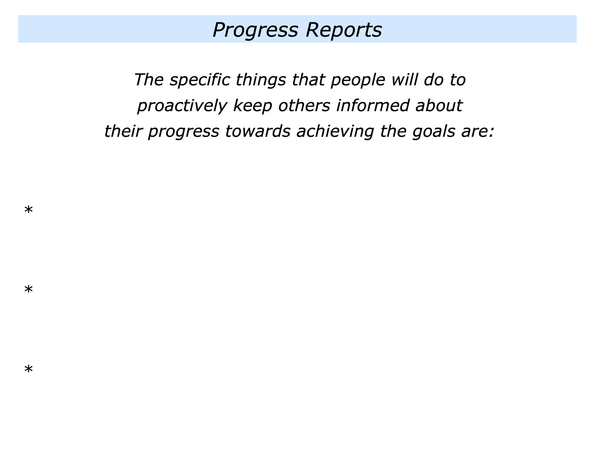
To keep sharing their progress toward achieving the goals;
To keep focusing on what is working – such as by sharing success stories – and what they can improve in the future;
To keep encouraging themselves and others on the way towards achieving the goals.
Good leaders also spend time with the individuals and combinations of people. Such meetings may have different functions. Here are two examples.
The leader may normally focus on a person’s or a combination of people’s contribution and any help they need to deliver their part of the picture of success.
The leader may, on other occasions, focus on a person’s development and any help they need to shape their future to achieve their professional picture of success.
Great teams build their strengths and manage the consequences of their weaknesses. They also encourage each person and each combination of people to follow this approach. They are then more likely to embody the ethic of continuous improvement.
Such teams go beyond the normal practice of focusing on individuals. They build combinations of people who perform superb work and contribute towards delivering the picture of success.
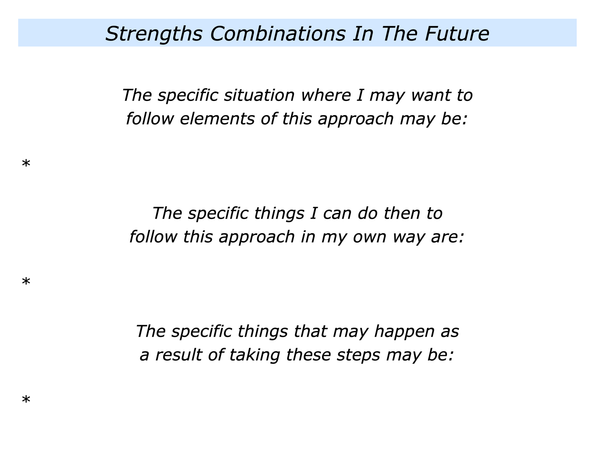
Let’s return to your own life work. Looking ahead, can you think of a situation when you may want to use elements of the strengths combinations approach?
You may want to do this when managing a project, leading a team or orchestrating people’s talents to achieve a compelling goal? How can you follow this approach in your own way?
If you wish, try tackling the exercise on this theme. This invites you to complete the following sentences.

Leave a Reply