


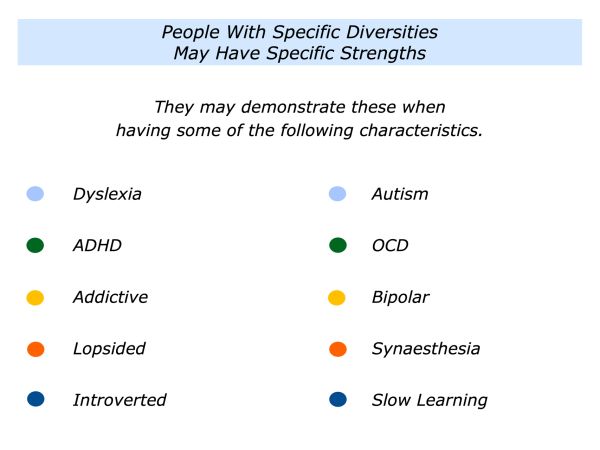
Every person is different and every person has strengths. Today it is more common to hear about people who have specific diversities to be able to channel these through specific strengths.
This can include people who may have aspects of autism, dyslexia, ADHD or OCD. Some may be introverted, have lopsided personalities, labelled as slow learners or demonstrate other characteristics.
Such people may find it challenging to be in certain situations. They may also have certain strengths, however, that they can channel in positive ways.
One view is that one person in seven has a brain that functions in a very different way compared to others. They can find it difficult to operate in some situations but flourish and apply their abilities in other environments.
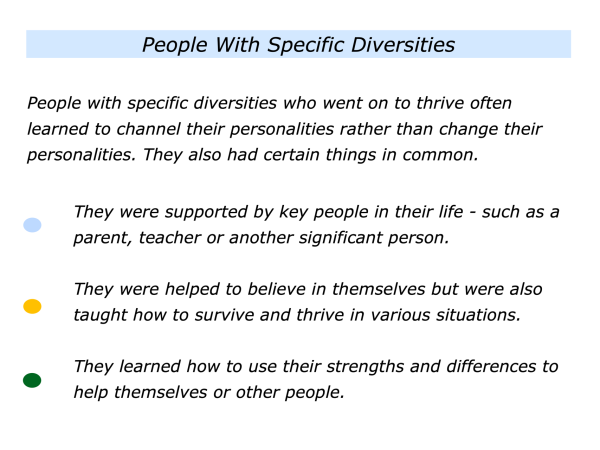
People who learn how to use such abilities often describe the support given to them by parents, teachers and other significant people. Many also recognise it was important to accept themselves.
They were then more able to channel their personality rather than change their personality. Those who went on to thrive often had some of the following things in common.
People want stability, stimulation and the chance to succeed. Growing up in such an environment can then help them to develop. The following sections describe the potential strengths of people who demonstrate certain characteristics.
Dyslexia
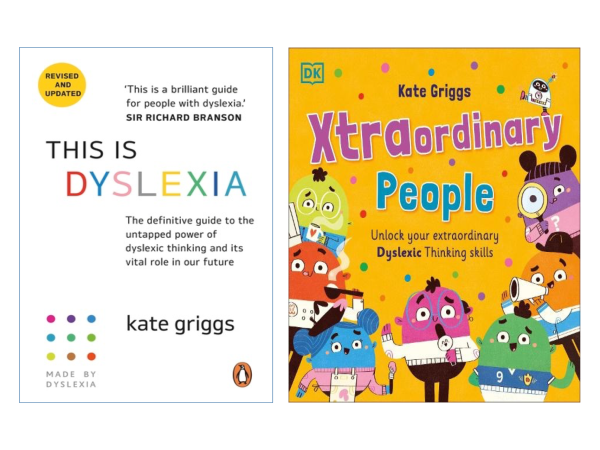
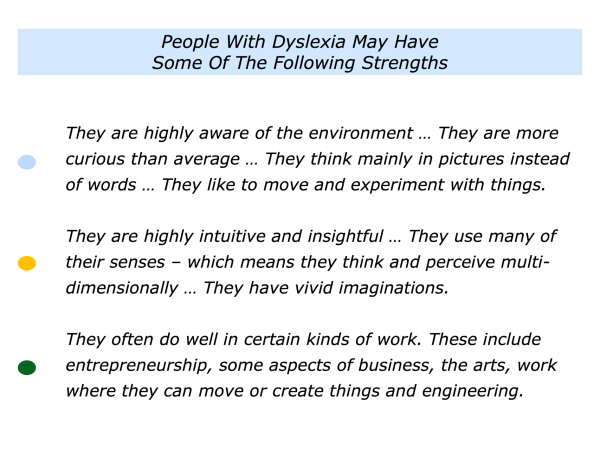
Some people who are dyslexic have specific strengths. Kate Griggs has done marvellous work that has helped many people with dyslexia. She has been shifting the narrative on dyslexia and educating people on its strengths since 2004.
She wrote This Is Dyslexia and Extraordinary People. She created the Made By Dyslexia website and also helped to found DyslexicU – The University of Dyslexic Thinking. This shows how the strengths of people with dyslexia can do superb work in an AI World.
Autism
Some people who have aspects of autism may also have specific strengths. Thorkil Sonne took this approach when his son Lars was discovered to have autism.
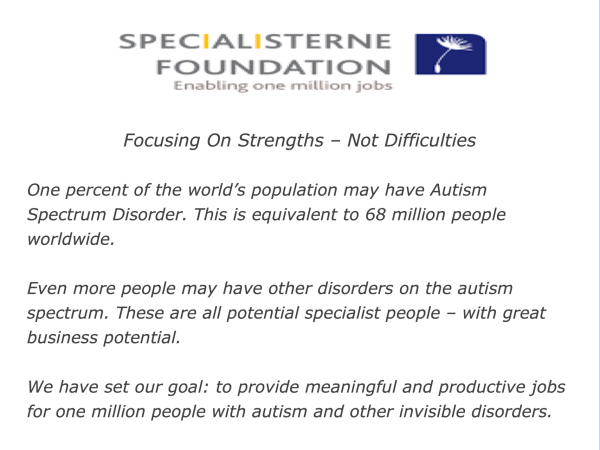
He created the Specialisterne Foundation that aims to create one million jobs. Here is how Thorkil describes the strengths of such people.
My vision is to create new possibilities for people with ASD and to influence society to adopt a more positive attitude towards people with ASD.
It is believed that one percent of the world’s population may have Autism Spectrum Disorder. This is equivalent to 68 million people worldwide.
Even more people may have other disorders on the autism spectrum, such as Attention Deficit Hyperactive Disorder (ADHD). These are all potential specialist people – with great business potential.
ADHD
Some people who have ADHD demonstrate certain strengths. They are often energetic, driven and focused. They love to set goals, make a plan and follow it to achieve success.
Such people can be helped to channel their energies in ways they find stimulating. They may then do superb work when playing a sport, performing in the arts, driving sales or working towards achieving other goals.
During my work I have met many people who demonstrate these characteristics. The keys are often to encourage them to focus on something they feel passionately about and to help them:
To focus their energy in a positive way and work towards achieving what they see as a positive goal;
To follow their successful pattern – such as daily disciplines – for working towards achieving the positive goal;
To find ways to stay focused and manage any challenging events on the way to achieving the positive goal.
OCD
There are now many websites that provide practical tips that people can use to manage their obsessive thoughts and actions. The following section describes how it can sometimes be possible to channel these characteristics.
This is a positive approach but it does not aim to lessen what can be the downsides of obsessive compulsive disorder. There are now some excellent practitioners who can help people to manage these downsides.
Many peak performers, however, often have a different kind of OCD in the areas where they excel. They have obsessive compulsive discipline rather than disorder.
Such people like to feel in control and follow certain disciplines. They then channel these drives to maintain a sense of order, do superb work and achieve their chosen goals. They may, however, need tools they can use:
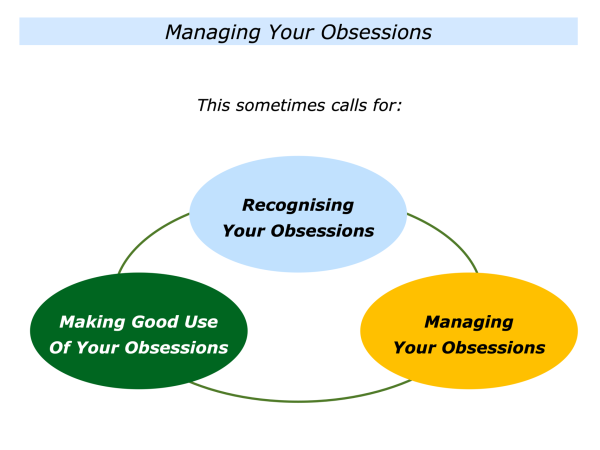
To manage their obsessions rather than let their obsessions manage them;
To recognise the potential pluses and minuses of their obsessions – both for themselves and other people;
To find ways to build on the pluses and minimise the minuses of their obsessions.
Great workers often follow their chosen strategies for managing their obsessions. Some do this in a systematic way that enables them to focus. Such an approach can have both pluses and minuses.
The pluses may be:
They are fully prepared … They know some areas in great detail … They get things done effectively … They follow a predictable rhythm … They perform superb work and get a sense of satisfaction.
The potential minuses may be:
They may appear anti-social when doing their work … They may appear odd … They may behave in ways that affects others … They may have blind spots.
Such a person may need to learn how to manage their obsessions. One approach is to organise their days so that: a) they can take care of their health; b) they can give quality time to their loved ones; c) they can spend quality time pursuing their obsession.
As mentioned earlier, however, this approach comes with a health warning. It can be important for somebody to get help from a qualified professional who can provide them with tools they can use to manage their OCD.
Addictive
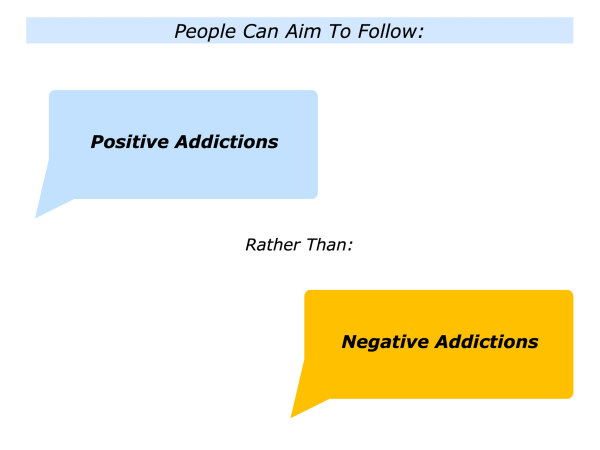
Some people have extremely addictive personalities but actually many people have some form of addictions. These addictions may fall into two extreme categories.
Positive addictions – these can have positive consequences for themselves and others.
Negative addictions – these can have negative consequences for themselves and others.
Some people learn to recognise such addictions. They may then aim to channel these in ways that help rather than hurt themselves and other people. Let’s explore these themes.
Positive Addictions
Some people may be addicted to focusing on positive things in life or finding positive solutions. They may be addicted to exercise, staying healthy or other activities.
Some may be addicted to doing creative work. Some may be addicted to appreciating life. Some may be addicted to helping other people.
Negative Addictions
Some people may be addicted to alcohol, drugs or other substances. Some may be addicted to angst or continually finding problems. Some may be addicted to anger or getting their highs by hurting other people.
Some therapy programmes encourage people to follow positive rather than negative addictions. William Glasser described this approach in his 1976 book Positive Addiction. He showed how people could channel their energies into running, meditation or other beneficial activities.
This is an approach I sometimes used with people who wanted to channel their addictive personalities in positive ways. This called for helping them:
To clarify their personal or professional goals – their picture of success;
To clarify the positive patterns they could follow to increase their chances of achieving success;
To clarify and follow their specific action plan for achieving success.
Some people may object to this approach. They may say:
“Isn’t that just replacing one addiction with another? Shouldn’t the person be trying to find their true self?”
Perhaps, but some people found it proved more helpful for themselves and others. Some developed a positive addiction for exercise or helping other people who were in difficulties. This called for them choosing:
To rehearse when they were going to do – particularly when faced by situations that might trigger negative habits;
To follow a set routine and get some quick successes;
To keep repeating this pattern and get positive results;
This approach involves a person with an addictive personality channelling this into following positive addictions in their life or work.
Bipolar
Stephen Fry, the actor, has shared his own experiences with bipolar disorder. Sometimes this can lead to great highs but also deep lows.
During a television programme he described how twenty people with this condition were asked:
“Let me pose a hypothetical question. If you were given the chance to get rid of the lows but, at the same time, lose the highs, what would you do?”
Stephen reported that only one of the twenty people said they would take up this offer. Every person has things they need to manage in life, said Stephen. Bipolar was one such thing for him.
Many websites have been created by people who experience such mood swings. These provide practical tools that people can use to manage this trait. These include the following.
Set and follow a chosen routine … Plan ahead … Do things that give you positive energy … Exercise in way that works for you.
Recognise and manage triggers … Learn how to manage your moods … Set and reach achievable goals … Focus on improvement not perfection.
Lopsided
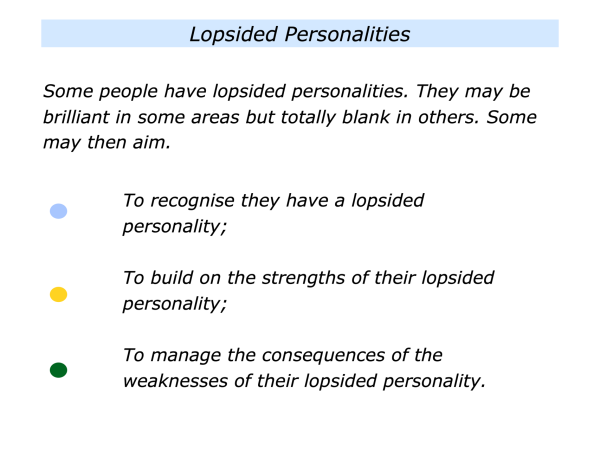
Some people have lopsided personalities. They may be brilliant in some areas but totally blank in others. Warren Buffett described himself in this way. Here is a summary of what he said.
“I have a lopsided personality. I am brilliant with numbers but I cannot tell you the colour of the wallpaper in my room at home. Even though I have lived in the same house for over fifty years.”
A person with a lopsided personality may see things quickly in one area of life. They can tell you exactly what is happening and what is about to happen. In other areas they don’t see a thing.
If appropriate, they can be helped to build on their strengths and manage the consequences of any weaknesses.
Synaesthesia
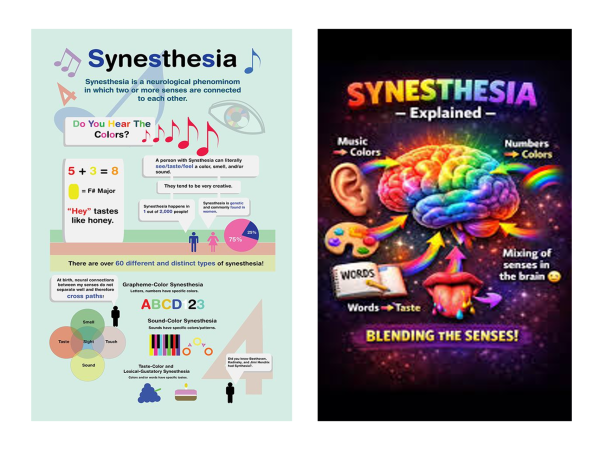
A person with synaesthesia may find that the way they experience situations may be different from many people. This can involve their various senses crossing over.
One of the most obvious examples is when a person who listening to a piece of music says that they can see colours. But there are many other examples.
Looking back, I remember doing a mentoring session with a superb sales leader. They said things like:
“I can smell a deal.”
Asking them to explain further, it emerged that they could literally smell when a deal was going to happen.
During the same period I worked with another person who was brilliant with numbers. They said:
“I can taste numbers.”
Some people with synaesthesia use their senses to make creative breakthroughs or do other activities. The following individuals are said to have demonstrated some characteristics of synaesthesia.
Richard Feynman, Nikola Tesla, Marilyn Monroe, David Hockney, Beyoncé, Stevie Wonder, Duke Ellington, Franz Liszt, Billy Joel, Jean Sibelius.
Some people who have such diversities seem to have the belief in themselves and their creative ability. Others may need encouragement and practical tools they can use to express themselves fully.
Introverted
On one level it may seem odd to include people who are introverted in a piece on specific diversities. There can be times, however, when such people are labelled as shy, withdrawn or simply quiet.
Susan Cain’s book Quiet: The power of introverts in a world that can’t stop talking highlighted the strengths of such people. Some introverts display the following characteristics.
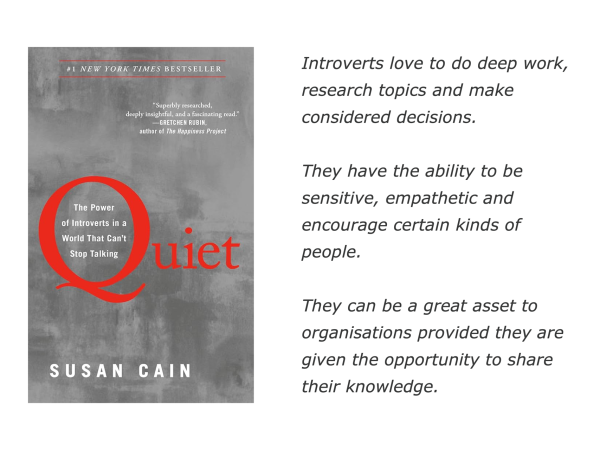
Introverts like to feel in control of their world. They therefore often rehearse what they are going to do next. Some also learn how to buy time to think and make good decisions when the unexpected happens.
Such people are happy in their own company but some make a living by going into role. They may do this by being a medic, trusted advisor, actor, leader or another role.
They then click into action. They feel in control because they know: a) the role; b) the rules to follow to get the right results. Such people may then go home and regain energy by do things that they find rewarding as an introvert.
Slow Learning
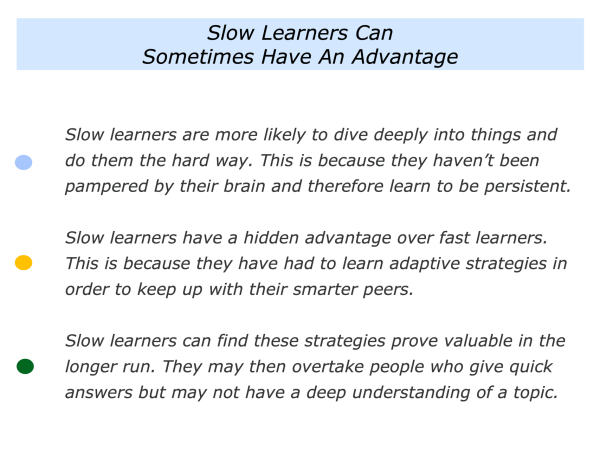
Ian Leslie wrote an article called In Praise Of Slow Learners that described the strengths of people who appear to be slow learners. These include the following characteristics.
They learn slowly but methodically … They take time to gather information and fully understand a topic … They then put the ideas into action … They keep practicing until they make things work … They then internalise these strategies for achieving future success.
Ian says there are advantages and disadvantages to being such a learner. But sometimes it is possible to apply the advantages in ways that deliver success. He explains this in the following way.
Every person is different and every person has certain strengths. Today it is more common to hear about people who have specific diversities to be able to channel these through specific strengths.
Such people may find it challenging to be in certain situations. They may also have certain strengths, however, that they can channel in positive ways.
Let’s return to your own life and work. Looking ahead, can you think of a situation where you may want to help people to find and build on their specific diversities?
You may want to follow elements of this approach to build on your own strengths. Alternatively, you may want to follow it to help another person to find and build on their strengths.
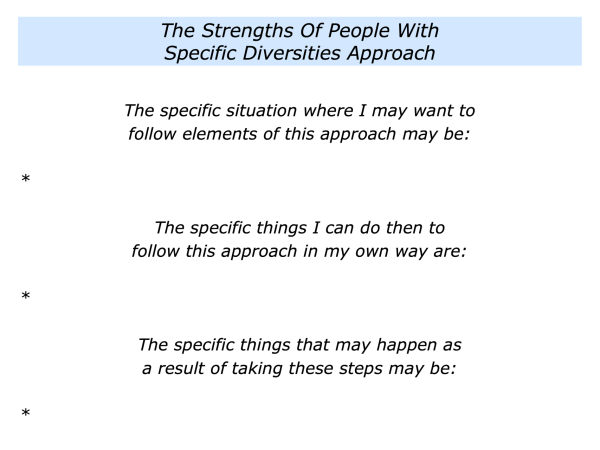
What may be the situation when you want to follow this approach? How could you follow this approach in your own way? What may happen as a result of taking these steps?
If you wish, try tackling the exercise. This invites you to complete the following sentences.

Leave a Reply