



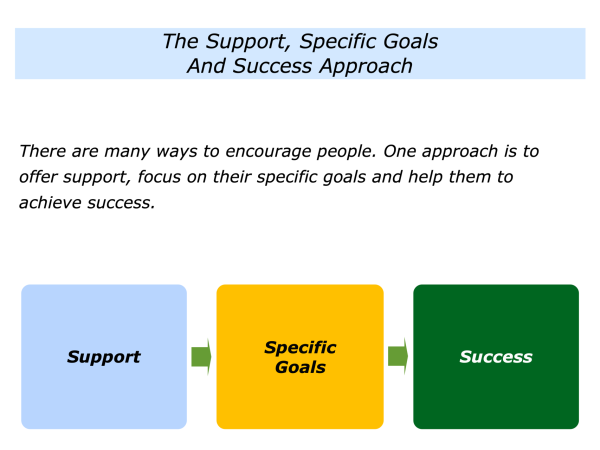
There are many ways to encourage people. This piece explores one of the most basic but effective ways to help to them to achieve their goals. The aims are:
To offer people support;
To focus on people’s specific goals;
To help people to achieve success.
Imagine you want to follow this approach to help a person or a group of people. If appropriate, you can focus on the following steps.
You Can Offer People Support
Different people offer support to people in different ways. Sometimes this involves providing them with the basic materials for life. These include food, safety, shelter and encouragement. It is also to offer them practical tools they can use to be healthy, hopeful and happy.
This approach is taken by many caring people in their daily life and work. They may then do practical things to help people climb the hierarchy of needs that were described by Abraham Maslow.
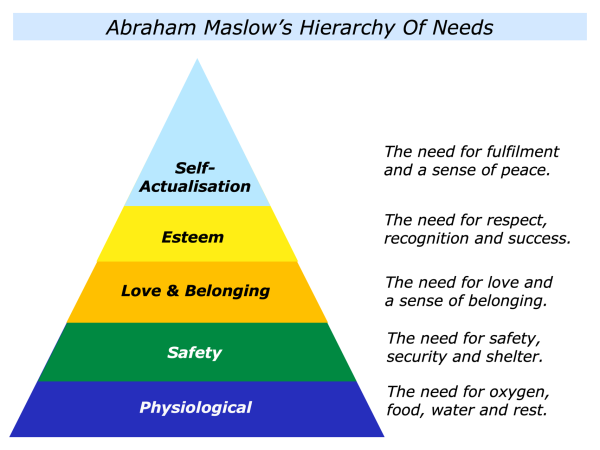
People have an ascending set of needs, said Maslow. Once they are satisfied on one level, they are more likely to move onto the next level. These drives start with the physiological needs and climb towards self-actualisation.
People are more likely to fulfil their potential in environments that enable them to fulfil their needs, said Maslow. Many people have since expanded on his theory and translated it into action.
People in the caring professions often follow this approach. They provide an encouraging environment in which people can feel safe. They also encourage people: a) to support themselves; b) to support other people.
The supportive approach can be used over the long-term but sometimes there is also the need for immediate action. This can be the case when helping people who are in deep distress.
Such people may be fleeing persecution, be in pain or be suffering in other ways. It can then be important to ask the question:
“What are your top priorities right now?”
Imagine that you want to follow elements of this approach when helping a person or a group of people. You can then do your best to provide the support they need. This can sometimes lead to the next step.
You Can Clarify
People’s Specific Goals
This involves focusing on people’s short, medium or long-term goals. These can differ depending on what is happening their lives. A person may say, for example:
I want …
To feel more in control of my life … To feel happier … To encourage my children … To manage my anger … To do satisfying work … To deal with my micromanaging boss … To turnaround a failing team … To lead the company through challenging times.
You will have your own approach to helping a person to clarify their specific goal. If appropriate, you may also begin to explore the strategies they can follow to achieve their aims. Bearing this in mind, it can be useful to explore some of the following themes.
What is the person’s goal? What are the real results they want to achieve? What is their picture of success? What will be the benefits of achieving the goal?
What are the things they can control in the situation? What are the things they can’t control? How can they build on what they can control and manage what they can’t?
What are the key strategies they can follow to give themselves the greatest chance of success? How can they follow these strategies in their own way? How can they get some quick successes?
Imagine that you have helped a person to clarify their specific goal. You may also have begun to clarify some of the strategies they can follow to achieve their aims. It will then be time to move on to the next step.
You Can Help People
To Achieve Success
There are many ways to help people to reach their goals. Bearing in mind what they can control, you can help them to work towards goals that they have a good chance of achieving. You can also encourage them to get some early successes.
You can help the person to
follow strategies that work
One approach is to revisit the person’s positive history. When have they tackled similar challenges successfully in the past. What did they do right then? How can they follow similar principles – plus maybe add other skills – to tackle the present challenge successfully?
Another approach is to learn from other people who have tackled similar challenges successfully. What did those people do right? How can the person follow some of these principles in their own way?
The key is to focus on what works. It is then to help the person to follow the strategies that will give them the greatest chance of success. They must, of course, follow these in their own way.
You can help the person to
follow a structure that works
People like to follow a structure towards achieving their specific goal. A person who wants to feel happy rather than depressed, for example, may need to follow positive habits.
These can include getting up at the same time each day, eating healthy food, exercising, listening to their favourite music, getting an early success and doing satisfying work. They can also do things that give them positive energy and spend time with positive people.
One key point to bear in mind: It is important for a person to create their own structure. They are then more likely to follow this discipline rather than trying to follow one that is imposed on them.
Caring professionals encourage individuals to follow positive habits. They help them to follow a daily structure that encourages both themselves and other people.
You can help the
person to achieve success
You can encourage the person to do their best to achieve their goals and achieve success. This can help to build confidence. Some therapists, for example, also invite individuals to keep a Success Diary. They invite them to write down:
The specific successes they have had that day;
The specific things they did right to create the successes;
The specific things they can do to follow these principles – plus the things they can improve – to get successes the next day.
This is an approach that I have seen work with people in many walks of life. The aim is to help people: a) to build on their positive habits; b) to, when appropriate, focus on what they can improve. They can then do their best to achieve their picture of success.
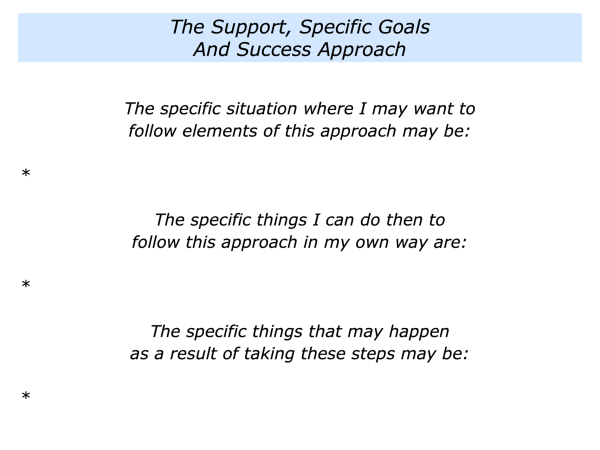
Let’s return to your own life and work. Looking ahead, can you think of a situation where you may want to follow elements of this approach? How can you do this in your own way?
If you wish, try tackling the exercise on this theme. This invites you to complete the following sentences.

Leave a Reply