



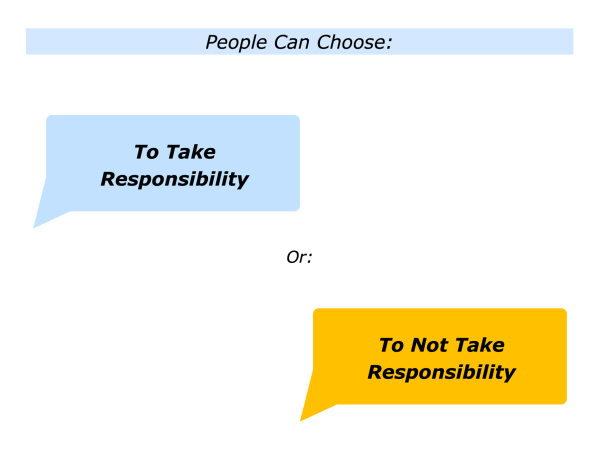
There are many models for recognising how people behave in their lives and work. One approach is to focus on the extent to which a person chooses to take responsibility for their actions.
Some people choose to take responsibility. They then aim to do their best in their personal or professional lives. Some people choose to not take responsibility and they blame others.
The route that people take has consequences for both themselves and other people. Let’s explore these different approaches.
The Taking Responsibility Approach
This is an approach I first encountered when working with people in recovery programmes. Whilst it is possible to create an encouraging environment and do our best help somebody, the key is for:
The person to choose to take responsibility for shaping their future life.
This approach calls for a person choosing to develop an internal locus of control and saying: ‘I can make things happen.’ Rather than having an external locus of control and keep saying: ‘Things happen to me.’
People who have a positive attitude are often proactive. They prepare properly and make things as predictable as possible. They recognise, however, that sometimes unexpected events will happen.
Such people then take the following steps. They aim: a) to build on what they can control in the situation; b) to, as far as possible, manage what they can’t control in the situation; c) to do their best in the situation.
People make choices every day. They can choose to take responsibility or avoid responsibility, be creative or keep complaining, help people or hurt people. The choices that people make can have consequences – pluses and minuses – for both themselves and other people.
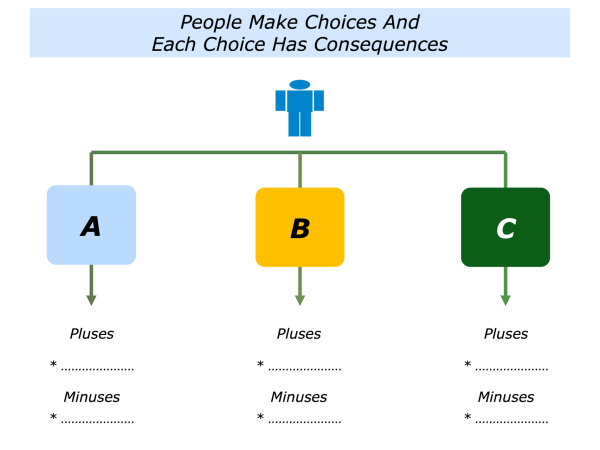
People who take responsibility often encourage other people but, at the same time, choose not to be victims. They also, when appropriate, aim to behave in a professional way and do their best to achieve positive results.
The Taking Responsibility
Approach In Action
This is an approach that can be used when considering hiring or promoting people. When hiring people, for example, you can invite a person to do the following exercise. This invites a person:
To describe a specific situation in the past when they took responsibility – this could in their personal or professional life – and what they actually did then to take responsibility;
To describe the specific things they would do – if they were successful in getting the professional role – to take responsibility and do their best to make a positive contribution to the organisation.
This exercise sounds tough. But it can be a useful way of exploring whether a person is prepared to follow the ethic of earning things rather than having a sense of entitlement. Here is the exercise on this theme.
Taking Responsibility In The Past
The specific situation in the past when I chose to take
responsibility in my personal or professional life was:
*
The specific things I did then
to take responsibility were:
*
*
*
Taking Responsibility For Making A
Positive Contribution To The Organisation
If I am successful in getting the professional role,
the specific things I would do to do best to make a
positive contribution to the organisation would be:
*
*
*
People who take responsibility often want to encourage people. They may sometimes need to clarify their moral compass, however, about what they can and can’t do to help people to reach their goals.
They may recognise that it can be important: a) to encourage people; b) to avoid stepping over a line where they take over what should be the other person’s responsibility. This involve focusing on the following themes.
They can provide support and help the person to clarify their goals. They can also, when appropriate, pass on knowledge and practical tools that a person can use to achieve their goals.
They can’t make the internal decision for a person. This is because it is up to the person to choose whether or not they are prepared to do what is required to achieve their goals.
There are many models for considering whether or a person takes responsibility. One approach involves focusing on what a person actually does and asking the following questions.
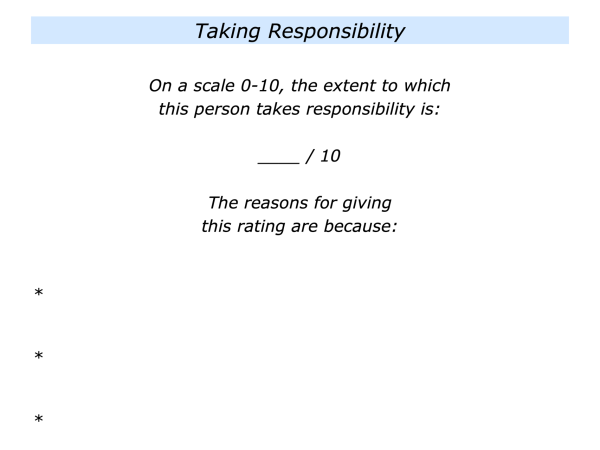
Taking Responsibility
On a scale 0-10, to what extent does this person take responsibility?
What are the reasons why I give this rating? What does the person actually do to show that they do or do not take responsibility?
One key point. Employ people whose rating is at least 8+/10. Otherwise you may spend a lot of time trying to persuade or micromanaging them.
Recognising The Kind Of
Language A Person Uses
Let’s consider another approach. This involves focusing on the language that a person uses when talking about themselves or certain issues. When listening to the person, you can ask yourself the following questions.
Does the person use positive language? Do they focus on how they can take responsibility, build on what they can control and do their best in a situation?
Does the person use negative language? Do they sometimes present themselves as a victim, blame others and focus on what they can’t do in a situation?
People may have learned or chosen to follow positive scripts or negative scripts in their lives. Those who have positive scripts focus on taking responsibility and aiming to do their best in life. Some people have other scripts.
People may also have both successful and unsuccessful patterns they follow in their lives. Some have a pattern of choosing to take responsibility. Some may follow another pattern. Let’s explore this approach.
The Not Taking
Responsibility Approach
Some people choose not to take responsibility for their actions and the potential consequences. They may choose to blame their circumstances, blame others or blame the world.
They may also behave in ways that hurt themselves or other people. They may then look for excuses and justify their behaviour by saying things like: ‘What else could I do?’
Some people focus only on their own feelings. They may then express these in ways that cause distress. They may also pursue their own agenda by behaving in ways that cause collateral damage.
Some people who abuse others may also sometimes present themselves as the victims. Some may enjoy scapegoating others and get a kick out of hurting people.
There are many models for helping people. Whatever approach is used, however, one of the keys is to clarify whether a person chooses to take responsibility for their actions and shaping their future.
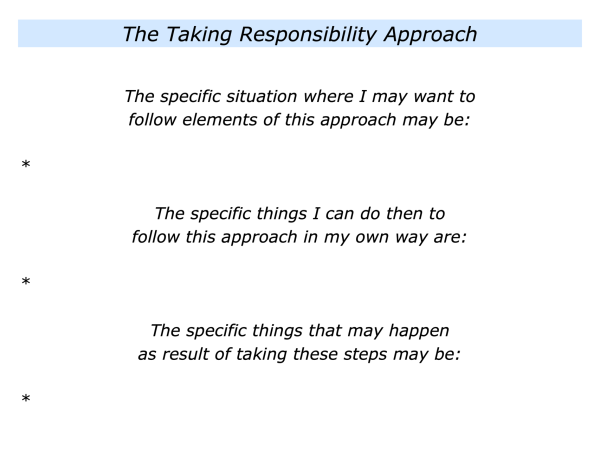
Let’s return to your own life and work. Looking ahead, can you think of a situation when you may want to follow elements of the taking responsibility approach?
You may want to do this when focusing on your own actions. Alternatively, you may want to follow elements of this approach when helping or working with other people in your life or work.
If you wish, try tackling the exercise on this theme. This invites you to complete the following sentences.

Leave a Reply