



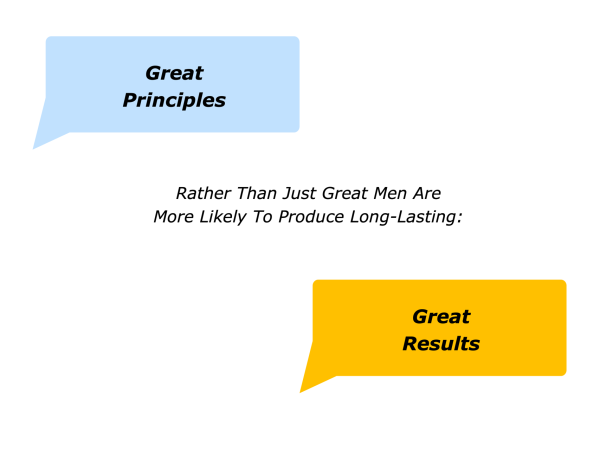
There are many ways to do fine work. One approach is to recognise that great principles – rather than just great men – are more likely to produce long-lasting great results.
People who take this approach aim to follow the principles that are likely to get the desired results. They may also focus on how to express these in modern ways to achieve the picture of success.
This approach is different from Thomas Carlyle’s well-known view that is great men who shape history. That approach nurtured the view that we must rely on charismatic heroes to help us to achieve success.
Carlyle said that some great men where caring rather than simply conquerors. But some leaders chose to interpret this approach by exerting power over others and nurturing hero worship.
Some people yearn to have strong men or women who will turn around their political party or nation. Such leaders may produce short-term wins but they may not know how help people to achieve sustainable success.
Good leaders are often positive, predictable and create an encouraging environment. They then enable people to follow certain principles to achieve ongoing success.
Imagine that an organisation wants to follow the great principles approach rather than the great man approach. Let’s explore how they may take these steps.
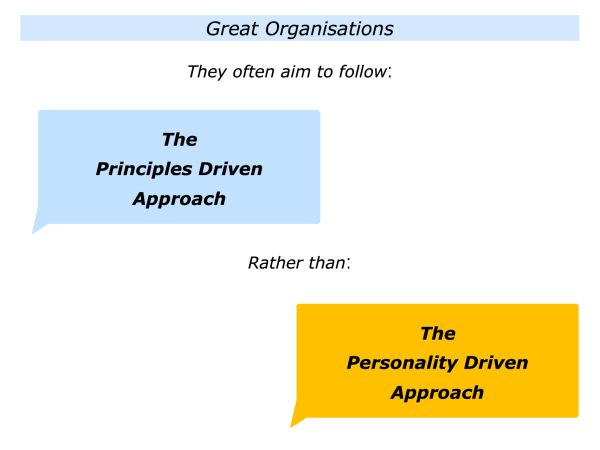
Great organisations sometimes start by being personality driven. They may have an inspiring founder who creates a movement, idea, product, service or cause. They attract others with the power of their idea or the force of their personality.
Such organisations may only thrive in the long-term, however, if they become principles driven. They then communicate these principles which provide a guiding compass. People can then use their personalities to follow these principles to achieve ongoing success.
Different organisations take this approach in different ways. One way is for them to go through the following steps.
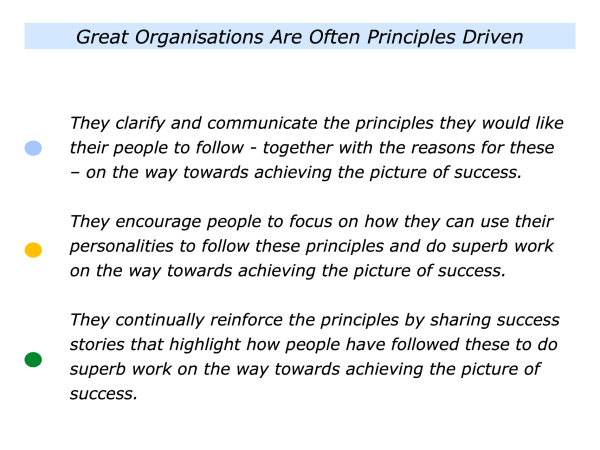
Different organisations will encourage their people to follow different principles. Many focus on common themes, however, that reflect some of the eternal principles that people can follow to deliver success.
Some organisations describe no more than three or four principles. This is because it is hard for people to remember a long list of sometimes well-meaning but vague ideas.
Some organisations describe their principles as a series of ‘Dos’ that encourage people to behave in certain ways. It is also important, of course, to describe the reasons for following these principles.
Here are some of the principles that organisations may encourage their people to follow. When appropriate, they may also bring these to life by giving specific examples.
The Principles
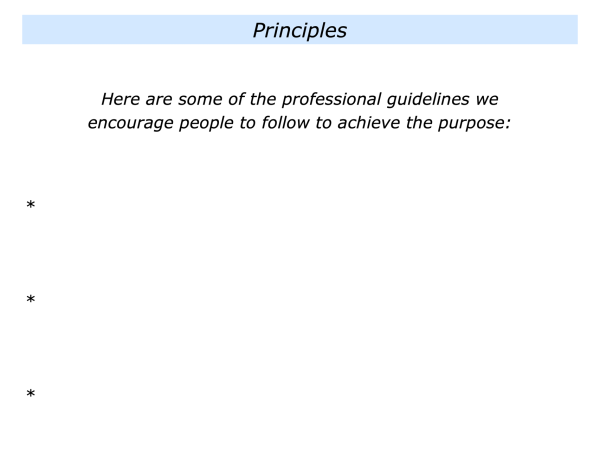
Do take responsibility … Do have a positive attitude … Do be professional … Do be outcome focused … Do provide great service … Do help others to succeed … Do keep improving … Do deliver success.
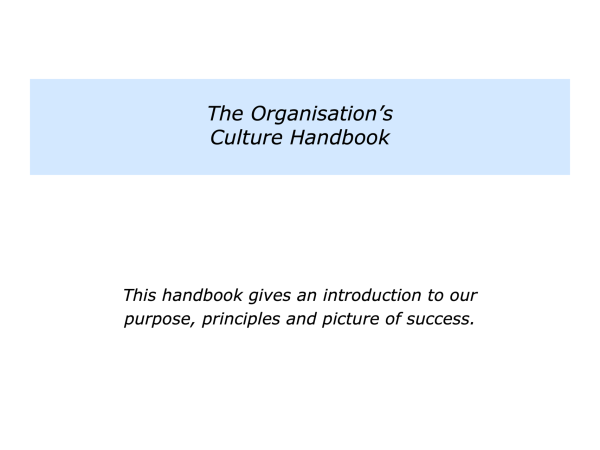
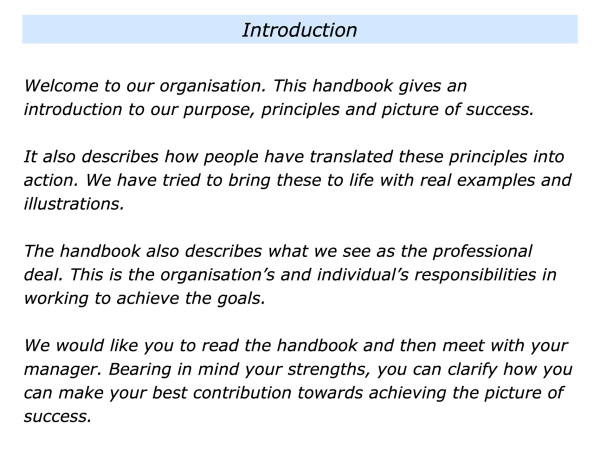
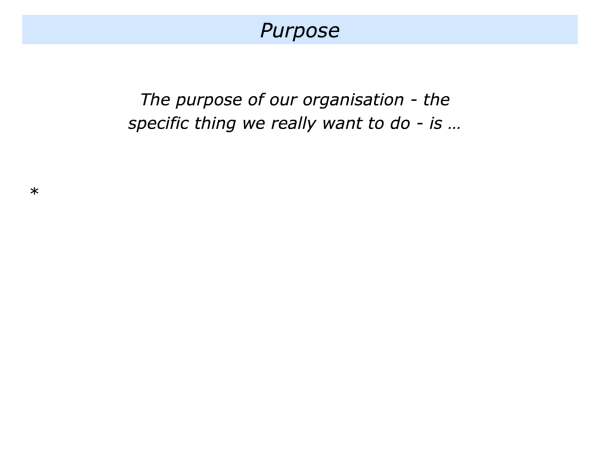
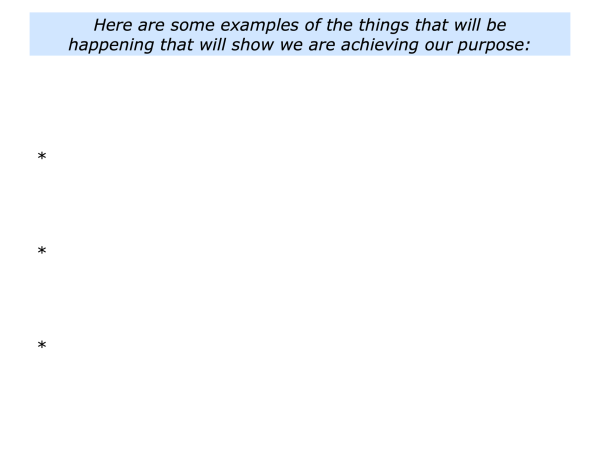
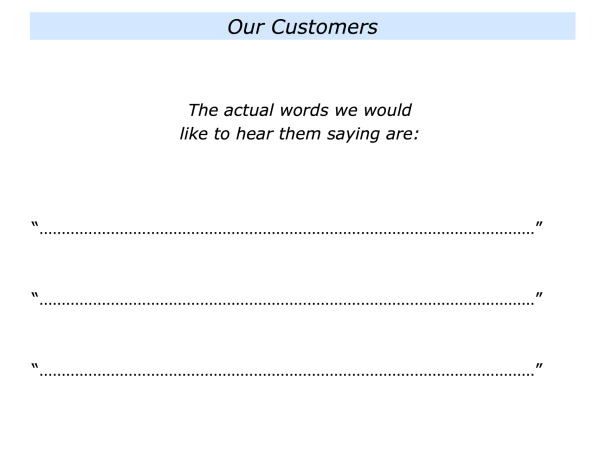
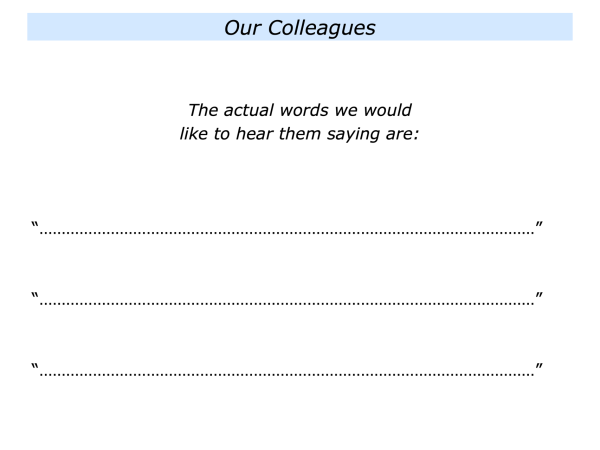
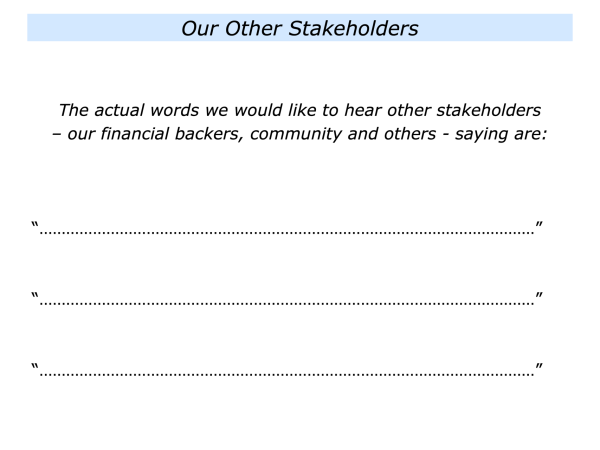
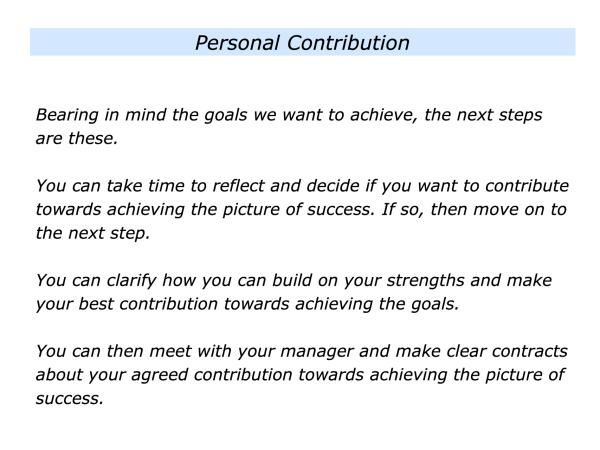
Some organisations also create a culture handbook that describes their purpose, principles and picture of success. This encourages people to keep making their best contributions towards achieving the goals.
Some send this to candidates who are applying to join the organisation. But they may describe an edited version of the picture of success. Here is a version of such a culture handbook.
You would, of course, produce your own version and bring this to life by describing how people in the organisation have translated the principles into action.
Good governmental leaders may also aim to be positive and predictable. They then focus on following certain principles. They may see their role, for example, as aiming to do their best:
To protect the realm;
To build a good economy;
To improve the quality of people’s lives.
Good leaders in many fields often aim to create a positive environment and follow the principles approach. They then encourage people to do superb work and achieve the desired picture of success.
There are many ways to do fine work. One approach is to recognise it is great principles – rather than just great men – that are more likely to produce long-lasting great results.
Let’s return to your own life and work. Looking ahead, can you think of a situation where you may want to follow elements of the great principles approach? How can you do this in your own way?
If you wish, try tackling the exercise on this theme. This invites you to complete the following sentences.

Leave a Reply