



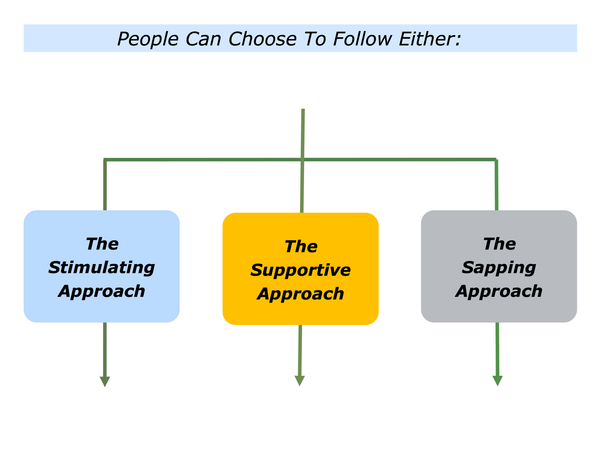
There are many ways to live life. Some people aim to follow the stimulating approach. Some follow the supportive approach. Some follow the sapping approach.
Different people follow these approaches in different ways in their lives and work. Let’s explore how they may translate these into action.
The Stimulating Approach
People who follow this approach do things that they find stimulating or that may stimulate other people. Such people aim to follow this approach in both their personal and professional lives.
Some people focus on doing things that give them positive energy. They also maintain a sense of gratitude, count their blessings and aim to do their best each day.
Some people do specific things that they find stimulating. They may enjoy walking, playing music, doing creative projects, working with particular clients, tackling certain challenges or doing other activities.
People who do such things can find that these help them to maintain a positive attitude. These can also help to develop their inner strength to manage challenges they may encounter in their life or work.
Some people may encourage others to do things that are stimulating. They may also act in ways that can be inspiring and help to create a successful environment.
Some people may be stimulating because they share positive ideas. Some may be pioneers who act as positive models. Some may show how it is possible for people to shape their lives in a positive way.
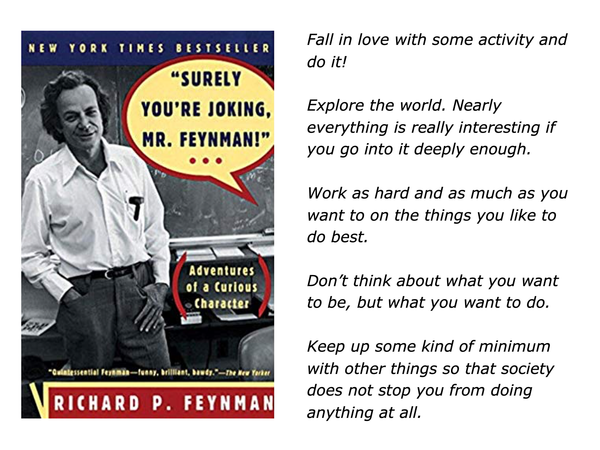
Richard Feynman, for example, was a professor of physics who inspired many people beyond his specialist field. He provided stimulation by encouraging people to focus on what they loved doing. He kept returning to the following themes.
Let’s return to your own life. Looking ahead, it can be useful to explore the following questions.
What are the things that I find stimulating? How can I do more of these things – providing they don’t hurt other people? What may be the benefits of doing these – both for myself and other people?
How can I, when appropriate, encourage people to do the things that they find stimulating? How can I do this in a positive and respectful way? What may happen as a result of taking these steps?
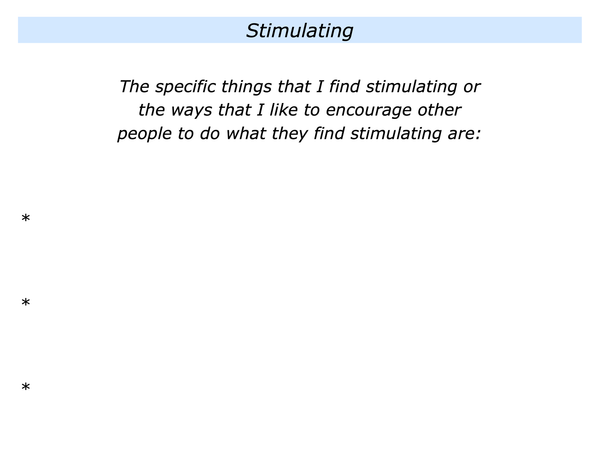
If you wish, try tackling the exercise on this theme. This invites you to complete the following sentence.
The Supportive Approach
Some people find ways to do things to support themselves and, when appropriate, support other people. Different people do this in different ways in their lives or work.
Some people do practical things to support themselves. They aim to follow a healthy lifestyle, rest properly and, when possible, follow their chosen rhythm for working.
Some people do things that are stimulating but also spend time in their favourite sanctuaries. They aim to relax, recentre and, when appropriate, re-energise themselves
Some people aim to support others in their personal lives. They aim to encourage their loved ones, friends or colleagues. They also enjoy spending time with positive people who they find supportive.
Some people aim to support others in their professional lives. They may do this by working as a counsellor, educator, medic, trusted advisor, mentor or another professional role.
Looking back, who have been the supportive people in your life? You may have had a parent, teacher, friend, coach or another person who encouraged you. What did they do to support you?
They may have created a positive environment in which you felt safe, at ease and able to be yourself. Some may have encouraged you to build on your strengths, set goals and achieve success.
Such people may have provided encouragement but also at times may have been truth tellers. When appropriate, they may have offered suggestions about how you could choose to behave in the future.
Looking back, what did you gain from being with these supportive people? What did you learn about how you can support others? How do you try to put some of these ideas into practice?
Ian Wright, the former Arsenal and England footballer, often talks about how he received such help from one of his teachers, Sydney Pigden. Many years later they met when Ian was making a television programme.
The producers invited Sydney along to pay a surprise visit. Ian later recounted what he had gained from his teacher. Here is a summary of what he said.
“Mr Pigden had a massive impact on me. For me he will remain the greatest man in the world. He was a guiding light all the way through my career, as people saw in the video when I was reunited with him.
“I dedicated my book to him and I think that was the least I could do for somebody that literally turned my life around, in respect to teaching me how to be a decent human being.
“I met him when I was seven, so we’re talking about 50 years ago, and it was because I wasn’t being particularly good in class.
“I wasn’t able to learn as quickly as the rest of the kids were. So he gave me responsibilities, like a registered a milk monitor, you know, things like that. Then when I started playing football, he really backed me.
“I don’t know why he chose me. I’m glad that he did. Once he come in, everything was so much better.
“I used to collect the registers from the teachers. Then they made me milk monitor. I really liked that. It was really good. I just felt important.

Some people get support from writers, artists or others they have never met. Many people were encouraged to follow their own path, for example, after reading Jenny Joseph’s famous poem Warning. Here is an excerpt from that piece.

Let’s return to your own life and work. Looking ahead, it can sometimes be useful to explore the following questions.
How can I continue to support myself? How can I do more of these things? How can I, when appropriate, support other people? What may be the benefits of taking these steps?
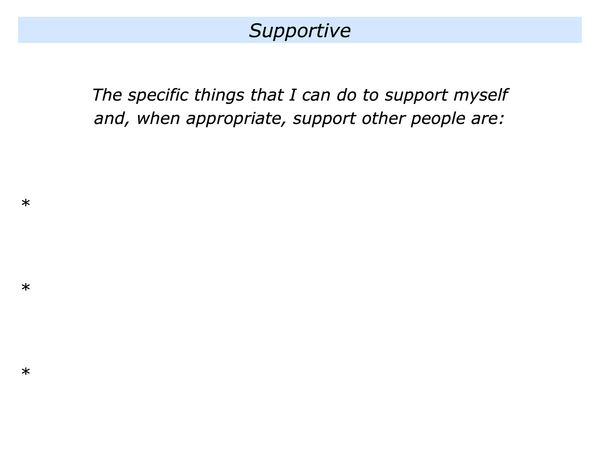
If you wish, try tackling the exercise on this theme. This invites you to complete the following sentence.
The Sapping Approach
Some people behave in a way that can be sapping. They may do this by being negative, complaining or spending lots of time criticising other people.
Some people actually enjoy taking this approach. They may enjoy feeling superior, scapegoating others or attacking people who are different. Some get a kick out of hurting other people.
Looking at your own life, it can be useful to recognise things that are sapping. These can take energy and, on some occasions, it can take time to heal.
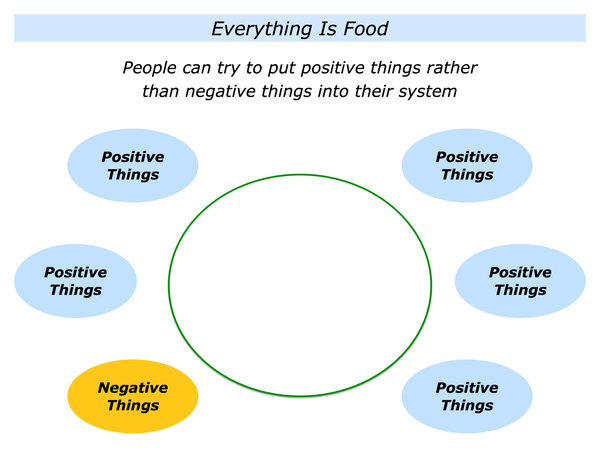
Wherever possible, you can try to avoid spending time with people who are sapping. This involves recognising the old philosophy that ‘everything is food’. The experiences we encounter each day can affect our system.
People are more likely to be healthy if they put positive things rather than negative things into their system. This approach may sound difficult, but it can be more difficult to be with people who are sapping.
Some people may also spend a lot of time focusing on negative things or experiences in their own lives. This can lead to them going into a downwards spiral. One approach is for them:
To recognise the sapping feeling which may lead to them being in a negative cycle;
To do something stimulating or supportive in order change the feeling and put themselves into a positive cycle.
To build on this positive feeling and, if appropriate, do something to support other people.
There are many ways to live life. Some people follow the stimulating approach. Some follow the supportive approach. Some behave in ways that are sapping.
Let’s return to your own life. What may be the stimulating or supportive things you can do when recognising any signs of sapping? How can you do this in your own way?
If you wish, try tackling the final exercise on this theme. This invites you to complete the following sentence.

Leave a Reply